









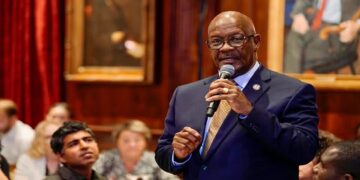

















Freetown, Sierra Leone – Parliament’s ongoing debate and vote on the Constitutional Amendment Bill has attracted significant public attention, with the proposed reforms set to introduce major changes to Sierra Leone’s electoral system, governance structure and constitutional arrangements.
The proposed amendments seek to reshape how elections are conducted, how political candidates qualify for office, and the powers exercised by key state institutions.
Here are 10 key changes citizens should know:
1. Presidential Election Threshold to Change
The proposed amendment would reduce the threshold for winning a presidential election in the first round from 55 percent to a simple majority of 50 percent plus one vote.
However, a candidate would also be required to secure at least 20 percent of the votes in two-thirds of the country’s voting districts.
2. Shift from First-Past-The-Post to Proportional Representation
Sierra Leone would move away from the First-Past-The-Post constituency-based electoral system to Proportional Representation (PR).
The proposed system would also eliminate parliamentary by-elections, representing a major change in the country’s electoral arrangements.
3. Parliament to Have Power to Remove President or Vice President in Specific Circumstances
Under the proposed changes, Parliament would become the body empowered to remove a sitting President or Vice President who has been expelled from the political party under which they were elected.
Such removal would require a two-thirds majority vote in Parliament.
4. New Process for Choosing the Chief Electoral Commissioner
The President would no longer have direct power to appoint the Chief Electoral Commissioner.
Instead, a Search and Nomination Committee would nominate a candidate who meets stipulated constitutional requirements, introducing a new mechanism for selecting the country’s top electoral official.
5. General Elections to Have a Fixed Date
The proposed amendment would establish a fixed date for general elections.
Under the provision, general elections would be held on the second Saturday of November in every election year, providing greater predictability around the electoral calendar.
6. Minimum 30% Women’s Representation
Political parties would be required to ensure that at least 30 percent of their nominees for national and local government elections are women.
The proposed provision is aimed at increasing women’s participation and representation in Sierra Leone’s political institutions.
7. Independent Candidates Allowed to Contest the Presidency
The amendment would open presidential elections to independent candidates.
Qualified individuals would no longer be required to contest the presidency under the banner of a registered political party, provided they meet the constitutional requirements for presidential candidates.
8. Public Officials Seeking Parliament to Resign Six Months Earlier
The proposed amendment would reduce the period public officials must resign before contesting parliamentary elections.
The current 12-month requirement would be reduced to six months, potentially making it easier for eligible public officials to transition into electoral politics.
9. Election Petitions to Be Filed Within Three Days
The time limit for challenging election results at the Supreme Court would be significantly reduced.
Under the proposal, election petitions would have to be filed within three days after results are announced, instead of the existing seven-day period.
10. New Restrictions on Dual Citizens and Outgoing Presidents
The proposed amendments would introduce restrictions on certain categories of dual citizens, disqualifying them from holding the offices of President, Vice President or Speaker of Parliament.
The reforms would also impose limits on outgoing presidents during the transition period following an election. They would be restricted from making major public appointments, entering into significant contracts or undertaking substantial institutional changes after an election.
The proposed constitutional changes have generated widespread interest as Parliament considers reforms that could significantly affect Sierra Leone’s electoral and governance systems. The outcome of the parliamentary vote is therefore expected to have lasting implications for the country’s constitutional and democratic development.