












































FREETOWN, 19 October 2026 – Sierra Leone has heightened Ebola surveillance and preparedness nationwide after Kenya confirmed seven cases, rising to eight on Sunday, of Ebola disease linked to the ongoing outbreak in the Democratic Republic of Congo (DRC).
The National Public Health Agency (NPHA) says it is strengthening health screening at the Freetown International Airport at Lungi and at all official land border crossings, with special focus on travellers arriving from East and Central Africa.
What Happened in Kenya
Kenya’s Ministry of Health on Saturday, 17th October, confirmed four new cases – three healthcare workers, two men aged 29 and 35 and a woman aged 32, who treated the first patient on 3rd and 4th October, and a male relative of that patient who had been in quarantine since 6th October.
It is the first time the virus has spread from person to person inside Kenya. All four were already in quarantine when they developed fever and were immediately isolated. Laboratory tests at the National Virology Reference Laboratory and Kenya Medical Research Institute (KEMRI) confirmed the Bundibugyo strain.
With that, Kenya’s total rose to seven including one death. On Sunday, 18th October, an eighth case was confirmed – a 49-year-old male patient attendant who washed linen and utensils used by the first patient. He developed fever, headache and muscle pain.
Kenya’s first patient was a man who had lived in the DRC for seven years. He fell ill there, travelled by road to Uganda and flew to Nairobi on 3rd October. He died on 5th October. Kenyan authorities have now traced 128 of 130 contacts (98.5%) and placed them under 21-day quarantine. They say there is no evidence yet of wider community transmission.
Africa CDC and WHO have commended Kenya for its rapid contact tracing.
Why Sierra Leone Should Be Concerned
The DRC outbreak, which was declared in May 2026, has become one of the deadliest ever. WHO reports more than 9,400 confirmed cases and over 4,500 deaths across at least eight provinces, with a case fatality rate of about 50%. It has now spread to Uganda (20 cases), Kenya (8 cases) and a travel-related case in France. WHO has declared it a Public Health Emergency of International Concern (PHEIC).
Crucially, this outbreak is caused by the Bundibugyo strain of Ebola, first identified in Uganda in 2007. Unlike the Zaire strain that devastated Sierra Leone in 2014-2016 – when more than 14,000 people were infected and nearly 4,000 died in Sierra Leone alone – there is *no approved vaccine* specifically for Bundibugyo. Vaccine candidates are still in trials in Uganda. This makes early detection, isolation and strict infection prevention the only effective tools.
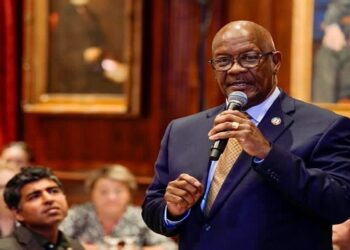
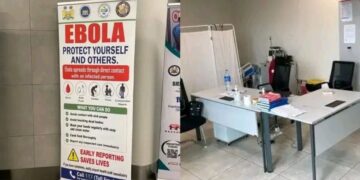
NPHA Executive Director, Brig. Gen. Prof. Foday Sahr, said: “Early reporting saves lives. Stay alert, follow health guidance and call 117 if you suspect Ebola.”
What NPHA Is Doing
Working with the Ministry of Health and the Sierra Leone Civil Aviation Authority, NPHA has:
– Reinforced fever screening and health questionnaires at Lungi and border posts
– Activated district rapid response teams
– Restocked personal protective equipment and isolation units
Travellers are urged to complete the online health declaration at https://poep.npha.gov.sl* within 72 hours before travel and to give accurate travel history.
What The Public Should Know
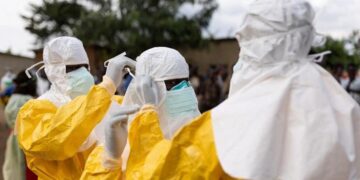
Ebola does NOT spread through air. It spreads through direct contact with blood or body fluids (vomit, urine, stool, sweat, semen, breast milk) of a sick person or someone who has died from Ebola, or by touching contaminated bedding or clothing.
Symptoms appear 2 to 21 days after exposure and include: sudden fever, severe weakness, headache, muscle pain, sore throat, vomiting, diarrhoea, abdominal pain. Bleeding may occur in some cases but is not always present.
NPHA Advises:
1. Call 117 immediately if you have symptoms or contact with a suspected case
2. If you arrived from Kenya, DRC, Uganda in last 21 days, monitor your health for 21 days
3. Wash hands regularly with soap and water
4. Do NOT touch or wash the body of anyone suspected to have died from Ebola
5. Avoid contact with blood and body fluids of suspected cases
NPHA urges the public to remain calm but vigilant, rely only on verified information from NPHA and the Ministry of Health, avoid spreading rumours on WhatsApp and Facebook, and treat travellers and affected families with dignity and respect.