


















































FREETOWN – The National Public Health Agency (NPHA) has stepped up surveillance at all entry points into Sierra Leone following the confirmation of an imported Ebola case and death in Kenya.
Kenya on Tuesday confirmed its first case after a Kenyan citizen who had been living in the Democratic Republic of Congo (DRC) travelled by road to Uganda before flying to Nairobi. The patient was isolated at a hospital in Nairobi, tested positive for the Bundibugyo strain of Ebola, and later died. Kenyan authorities have identified 28 contacts and are tracing others.
In a Public Notice issued on 6th October and signed by its Executive Director, Brig. Gen. Prof. Foday Sahr, the NPHA said it recognises the concern this news may cause in Sierra Leone, given the country’s history with Ebola.
The Agency confirmed that the ongoing Bundibugyo Ebola outbreak in the DRC now accounts for more than 8,000 reported cases and over 4,000 deaths.
“We recognise the concern this news may cause. Ebola can be contained through early detection, prompt care and cooperation with health authorities. Air travel between Sierra Leone and Kenya makes continued vigilance important,” the NPHA stated.
Vigilance at Airport and Borders
The Ministry of Health, Sierra Leone Civil Aviation Authority and NPHA say they continue to maintain vigilance at points of entry. All travellers are being screened for signs and symptoms at Freetown International Airport and at all official land border crossings.
The NPHA is urging travellers to cooperate with health officers and provide accurate information about their health, travel history and contact with anyone who is ill.
What You Must Do:
1. If you develop symptoms: If you develop symptoms after recent travel to the DRC or Kenya, or contact with a suspected Ebola patient, call 117 immediately, explain your symptoms, travel history and possible exposure, avoid close contact with others and public transport, and follow health officials’ instructions.
2. Stay alert after travel: Travellers returning from the DRC or Kenya should monitor their health for 21 days after arrival, even after passing entry screening. Report any known contact with an Ebola patient immediately, even if you feel well.
3. Complete the travel portal: All travellers entering or leaving Sierra Leone must complete the health declaration at https://poep.npha.gov.sl within 72 hours before travel. Enter accurate travel, contact and health details, and keep your confirmation QR code or reference number.
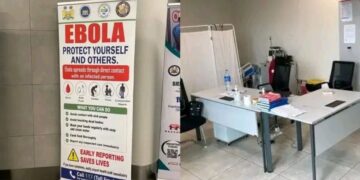
Ebola spreads through direct contact with blood, body fluids or contaminated materials from someone sick or deceased. Symptoms may appear between 2-21 days after exposure and can include sudden fever, weakness, headache, muscle pain, sore throat, vomiting, diarrhoea, stomach pain and skin rash. The NPHA cautioned that bleeding does not occur in every case – do not wait for bleeding to seek help.
The Agency also urged regular handwashing with soap and water, avoiding contact with bodily fluids or belongings of suspected cases, and not touching the body of someone who may have died from the disease.
Sierra Leone, which lost nearly 4,000 people during the 2014-2016 West Africa Ebola outbreak, says it is better prepared now, but wants citizens to rely on verified information from the NPHA and Ministry of Health and avoid rumours.
The message, the NPHA said, is simple: “Please remain calm, stay alert and report concerns early.”