















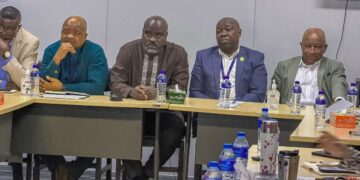



















Freetown, Sierra Leone — An online opinion poll conducted by the Campaign for Human Rights and Development International (CHRDI) has found that 50% of respondents do not trust any public institution to act in the best interest of citizens.
The survey asked Sierra Leoneans which public institution they trusted most. A striking 50% selected “None of the Above,” underscoring widespread disillusionment with governance structures. Even the highest-rated body, the Electoral Commission for Sierra Leone (ECSL), garnered trust from fewer than one in five respondents (under 20%). Other key institutions, including Parliament, the Judiciary, the Sierra Leone Police, local councils, and the Anti-Corruption Commission — recorded similarly low levels of confidence.
CHRDI, a rights-based advocacy organization operating in Sierra Leone and the United Kingdom, described the findings as a “warning sign” and evidence of a “public trust crisis.”
The group warned that declining confidence could undermine accountability, democratic governance, national cohesion, and the country’s ability to address pressing socioeconomic challenges.
Broader Context of Distrust
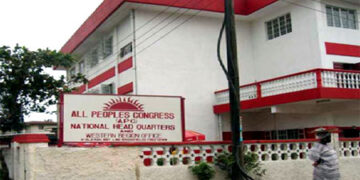
This poll aligns with other indicators of institutional skepticism in Sierra Leone. Afrobarometer surveys have shown trust in the ECSL nearly halving since 2018, dropping to around 34% by late 2025, amid controversies surrounding the 2023 general elections. Those polls were disputed by the main opposition All People’s Congress (APC), which rejected the results declaring President Julius Maada Bio’s Sierra Leone People’s Party (SLPP) victorious. Independent observers noted issues with transparency and communication during the process.
Broader governance challenges exacerbate the problem. Sierra Leone continues to grapple with systemic corruption, political polarization along ethno-regional lines (notably between the Mende-dominated south and Temne-dominated north), economic pressures, and questions over the rule of law. Recent events, such as the parliamentary removal of respected Auditor-General Lara Taylor-Pearce and her deputy in late 2024, have further fueled perceptions of executive influence over oversight bodies.
Reports from organizations like the Bertelsmann Transformation Index (BTI) highlight how resource constraints, donor dependency, bureaucratic inefficiencies, and a “winner-takes-all” political culture hinder reforms. Public debt has risen significantly in recent years, while youth unemployment and poverty remain high, contributing to social tensions.
Implications for Democracy and Stability
CHRDI emphasized that rebuilding trust is essential for Sierra Leone’s progress. Without credible institutions, efforts toward accountability, anti-corruption measures, and inclusive development risk faltering. This sentiment echoes global trends in the 2025 Edelman Trust Barometer, where grievances against governments and elites are eroding confidence worldwide.
Analysts suggest that implementing recommendations from post-2023 electoral review committees, such as improving ECSL transparency, regulating party financing, and curbing the misuse of state resources, could help restore faith. Civil society groups and international partners, including the UNDP and EU, continue to support electoral and governance reforms.
As Sierra Leone navigates its post-civil war democratic journey, marked by relative stability since 2002 but persistent structural weaknesses, this latest poll serves as a urgent call for renewed commitment to transparency, inclusivity, and responsive governance. Failure to address these concerns could deepen divisions and threaten long-term national cohesion.