



































Freetown, Sierra Leone – August 5, 2025 –Mounting safety concerns are emerging over the continued use of aging and outdated ferries transporting passengers between Ferry Junction (Kissy Terminal) in Freetown and Tagrin Terminal in Lungi.
Visual footage circulating across the nation highlights aging ferries struggling to dock at Kissy Terminal and Tagrin Point, underscoring the increasingly precarious conditions faced by passengers on the Freetown–Lungi ferry route.
The ferries, most notably the MV Mahera, MV Murzuk, and Great Scarcies, continue to serve as the primary mode of transportation across the Rokel River, despite chronic technical failures and long-delayed maintenance. Engineers report repeated breakdowns due to long intervals without refurbishments and scarce spare parts, often leading to breakdowns mid-voyage and passenger abandonment at sea.
On June 28, 2025, a ferry from Kissy Terminal became stranded near sea bed exposure during low tide before eventually reaching Tagrin Terminal. The event, captured on video, triggered renewed calls for construction of the long-proposed Lungi Bridge to reduce reliance on unreliable water transport.
Mahera, also, experienced a three‑hour sea stranding in February 2022 while carrying up to twice its rated passenger load, highlighting both mechanical fragility and chronic overcrowding.
Despite serving as the main link for thousands of passengers traveling between Freetown and Lungi International Airport daily, the ferry service is plagued by breakdowns, overloading, poor terminal infrastructure, and limited enforcement of safety standards.
Overloading and Passenger Safety
Overcrowding remains a routine violation. While the ferries are designed to carry about 350–400 passengers, operators often exceed this capacity, especially during peak travel hours. Witnesses claim that both people and vehicles are loaded far beyond safe limits, further compromising vessel stability.
“The ferry was so packed, people were standing on the vehicle ramp,” said a regular commuter responding to a varial footage circulating on social media. “If anything had gone wrong, rescue would’ve been impossible.”
Terminal Hazards and Infrastructure Challenges
Despite a vessel capacity of approximately 350–400 passengers, plus vehicles, frequent overloading is reported, especially during peak times. Operators routinely exceed this limit, putting vessel stability at risk. At Kissy Terminal, images show crowds spilling onto ramps and decks, raising serious concerns over emergency preparedness.
The docking areas at Kissy and Tagrin Terminals are also in disrepair. Silting and the accumulation of debris such as scrap metal have created additional hazards for ferry movement. At times, ferries have damaged propellers while maneuvering through shallow or obstructed sections of the riverbed.
Maritime officials have admitted that dredging is infrequent and that terminal upgrades are long overdue.
Lack of Emergency Equipment
Survivor and commuter accounts suggest that many ferries operate without essential safety gear like lifejackets, fire extinguishers, or functioning alarms. Civil society and retired maritime experts warn that without these measures in place, a serious incident could result in mass fatalities.
Spotlight on Regulation & Oversight
Authorities acknowledge deficiencies in oversight. Despite investigations launched by the Sierra Leone Maritime Administration, there remains no clear public record of findings or consequent reforms. Civil society advocates demand full disclosure of safety audit results and enforcement of legal penalties for overloading and non-compliance.
Lungi Bridge and Government Intervention
The government has announced plans to build a $1.2 billion Lungi Bridge, aiming to supplant the ferry system entirely and eliminate traversal risks associated with the estuary. Despite international memorandums signed in mid-2025, construction has yet to begin.
The government has announced plans to commission four new ferries to modernize operations and improve safety on the Freetown–Lungi route. These vessels are expected to operate from upgraded jetties and offer a more reliable transport option alongside ongoing bridge discussion
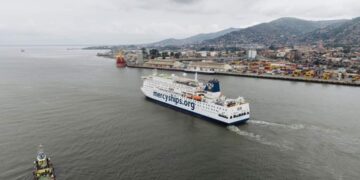
In the meantime, Turkish shipping company Negmar has introduced newer, safer vessels with enhanced capacity and regular maintenance provisions. Nonetheless, lower-income commuters continue relying on aging public ferries due to affordability.
Perspectives from the Public
Passengers and civil society critics describe ferries like Mahera as “floating coffins,” emphasizing public distrust. The combination of aging vessels, poor regulation, overcapacity, and insufficient SAR capability continues to fuel fear among everyday commuters, airport staff, and regional traders who must cross daily.
“The ferry was super sketchy… my dad almost missed his flight as it takes forever to load/unload,” a citizen remarked on social media.
“More professional but unsafe as hell.”
Passengers say ferry reliability is worsening, especially during rainy-season storms. Traders report delays jeopardizing perishable goods.
These remarks echo broader sentiment: while speedboat alternatives like Sea Coach or Sea Bird may offer smoother experiences, they remain more expensive and not accessible to daily commuters.
Conclusion
The Freetown–Lungi ferry corridor remains both a vital transport link and a persistent safety concern. With increasing ferry breakdowns, overcrowding, weak infrastructure, minimal safety equipment, and slow regulatory reform, passengers face mounting risk on every voyage.
Calls for urgent modernization—from replacing outdated vessels to constructing the promised Lungi Bridge—reflect widespread recognition that ferry transport on this route demands transformative change to ensure public safety.