












































Freetown, Sierra Leone – March 18, 2026 — Sierra Leone’s main opposition party, the All People’s Congress (APC), has dramatically raised the stakes in its long-running dispute with the government, threatening a peaceful nationwide protest and announcing a complete withdrawal from all levels of governance unless Edmond Sylvester Alpha is immediately removed as Chief Electoral Commissioner and Chairman of the Electoral Commission for Sierra Leone (ECSL).
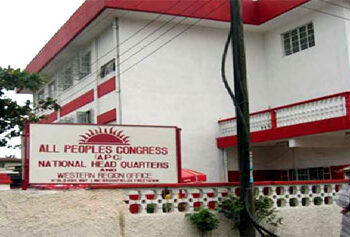
In a strongly worded press conference held this afternoon at the APC headquarters in Freetown, Secretary General Lansana Dumbuya declared that the party would no longer participate in national or local government structures as long as Mr. Alpha holds his position.
This dramatic step would see all APC-affiliated elected officials, including Members of Parliament, Councillors, Mayors, and other representatives, boycotting parliamentary sessions, council meetings, and related administrative responsibilities across the country.
“The APC will not lend legitimacy to a broken system,” Dumbuya told journalists. “We remain fully committed to defending constitutional governance and the integrity of our electoral process through peaceful and lawful means.”
He added that the party is still open to genuine dialogue with the authorities, but only if it is conducted in good faith.
The announcement intensifies a months-long controversy surrounding Mr. Alpha’s appointment. Edmond Sylvester Alpha was nominated and confirmed by Parliament in mid-March 2026, despite fierce objections from the APC, civil society organizations, and legal experts. The opposition has repeatedly argued that the process breached established constitutional and procedural norms, compromised the independence of the ECSL, and jeopardized preparations for the critical 2028 general elections.
Prominent voices, including the Sierra Leone Bar Association, the Institute for Legal Research and Advocacy for Justice (ILRAJ), and various civil society coalitions, have labeled the appointment unlawful and procedurally defective. The APC had previously issued a 48-hour ultimatum for reversal—ignored by the government—before Parliament proceeded with confirmation during sessions the opposition chose to boycott.
Yesterday’s scalation could significantly disrupt legislative business, local administration, and service delivery in APC-stronghold areas. Political analysts warn that a sustained boycott combined with planned nationwide protests, described by the party as peaceful, risks deepening national divisions and attracting renewed international scrutiny, particularly following earlier diplomatic interventions on electoral matters.
The ruling Sierra Leone People’s Party (SLPP) government has yet to issue an official response to the APC’s latest position. Mr. Alpha, who has recently reached out to political stakeholders in an effort to build bridges, has not commented publicly on the renewed calls for his removal.
As Sierra Leone navigates rising political tensions ahead of the 2028 elections, today’s developments represent one of the most serious challenges to political stability in recent years, with both the opposition and government framing their stances as fundamental to safeguarding democracy.