



































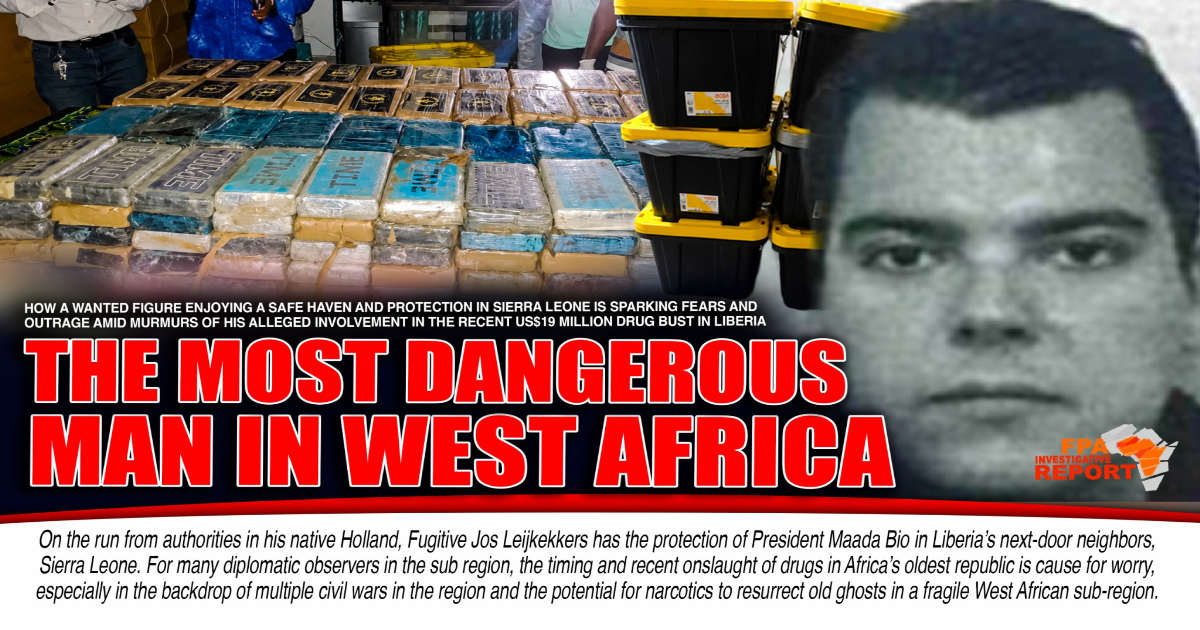
A major cocaine seizure in neighbouring Liberia has intensified regional concerns about drug trafficking networks operating across West Africa, with Sierra Leone and Dutch fugitive drug trafficker Bolle Jos Leijdekkers once again attracting international attention.
Liberian authorities last week intercepted approximately 237.6 kilograms of cocaine, valued at an estimated US$19 million, at Roberts International Airport near Monrovia. The drugs, concealed in cargo boxes and compressed into 198 packages, were reportedly destined for Europe via a Brussels Airlines flight.
The discovery has triggered a high-level investigation involving Liberia’s security agencies, while authorities in the Netherlands and Belgium are reportedly monitoring developments amid allegations linking regional trafficking activities to networks associated with Leijdekkers.
Sierra Leone-Liberia Border Under Increased Scrutiny
Security analysts have long identified the Sierra Leone-Liberia corridor, particularly the Bo Waterside border crossing, as a vulnerable route for transnational criminal networks moving narcotics across West Africa.
The latest seizure has renewed concerns about the movement of illicit drugs between the two neighbouring countries, especially as international law enforcement agencies continue efforts to locate Leijdekkers, who is regarded as one of Europe’s most wanted fugitives.
According to reports by Liberian media outlet FrontPage Africa, some Western diplomats believe Leijdekkers has moved between Sierra Leone and Liberia in recent months, although authorities have yet to publicly provide evidence linking him directly to the latest cocaine seizure.
International Attention Focuses on Leijdekkers
Leijdekkers has been convicted in Europe for major cocaine trafficking offences and remains the subject of extradition requests from Dutch authorities.
Reports indicate that Dutch and Belgian officials are seeking greater cooperation from regional security agencies as part of wider efforts to dismantle international drug trafficking networks operating across West Africa.
His reported presence in Sierra Leone has previously generated diplomatic concern among European governments and international law enforcement agencies.
Liberia Launches National Security Probe
Liberian President Joseph Boakai has described the cocaine seizure as a serious national security threat and pledged that all those responsible will be brought to justice.
Speaking on the matter, Boakai stressed that Liberia would not become a transit point or safe haven for international drug trafficking syndicates.
Liberia’s Ministry of Justice, the Liberia Drug Enforcement Agency (LDEA), the National Security Agency, customs officials, immigration officers and airport security personnel have all been tasked with investigating the case.
Authorities say the investigation will focus on both those directly involved in the shipment and the broader criminal networks that facilitated the operation.
Growing Regional Concerns
Security experts warn that the size and sophistication of the US$19 million cocaine shipment suggest the involvement of an organised transnational network with access to transportation, logistics and financial systems across multiple countries.
As investigations continue, regional attention is expected to remain focused on trafficking routes linking Liberia and Sierra Leone, while international pressure mounts for stronger action against organised drug crime and fugitives such as Bolle Jos Leijdekkers.
The outcome of the Liberian investigation could have far-reaching implications for security cooperation and anti-narcotics efforts across West Africa.