











































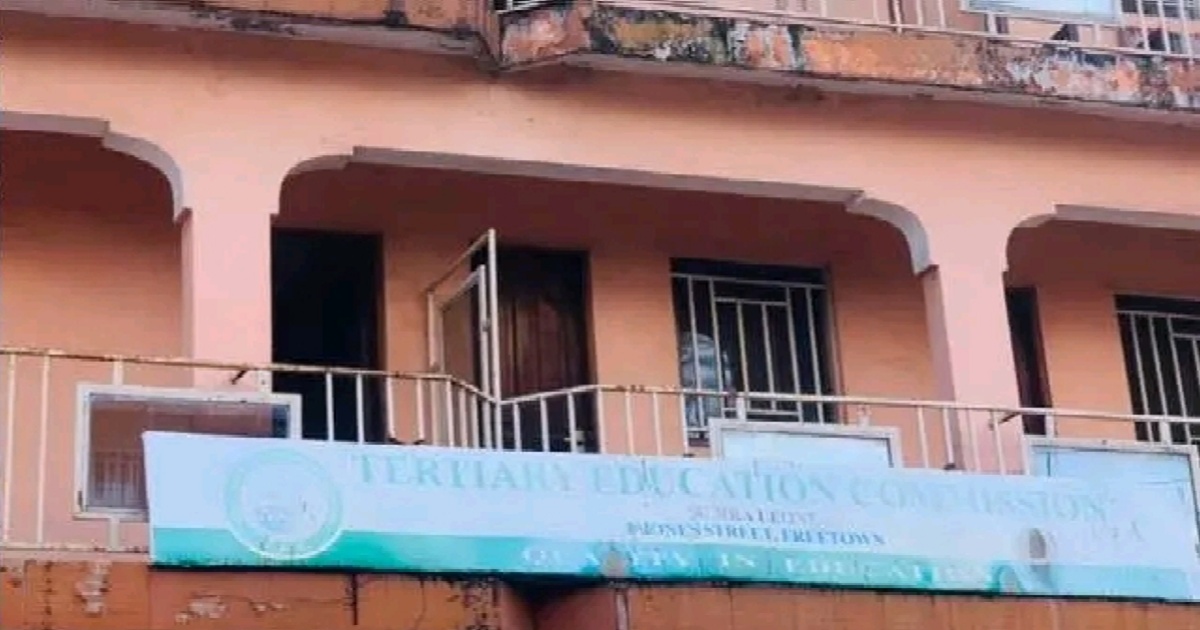
Freetown, Sierra Leone – July 17, 2026 — The Tertiary Education Commission (TEC) has issued a stern warning to operators of unaccredited tertiary institutions and those offering unapproved academic programmes, vowing a nationwide enforcement drive to restore integrity to the country’s higher education sector.
In a press release dated today, the Commission stated that such operations violate the provisions of the newly enacted Tertiary Education Commission Act, 2025. Offenders risk severe penalties, including heavy fines, suspension or revocation of programmes, imprisonment, and outright closure of institutions.
“The Commission will soon commence a massive nationwide crackdown on illegal institutions and even accredited ones running unapproved programmes,” the release said. It urged all affected institutions to immediately regularise their status with the TEC to avoid sanctions.
Background and Context
This latest move builds on the TEC Act 2025, passed by Parliament in February 2025, which repealed the older 2001 legislation and significantly strengthened the Commission’s regulatory powers. The new law aims to modernise oversight, align with international best practices, and tackle longstanding challenges such as the proliferation of unaccredited “universities,” fake degrees, and substandard programmes that have undermined public confidence in Sierra Leonean qualifications.
Sierra Leone has grappled with issues of academic fraud for years. Past incidents, including warnings against institutions like the Dominion Christian College and African Graduate University (AGU) in 2022, highlighted how unaccredited entities awarded unrecognised certificates and degrees. Joint statements from the Ministry of Technical and Higher Education, TEC, and other bodies at the time emphasised that such qualifications hold no value for employment or further study in the country.
Why This Matters
Education stakeholders say the crackdown is critical for protecting students and safeguarding the credibility of Sierra Leone’s tertiary qualifications both domestically and internationally. Unaccredited programmes often lack proper faculty, infrastructure, and curricula, leaving graduates at a disadvantage in the job market.
Parents, prospective students, and the public are advised to verify the accreditation status of any institution or programme through the TEC before enrolling or accepting certificates.
The Commission has called for full compliance and indicated that further details on the enforcement timeline and inspection processes will be released soon. Institutions seeking to regularise their operations are encouraged to contact the TEC Secretariat directly.