




























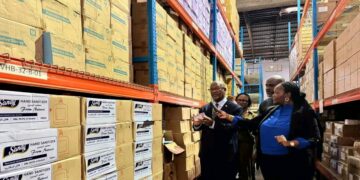

























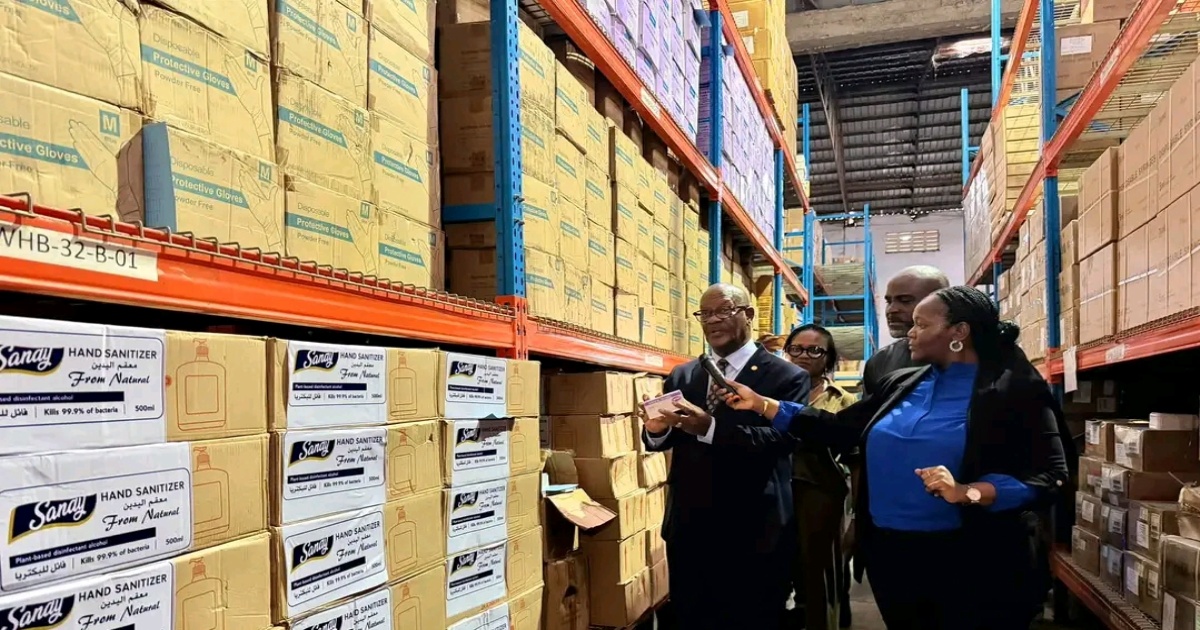
Freetown — The Government of Sierra Leone, through the Ministry of Health, has unveiled essential medicines and reproductive health supplies valued at US$2 million.
The commodities, now stored at the National Medical Supplies Agency (NMSA), are set for nationwide distribution to health facilities.
The supplies are intended for critical maternal and child health interventions, including Caesarean sections, normal deliveries and emergency care.
Officials said the medicines are specifically selected to tackle the leading causes of maternal and child deaths in the country: high blood pressure (hypertensive disorders), malaria, postpartum bleeding (haemorrhage) and sepsis or infection.
Minister of Health Dr. Austin Demby described the investment as evidence of the government’s ongoing commitment to safeguarding essential health services for women, children and families.
“This investment demonstrates Government’s continued commitment to protecting critical health services for women, children and families across Sierra Leone,” he said.
The procurement forms part of the Ministry’s broader efforts under the 300 Days of Activism for the Triple Zeros campaign. Launched in March 2026 with presidential backing, the initiative aims to achieve zero preventable maternal deaths, zero preventable infant and child deaths, and zero zero-dose children through intensified daily action, stronger accountability and improved service delivery.
Distribution of the new stock will be closely tracked from NMSA warehouses to health facilities as a key accountability measure designed to prevent diversion or misuse. The NMSA, established by Act of Parliament in 2017, is the public agency responsible for the transparent procurement, warehousing and distribution of drugs and medical supplies to public health institutions nationwide.
Sierra Leone has recorded progress in reducing maternal mortality in recent years, though rates remain among the highest globally. Haemorrhage, hypertensive disorders and infections continue to account for a substantial share of maternal deaths, underscoring the importance of reliable access to life-saving commodities at the point of care.
Ministry officials indicated that the supplies will support ongoing improvements in emergency obstetric care and help sustain gains under the Free Health Care Initiative for pregnant women, lactating mothers and children under five.
Further details on the exact composition of the consignment and the rollout schedule are expected as distribution begins.