


















































Sierra Rutile Limited, now fully owned by the Leone Oil Company, has announced plans to reduce its workforce as part of a restructuring process aimed at cutting operational costs and stabilising the company’s finances.
The proposed redundancy exercise comes as the mining firm grapples with declining investment returns and mounting global economic challenges affecting the minerals sector.
Leone Oil Company acquired full ownership of Sierra Rutile Limited from Australia-based Iluka Resources in 2024, making the rutile producer entirely Sierra Leonean-owned.
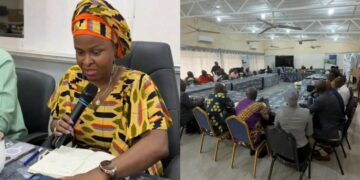
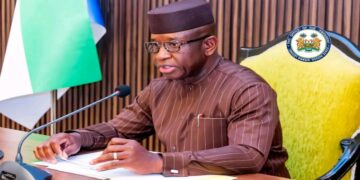
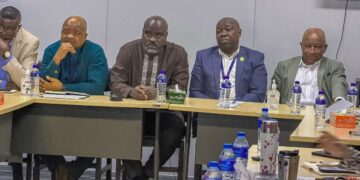
On Tuesday, a delegation from the Ministry of Employment, Labour and Social Security, led by Deputy Minister Lansana Dumbuya, met with management and workers at Sierra Rutile to discuss the planned layoffs and ensure the process complies with labour regulations.
Addressing workers during the engagement, Dumbuya said the government’s role was to protect the interests of both employees and management while promoting dialogue throughout the exercise.
He explained that the ministry was not involved in the company’s financial decisions but was responsible for ensuring that any redundancy process is carried out fairly and in line with the law.
According to information presented to the ministry, Sierra Rutile had earlier projected the need for significant cost-cutting measures. The company previously planned to reduce its workforce from more than 2,000 employees to about 1,000.
Officials disclosed that 468 workers were laid off in 2024, while the current restructuring could affect 213 junior staff, 80 senior staff, and 46 management personnel.
Dumbuya said difficult economic realities have forced many companies globally to reorganise their operations, noting that businesses must remain financially viable to survive.
He assured employees that the redundancy process would be conducted under the provisions of Section 82 of the Employment Act 2023 and the Mining Collective Bargaining Agreement Gazette.
Deputy Director of Labour and Employment Abdulai Conteh stated that management had formally notified the ministry in accordance with legal requirements, triggering consultations with workers and stakeholders.
Conteh described redundancy as a recognised labour procedure under Sierra Leone’s employment laws and said the ministry’s responsibility was to ensure workers’ rights and benefits are protected throughout the process.
Meanwhile, Secretary General of the Workers’ Union, Ahmed MK Josiah, welcomed government intervention but criticised management for failing to communicate the planned layoffs earlier.
He noted that similar redundancy exercises took place in 2017 and 2024, adding that earlier engagement with workers would have allowed employees to better prepare for the situation.
Some workers also raised concerns over changes to staff benefits and operational policies introduced after the company came under new ownership.
Responding to the concerns, Sierra Rutile Chief Executive Officer Lima Suffian Kargbo said the decision was necessary to prevent the company from collapsing under rising operational costs.
Kargbo revealed that the company spends about $2.5 million monthly on fuel and another $1.8 million on logistics, including transportation and staff-related provisions, despite low returns on investment.
He said the restructuring would affect roughly 24 percent of general staff, 35 percent of senior staff, and 46 percent of management employees.
According to the CEO, the redundancy process is expected to be completed before the end of May, allowing the company to resume operations on a reduced scale in June.
The meeting ended with assurances from labour officials that all affected employees would receive their full redundancy packages as required by law, while government pledged to continue mediating between workers and management to ensure a peaceful process.