





















By Dr. Doma
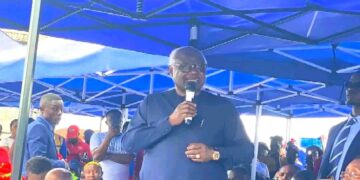
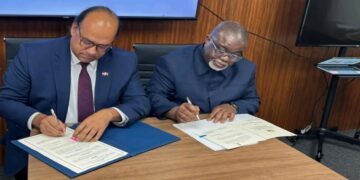
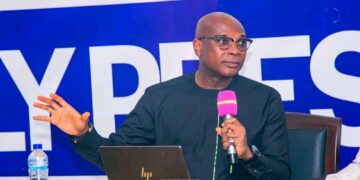
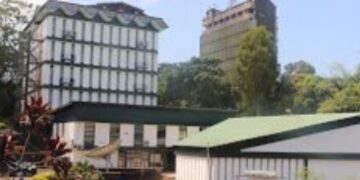
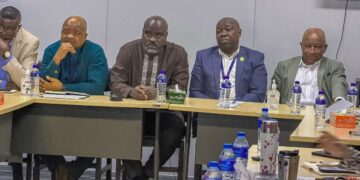
The Indian High Commission in Freetown on Wednesday invited journalists to a press conference at its Wilkinson Road chancery, delivering a message that was both diplomatic and deeply human.
At the centre of the briefing was the announcement of a three-days exhibition on *”The Human Cost of Terrorism”* from the 21st,22nd and 23rd November 2025, an event the High Commissioner described as a space for reflection, learning and shared global responsibility.
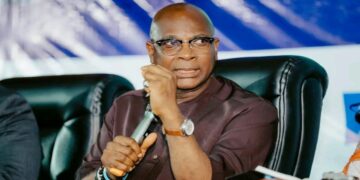
Speaking with a tone that blended firmness and empathy, the High Commissioner reminded the audience that terrorism is not just a geopolitical challenge but a lived human tragedy.
He noted that behind every statistic are families broken, communities displaced and futures altered.
“We often count the dead,” he said quietly, “but rarely count the futures stolen.” He walked journalists through some of the major terrorist attacks that have shaped the global consciousness over the last four decades, from the Air India Flight 182 bombing to the 9/11 attacks the East Africa embassy bombings, and the waves of attacks in Europe the Middle East, and parts of Asia.
These attacks, he stressed, did not only trigger new laws or security protocols; they changed lives in ways that are still felt today.
The High Commissioner reflected emotionally on India’s own scars, citing decades of cross-border terrorism and most recently, the Pahalgam attack of April 2025, which claimed the lives of 26 tourists.
He explained that such tragedies strengthen India’s resolve, inspiring initiatives like Operation Sindoor, a multi-layered effort to improve intelligence coordination, deepen international cooperation and enhance the country’s internal security architecture.
“We have mourned” he said, “but we have also learned. And we continue to stand firm.”
Drawing parallels with Africa’s experience he acknowledged that the continent has long faced its own waves of extremism from Boko Haram in Nigeria to Al-Shabaab in East Africa and ISIS-affiliated groups across the Sahel. He noted that although Sierra Leone remains one of the more peaceful nations in the region the threats affecting its neighbours make regional cooperation essential.
He commended Sierra Leone’s progress, referencing the National Counter-Terrorism Act (2024) and the establishment of the National Counter-Terrorism Coordination Committee as strong steps toward preparedness and resilience.
The High Commissioner also highlighted a moment of solidarity that resonated with him personally: the Sierra Leone Parliament’s condemnation of terrorism during the visit of India’s All-Party Parliamentary Delegation in May 2025.
He described the gesture as “more than diplomacy,” calling it an expression of shared values between the two nations.
He extended gratitude to the Government of Sierra Leone and the country’s vibrant media landscape for continuing to amplify conversations around peace, stability and development.
He emphasised that the fight against terrorism cannot rest solely in the hands of governments or security agencies. Teachers, religious leaders, artists, community elders, youth, journalists and civil society all play vital roles in shaping narratives that counter hatred, violence and extremism.
“Terrorism grows in the cracks of society,” he said. “Unity is what seals those cracks.”
He invoked the words of India’s Prime Minister, Narendra Modi, who has repeatedly stated that terrorism “has no borders, no values and no humanity,” urging nations not to differentiate between so-called “good” and “bad” terrorism.
The exhibition, he explained is India’s attempt to create a space where Sierra Leoneans can observe, ask questions and engage with stories that show how terrorism affects ordinary people across the world. “This exhibition is not just India’s story,” he concluded. “It is a story shared by all nations that desire peace, dignity and a secure future for their children.”
With that message, the High Commission closed the briefing but opened a much larger dialogue one that invites Sierra Leoneans to reflect on the human cost of terrorism and to stand united in the global effort to safeguard peace.
Questions and answers session climaxed the press briefing.