












































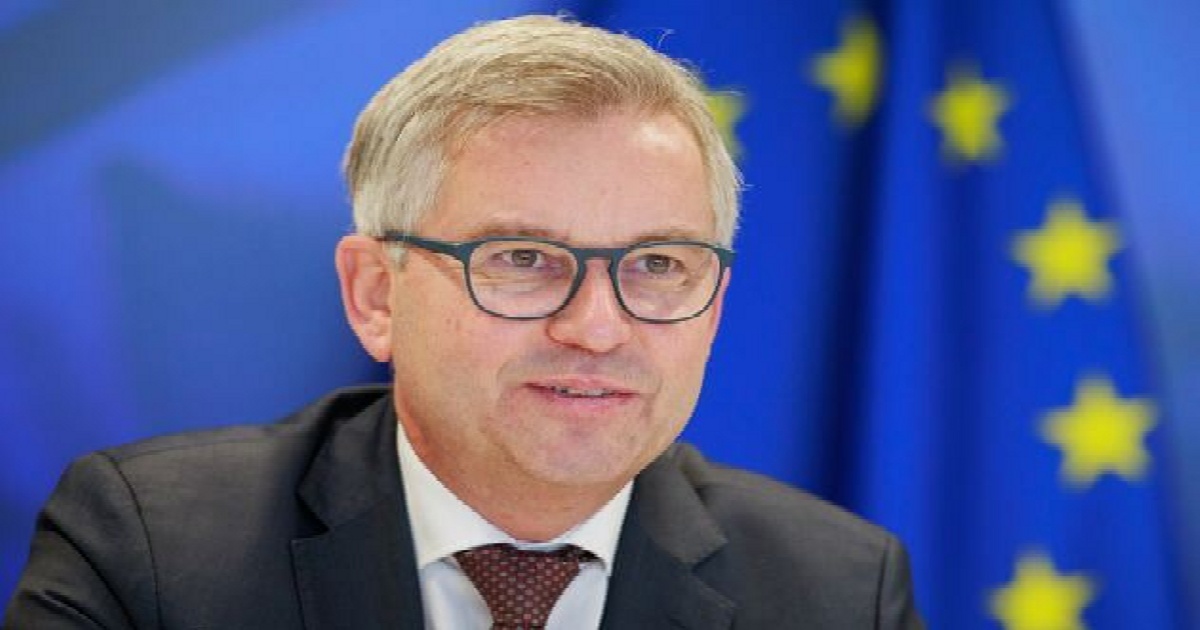
FREETOWN, Oct 2, 2026 — The European Union Commissioner for Internal Affairs and Migration, Magnus Brunner, says the current hold on EU budget support to Sierra Leone is due to technical reasons and not linked to allegations that the country is harbouring Dutch cocaine fugitive Jos Leijdekkers.
Brunner spoke on Thursday in Luxembourg after a meeting of EU Justice and Home Affairs Ministers where Sierra Leone and drug trafficking were raised.
“I think what we need is action against third countries that harbour drug traffickers,” Brunner told reporters. “We are concerned as a European Union about drug trafficking and transnational crime and organized crime trends in Sierra Leone.”
But he was categorical on the aid question: “When it comes to the suspension of the support, that’s due to technical reasons.”
His clarification contradicts claims made earlier in the day by Dutch Justice Minister David van Weel, who told Dutch paper De Telegraaf that the European Commission had frozen €18 million meant for this year to pressure Freetown to extradite Leijdekkers, known as “Bolle Jos.
The Government of Sierra Leone had earlier explained that the Commission communicated its decision in July 2026, long before this week’s row. According to Freetown, the Commission said Sierra Leone submitted its request to amend the Financing Agreement late, making it difficult to complete all assessments within the 2026 cycle.
The Commission therefore proposed rescheduling: moving the 2026 payment of €18 million to 2027, and the 2027 payment to 2028. The Government says EU officials in Freetown later confirmed the decision was not about any individual case.
The budget support is part of the €325 million grant package the EU committed to Sierra Leone under its 2021-2027 Multiannual Indicative Programme for governance, education, and green economy.
Why Sierra Leone Is Still Under Spotlight
Even with Brunner’s clarification, concern about Leijdekkers remains high in Brussels.
Leijdekkers, 34, from Breda, was sentenced to 24 years in the Netherlands in June 2024 for smuggling over 7 tonnes of cocaine and for ordering a hit. He is one of Europol’s most wanted.
Dutch authorities say he has been in Sierra Leone since at least 2023 and have formally requested extradition. Sierra Leone has not confirmed his presence, saying all such requests are handled under national law.
A Dutch diplomat at the Luxembourg meeting, speaking anonymously to international media, insisted the matter was still a “significant concern” and said Minister Van Weel will push for a new EU sanctions regime for cross-border organised crime — a framework the Commission unveiled in July to target drug trafficking, migrant smuggling and money laundering.
The EU Delegation in Freetown is yet to issue a formal statement, but Brunner’s comments are likely to calm fears of a full aid cut over the Bolle Jos affair.