





























Freetown, 5 November 2026 – The Sierra Leone Teachers Union (SLTU) has provided a detailed update on ongoing negotiations with the government for a new Collective Bargaining Agreement (CBA) aimed at improving teachers’ salaries and conditions of service, stressing progress on non-salary issues while calling on members to remain patient as salary talks continue.
In a press release dated 4 November 2026 signed by Secretary General Morris S. Conteh, the SLTU Head Office outlined the composition of the negotiating panels and the timeline of discussions so far.
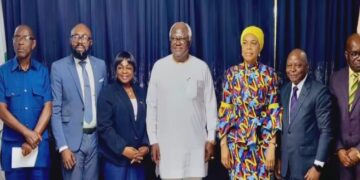
The Employees/Union/Teachers Panel is led by SLTU President Ibrahim Bankapoma Kargbo and includes regional vice presidents (James B. Nernoh – East; Theresa A. Saccoh – West; Isata Bangura – North; Rev. Umaru Lahai Koroma – South), women’s representatives Memunatu E. Kamara and Hawa Kamanda, representatives from the Conference of Principals of Secondary Schools (CPSS), National Council of Head Teachers (NaCOHT), Council of Heads of Technical and Vocational Institutions (CHTVI), Nursery Schools Association (NSA), Conteh himself, and Deputy Secretary General Alieu Deen-Conteh. Additional members include the President of the Inter-Religious Council and a representative from the Human Resource Management Office.
The Employer’s/Government Panel comprises the Chief Education Officer (Ministry of Basic and Senior Secondary Education), Financial Secretary and Accountant General (Ministry of Finance), Chief Executive Secretary of the Wages & Compensation Commission, and the Chairperson and Secretary of the Teaching Service Commission.
According to the release, SLTU leadership presented the proposed new CBA—containing proposed salaries and conditions of service for teachers in basic and senior secondary education—to the Minister of Basic and Senior Secondary Education on Monday 21 September 2026. A planning meeting followed on 28 September at which both panels agreed to separate the issues into non-salary and salary items.
On 19 October 2026 the non-salary items were discussed and finalised. These cover: duration and application of the agreement; recognition of rights; engagement, tenure of office and register of teachers; leaves; vacancies, promotions and transfers; redundancy compensation; operation of schools; class size/workload; termination of service; rights of the employer; evaluation and professional autonomy; provision for settlement of disputes/grievances; and end-of-service/gratuity benefits, retirement and pension.
It was agreed that the Ministry of Finance, Ministry of Basic and Senior Secondary Education, Teaching Service Commission and Wages & Compensation Commission would examine the union’s proposed salary increase before the next joint meeting. The SLTU said it is awaiting that meeting to discuss and agree the government’s salary offer. Negotiations are expected to conclude by the end of 2026, with any agreed salaries to be included in the 2027 financial year budget.
The union emphasised that its proposed CBA prioritises the harmonisation of salaries rather than a simple percentage increase.
“Against this background, the Union is appealing to its membership to exercise patience until the negotiations are concluded and a new Collective Bargaining Agreement, which includes improved salaries and conditions of service, is signed between the government and the union,” the release stated.
The update comes amid longstanding concerns over teachers’ pay and welfare. SLTU President Kargbo has previously noted that around 60 percent of teachers—mostly in lower grades—receive a net monthly salary of about NLe 1,500, while some head teachers earn around NLe 2,500 (roughly US$100 at recent exchange rates). Although nominal salaries have risen by about 75 percent since 2018, and a previous three-year agreement delivered a 45 percent increase in 15 percent annual tranches, the union argues that inflation and the declining value of the leone have eroded real living standards.
Only about 36,000 of an estimated 77,000–80,000 teachers are on the government payroll, with many others working as volunteers or paid irregularly by communities or private sources. School subsidies remain low (NLe 10 per primary pupil per term, higher for secondary levels) and have not kept pace with costs, while delays in payments, shortages of teaching materials and other operational issues have prompted industrial action, including a nationwide strike in late October 2026 focused on subsidies, welfare and learning materials.
The Wages and Compensation Commission, established to harmonise public-sector pay, features in both the current talks and broader debates about fairness across government institutions. Parallel salary and conditions disputes involving university lecturers (who have been on strike demanding a substantial increase and revised conditions of service) underscore the wider pressure on public education funding and staffing.
The SLTU has framed the process as constructive dialogue rather than confrontation at this stage, while underscoring that improved, harmonised remuneration and clearer conditions of service are essential to morale and quality in the sector.
The next joint panel meeting on the salary component is awaited. Further updates from the SLTU are expected as talks progress toward a possible agreement before the end of the year.