













































Freetown, Sierra Leone | 16 November 2026
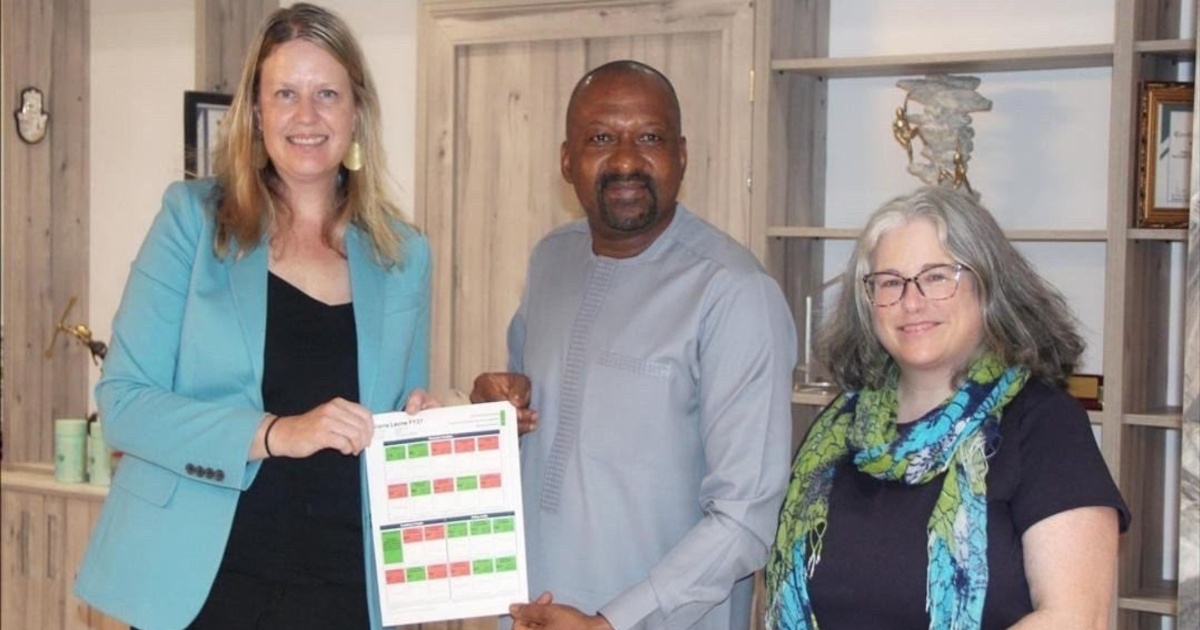
Sierra Leone has passed the United States Millennium Challenge Corporation (MCC) Fiscal Year 2027 Scorecard, securing 11 out of 22 performance indicators, an improvement from the nine indicators achieved in the previous assessment.
The latest result represents progress in the country’s performance across governance, economic management and human development, but questions remain over how these improvements will translate into tangible benefits for ordinary citizens.
According to information released by the Ministry of Information and Civic Education on 6 November, Sierra Leone also met the MCC’s mandatory requirements on Personal Freedom and the Control of Corruption and Government Accountability criteria. The country recorded two additional passes in Inflation and Business Start-Up, marking improvements in areas considered important for economic stability and private-sector development.
One of the most significant developments is the reported reduction in the inflation figure used for the assessment, which fell from more than 28 per cent to 7.6 per cent. While this represents considerable progress in controlling price increases, the bigger question for households is whether the reduction will result in more affordable food, transportation, electricity and other essential services. A lower inflation rate does not necessarily mean that prices have returned to previous levels; it means that prices are increasing at a slower rate.
The country also recorded encouraging results in governance. Sierra Leone passed five of the six indicators under the MCC’s Ruling Justly category, including Personal Freedom, Government Accountability, Control of Corruption, Rule of Law and Freedom of Information. However, Government Effectiveness remains below the required passing threshold, despite an improvement in its score. This raises important questions about the efficiency of public institutions, the delivery of government services and the implementation of national policies.
In education and economic inclusion, Sierra Leone reportedly ranked at the 97th percentile for Girls’ Primary Education Completion and the 88th percentile for Women in the Economy among countries in its income group. These results suggest progress in educational access and the legal and economic conditions affecting women’s participation. Nevertheless, the country continues to face challenges involving the quality of education, employment opportunities and the economic empowerment of women.
The assessment has also highlighted areas requiring urgent attention. Government acknowledged weaknesses in health, natural resource protection, access to credit and employment opportunities. Workforce Development was not scored because the required country data were unavailable for the assessment cycle. The Government further reported that information submitted after MCC finalised its data showed that Sierra Leone also meets the Health Expenditures requirement.
WHAT DOES THIS MEAN FOR SIERRA LEONE?
The MCC scorecard is more than an international performance ranking. It is part of a competitive process through which the United States identifies countries eligible to develop five-year development grant agreements, commonly known as Compacts.
According to MCC, its FY2027 assessment covered 104 countries, of which 36 passed and 68 failed. The assessment uses 22 independent indicators covering three broad areas: Ruling Justly, Investing in People and Economic Freedom.
Importantly, passing the scorecard does not automatically guarantee funding. MCC’s Board of Directors considers a country’s overall performance, additional policy information, potential economic growth opportunities and the availability of funding before making final selection decisions. The Board traditionally considers new partner countries in December.
Sierra Leone’s progress also comes against the background of its US$494 million MCC Energy Compact, designed to support improvements in electricity access and the financial sustainability of the country’s energy sector. Its successful implementation will be an important test of whether international development partnerships can deliver lasting improvements in the lives of citizens.
Ultimately, passing 11 indicators is an achievement worth recognising, but it should not become an excuse for complacency. Sierra Leoneans will judge economic progress not simply by international scorecards, government announcements or improved statistical rankings, but by whether businesses can access affordable credit, young people can find decent employment, public hospitals function effectively, schools deliver quality education and families can afford their daily needs.
The real test of development is not how well a country performs on paper, but how much better life becomes for the people who live in it.