





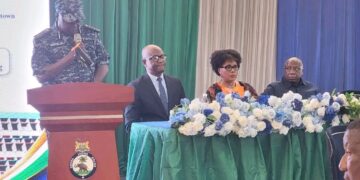













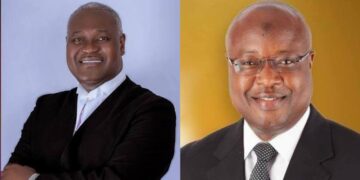
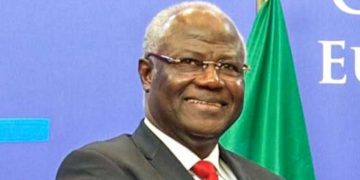
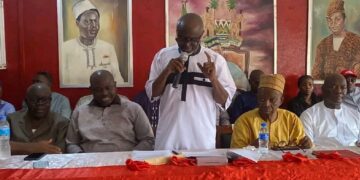
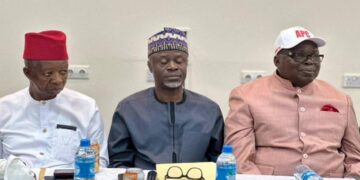




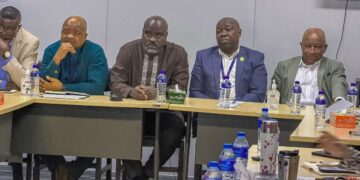






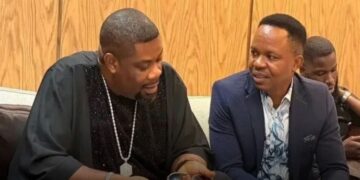


















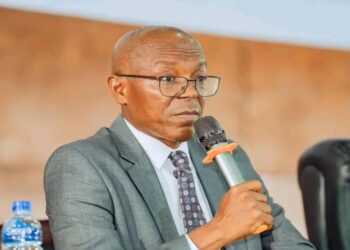
Freetown, 20 November 2025 – The Public Accounts Committee (PAC) of Sierra Leone’s Parliament, chaired by Hon. Ibrahim Tawa Conteh (who also serves as Deputy Speaker), yesterday (19 November) held a high-level engagement with key stakeholders from Local Councils at the Parliamentary Conference Room in the New Administrative Building.
The meeting focused on implementing resolutions arising from the Auditor General’s Report for 2023.
There was positive news: the PAC has already recovered more than US$2 million (equivalent to over 45 billion old Leones) in financial irregularities identified in the 2023 report. According to the Chairman, 80% of all audit queries have been successfully resolved, mainly through the recovery of unpaid withholding taxes and other statutory deductions.
However, serious challenges remain. Hon. Tawa Conteh strongly criticised the performance of the PETRA financial management system used by most councils.
He noted that the service provider is currently outside the country, causing major disruptions to revenue forecasting and collection. Only two councils managed to meet or exceed their own-source revenue targets for 2023.
The Chairman issued a stern warning: in the future, councils that fail to meet their revenue targets will risk having central government allocations withheld or reduced.
Another major concern raised was the frequent and abrupt transfer of council staff, which the Chairman said is seriously undermining effective operations. From now on, no staff transfers will be allowed until all outstanding audit queries in a council are fully resolved.
Augustine Sesay, Head of the PAC Secretariat, presented the key resolutions adopted by the Committee regarding the 2023 Auditor General’s Report:
1. PETRA System Inefficiencies: The PAC will summon the Public Financial Management Reforms Division (PFMRD), Ministry of Finance, Chief Administrators, Finance Officers, Chairpersons, and Mayors to address ongoing problems, including the fact that government continues to pay for ten user licences while only one or two officials can actually access the system.
2. Poor Revenue Performance: Future central government transfers to councils will be directly linked to the amount of own-source revenue each council generates.
3. Strengthening Revenue Mobilisation: Councils must prepare detailed PowerPoint presentations showing projected versus actual collection for every revenue stream (mining royalties, licences, business registration, market dues, timber, etc.) and provide clear breakdowns of how central government and donor funds were spent.
4. Staff Stability: No Local Council employee may be transferred until all audit queries in their council are fully cleared.
5. Recovery of Arrears: Councils must submit comprehensive lists of tax defaulters. The PAC will issue official letters that councils can use to summon debtors. Non-payment may lead to bank account garnishment under Sections 8 and 9 of the Finance Act 2022.
Director Lydia Kargbo of the PFMRD confirmed that 19 councils currently use PETRA and highlighted persistent challenges, including frequent server downtime. Deputy Auditor General Morie Lansana and Hon. Aaron Aruna Koroma (Deputy Opposition Leader 2) echoed these concerns, pointing to inadequate IT infrastructure as a major obstacle.
On a positive note, Director Kargbo announced that a new and improved PFM Smart System is scheduled for rollout in 2026. The PAC, PFMRD, and the Accountable Governance for Basic Service Delivery Project will collaborate to provide the necessary equipment.
The meeting concluded with a unanimous agreement to hold a follow-up session soon to resolve all outstanding issues before the 2026 fiscal year begins.
The engagement signals a clear message from Parliament: Local Councils must significantly improve financial discipline, revenue collection, and accountability, or face serious consequences for service delivery in their districts.





This website is real