













By Haroun Oluwole Zubairu
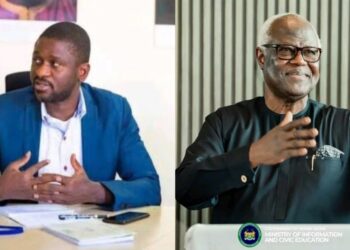
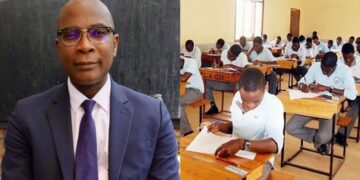
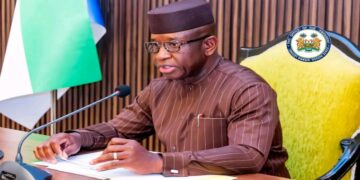
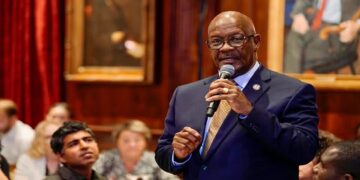
I watched Chief Minister Dr. David Moinina Sengeh’s interview with Umaru Fofana on AYV’s State of the Nation, and one particular exchange caught my attention.
When Umaru asked the Chief Minister how much he earns, his response was that he did not know.
Chief Minister, respectfully, how can one of the most senior officials in Sierra Leone not know approximately how much he earns?
I am not suggesting that you must remember every allowance or every deduction on your payslip. But you accepted the position. You receive a salary. You have financial records. And you are one of the people responsible for coordinating government delivery.
So when Sierra Leoneans ask, “How much does our Chief Minister earn?”, that should not be an impossible question to answer.
But this becomes even more troubling when we compare it with what is happening in our education system.
The President of the Sierra Leone Teachers Union recently stated that government provides only NLe10 per child, per term as school subsidy and called for it to be increased to NLe100.
NLe10 is roughly 40 US cents.
Now put that into perspective.
As of September 8, the official price of one litre of petrol in Sierra Leone is NLe40.
That means:
ONE LITRE OF PETROL = THE ENTIRE TERM SUBSIDY FOR FOUR PUPILS.
Think about that carefully.
A pupil receives NLe10 for an entire school term.
One litre of petrol costs NLe40.
In fact, even if you calculate three school terms at NLe10 each, that is only NLe30 for one pupil for the entire academic year — still less than the cost of one litre of petrol.
How can we seriously talk about Free Quality Education under those circumstances?
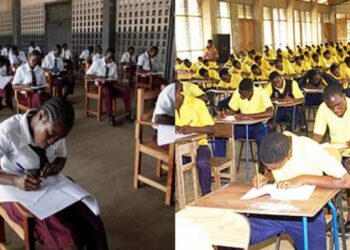
How does a school pay for basic teaching materials, administration, maintenance and other necessities when the allocation is NLe10 per child per term?
Then there is the issue of teachers.
The Teaching Service Commission’s July 2026 payroll dashboard shows 36,374 staff on the government teacher payroll. A broader TSC count lists 83,033 teachers across government, mission, community and private schools. Those figures are not exactly the same category, so we should not pretend government is expected to pay every one of the 83,033—but they still raise an important question about how many teachers serving our children remain outside the government payroll and under what conditions they are working.
Teachers are struggling.
Schools are asking for adequate and timely subsidies.
Parents are struggling.
Students are struggling.
And in the middle of all of this, one of the most powerful officials in government is asked:
“How much do you earn?”
And the answer is:
“I don’t know.”
Chief Minister, you frequently speak about data, delivery and accountability.
Then those principles must also apply to government itself.
If government can calculate NLe10 for a Sierra Leonean child for an entire school term, surely a senior government official should be able to tell the people approximately how much he earns.
How much does the Chief Minister earn?
How much do ministers earn?
What allowances and benefits come with these positions?
How many qualified teachers are still waiting to be placed on government payroll?
Why are schools struggling with inadequate subsidies?
And perhaps the most powerful question of all:
How can one litre of petrol be worth the school subsidy of four Sierra Leonean children for an entire term?
This is not about APC versus SLPP.
It is about national priorities.
It is about transparency.
It is about accountability.
Our leaders should know what government spends.
They should know what government spends on them.
And they should be prepared to explain it to the Sierra Leonean people.
One litre of petrol: NLe40.
One pupil for an entire term: NLe10.
That comparison alone should make all of us ask:
What are our priorities as a nation?
We can do better, Sierra Leone.