















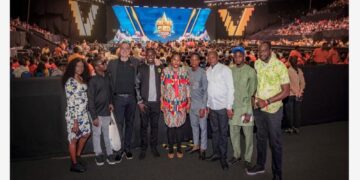

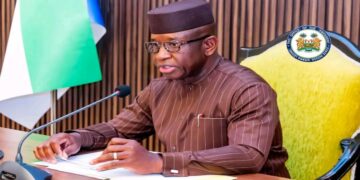
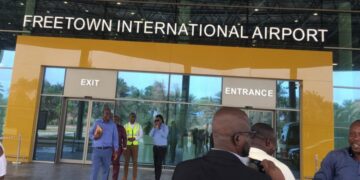
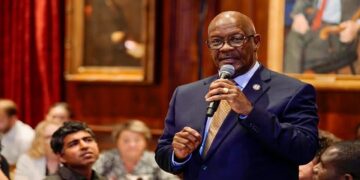














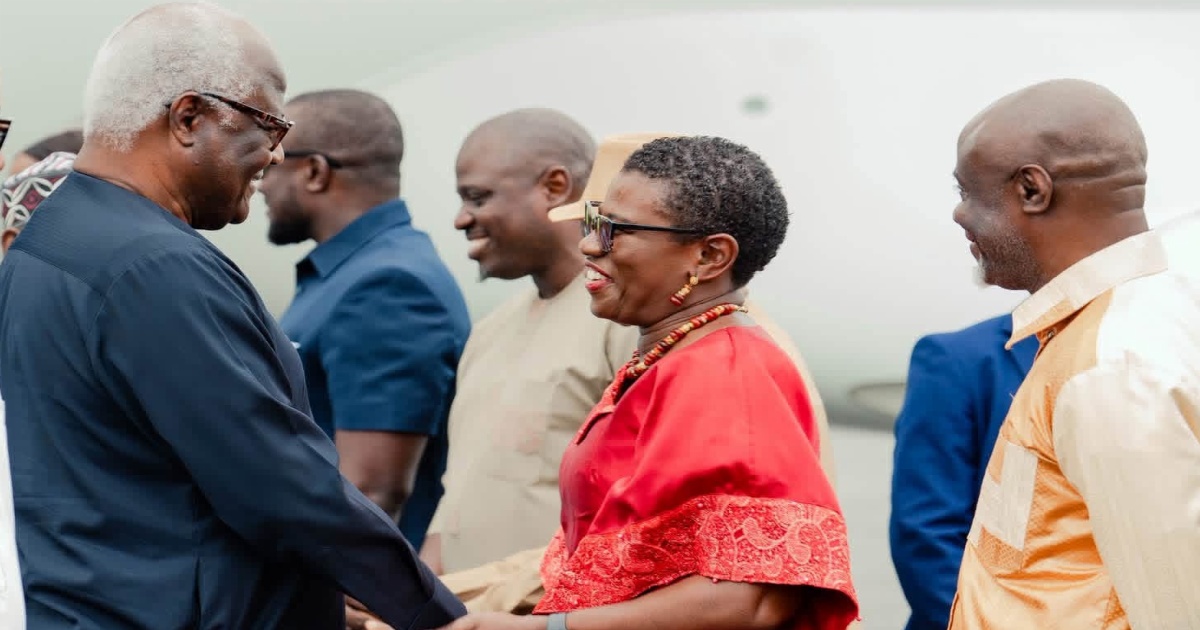
On Sunday 6 September 2026, former President Ernest Bai Koroma stepped back onto Sierra Leonean soil after more than two years away.
Accompanied by Nigerian elder statesmen including Olusegun Obasanjo and Foreign Minister Bianca Odumegwu-Ojukwu, and received by Sierra Leone’s Foreign Minister Mohamed Rahman Swarray along with APC officials, the 72-year-old former head of state offered a simple, smiling message: “Today I have come back home, and I’m happy.”
The homecoming followed the Bio government’s decision in July 2026 to discontinue treason and related charges against him, linked to the deadly November 2023 attacks on military sites, prisons and police stations that killed 21 people and freed hundreds of inmates. Koroma had left for Nigeria in January 2024 on medical grounds after a court granted permission; what began as a three-month stay stretched into a prolonged political exile under regional diplomatic cover. The charges, which he and his lawyers consistently rejected as politically motivated, were dropped without a detailed public explanation from the Attorney-General’s office.
For ordinary Sierra Leoneans, especially those who lived through the post-2023 tensions, the disputed elections, parliamentary boycotts and the uneasy Agreement for National Unity, the return carries layered meaning. It is personal for APC strongholds in the North and parts of the West. It is political for a party that has spent years in opposition since losing power in 2018. And it is national for a country still navigating fragile stability ahead of the 2028 general elections.
A Dominant Figure Re-enters the Stage
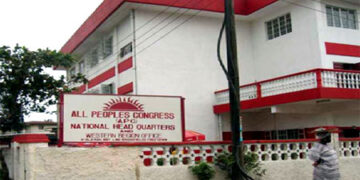
Koroma remains the most consequential living figure in the All People’s Congress. He led the party back to power in 2007, won re-election in 2012, and guided it through the difficult transition after the civil war. Even after leaving State House, he continued as a central influence within the APC. His prolonged absence left the party without its clearest centre of gravity during a turbulent period that included the contested 2023 presidential and parliamentary results, internal organisational challenges, and ongoing legal and regulatory pressures from the Political Parties Regulation Commission.
His physical presence changes the atmosphere. APC supporters see a unifying symbol who can help settle internal contests, boost morale among the base, and project seriousness toward 2028. Analysts note that the party will press for him to play an active role rather than retreat fully into elder-statesman status. At the same time, some observers suggest he may lean toward national reconciliation and advisory influence rather than day-to-day partisan combat. Either path carries weight: a visible Koroma still shapes messaging, candidate selection dynamics, and the party’s ability to mobilise.
The APC is not a monolithic machine. Recent internal elections, court injunctions affecting senior officers, debates over eligibility of potential flagbearers, and the search for a candidate who can unite technocratic, reformist and traditional constituencies show real strains. Figures associated with past leadership contests and newer aspirants continue to jockey for position. Koroma’s return does not automatically resolve those contests, but it can provide cover, legitimacy and a steadying hand if he chooses to exercise it.
What “Return to Power” Would Actually Require
Sierra Leone’s politics remain defined by the bipolar contest between the APC and the ruling Sierra Leone People’s Party. The SLPP holds a parliamentary majority and the presidency under Julius Maada Bio, whose second term ends in 2028. Demographic trends favour the Southeast, traditional SLPP territory, while the APC retains strength in the North and competitive positions in the West and other swing areas. Recent electoral reforms lowering the presidential victory threshold and adjusting other rules have been contested by the opposition, which views them as tilted against broader consensus.
For the APC, a credible path back to State House in 2028 depends on several practical factors that go beyond one man’s homecoming:
– Internal cohesion. The party must complete its organisational processes, settle leadership questions cleanly, and present a flagbearer with national appeal who can attract votes outside core strongholds.
– Message and performance. Economic pressures, governance delivery, and public trust in institutions will matter. Voters frustrated by living costs, jobs and service delivery will weigh whether the APC offers a convincing alternative.
– Credibility of the process. Lingering grievances from 2023, questions about electoral institutions, and the need for transparent rules remain live issues. Both parties and citizens have a stake in reducing the risk of another disputed outcome.
– National mood and reconciliation. The government’s decision to drop the charges and facilitate a dignified return, framed publicly around peace and cohesion, creates an opening. Whether that opening widens into broader political de-escalation will influence the climate in which the next campaign unfolds.
Koroma’s return is widely interpreted as a confidence-building step facilitated by ECOWAS and Nigerian diplomacy. It reduces one major source of polarisation. Yet history in Sierra Leone shows that symbolic gestures alone do not guarantee durable calm or electoral success. The APC must still organise, persuade and compete.
A Moment of Possibility and Caution
For many Sierra Leoneans watching from market stalls in Makeni, crowded streets in Freetown, or villages across the provinces, the image of the former president walking free and smiling lands differently depending on political affiliation. APC supporters see vindication and renewed hope that their party can regain power after years of opposition frustration. SLPP supporters and neutral observers may view it primarily as a pragmatic step toward stability that removes a flashpoint without conceding the political field.
What is clear is that the political temperature has shifted. A major legal cloud over the main opposition’s most prominent figure has lifted. Regional actors have invested political capital in a peaceful outcome. The road to 2028 is now more open for serious contestation rather than perpetual crisis management.
Whether that translates into an APC return to power will be decided by organisation, candidate selection, policy offer, voter turnout and the integrity of the electoral process, not solely by one homecoming. Koroma’s presence gives the party a powerful asset and a reminder of its recent governing past. How the APC uses that asset, and how the broader political class manages the remaining years of this term, will determine whether Sierra Leoneans look back on September 2026 as the beginning of a genuine political reset or simply another chapter in the long cycle of rivalry between the country’s two dominant parties.
For now, the former president is home. The real work of translating that fact into political consequence begins.