










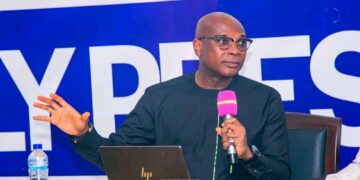






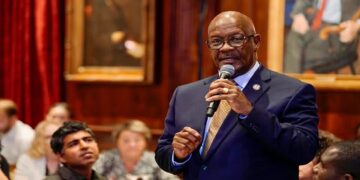
























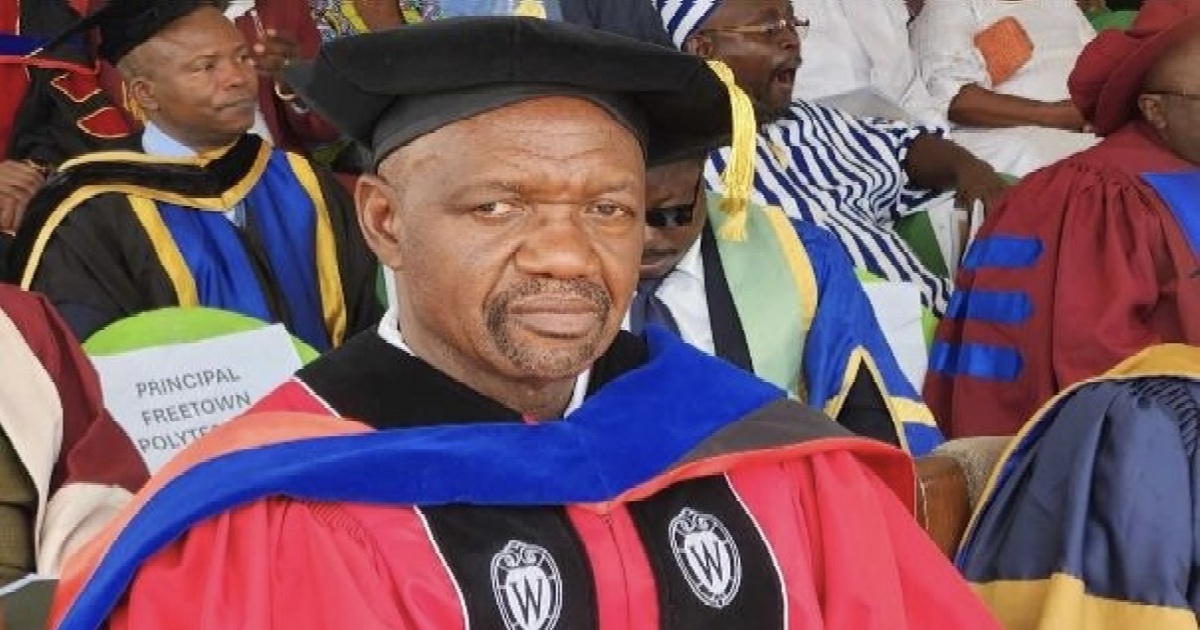
The Vice Chancellor and Principal of the University of Sierra Leone, Professor Aiah Lebbie, has expressed concern over what he describes as a growing decline in the number of students pursuing mathematics and science-related degree programmes, despite strong performances in those subjects at the secondary school level.
Speaking on the issue, Professor Lebbie noted that many students who obtain excellent grades in Mathematics and Further Mathematics during the West African Senior School Certificate Examination (WASSCE) are increasingly choosing courses outside the sciences when applying to university.
According to him, this trend is creating a shortage of future professionals in critical sectors that depend on scientific and technical expertise.
The Vice Chancellor cited instances where students with top grades in mathematics opted for social science and other non-science disciplines, describing the pattern as a mismatch between students’ academic strengths and their career choices.
He warned that if the situation continues, it could have long-term implications for Sierra Leone’s development and its ability to produce the skilled workforce needed for innovation and economic growth.
Professor Lebbie emphasized the importance of encouraging more young people to pursue careers in Science, Technology, Engineering and Mathematics (STEM), arguing that these fields are essential for addressing national development challenges and advancing technological progress.
He called for stronger career guidance programmes in secondary schools, improved support for mathematics and science education, and targeted mentorship initiatives aimed at motivating high-performing students to enroll in science-based university programmes.
Education stakeholders have previously identified factors such as inadequate mentorship, negative perceptions of mathematics, and weaknesses within the education system as challenges affecting students’ interest in STEM disciplines.
Professor Lebbie believes addressing these issues will be crucial to reversing the trend and building the next generation of scientists, engineers, researchers, and innovators in Sierra Leone.
His remarks come at a time when many countries across Africa are investing heavily in STEM education to strengthen their competitiveness in an increasingly technology-driven global economy.





This is because there no better encouragement in the teaching field