










































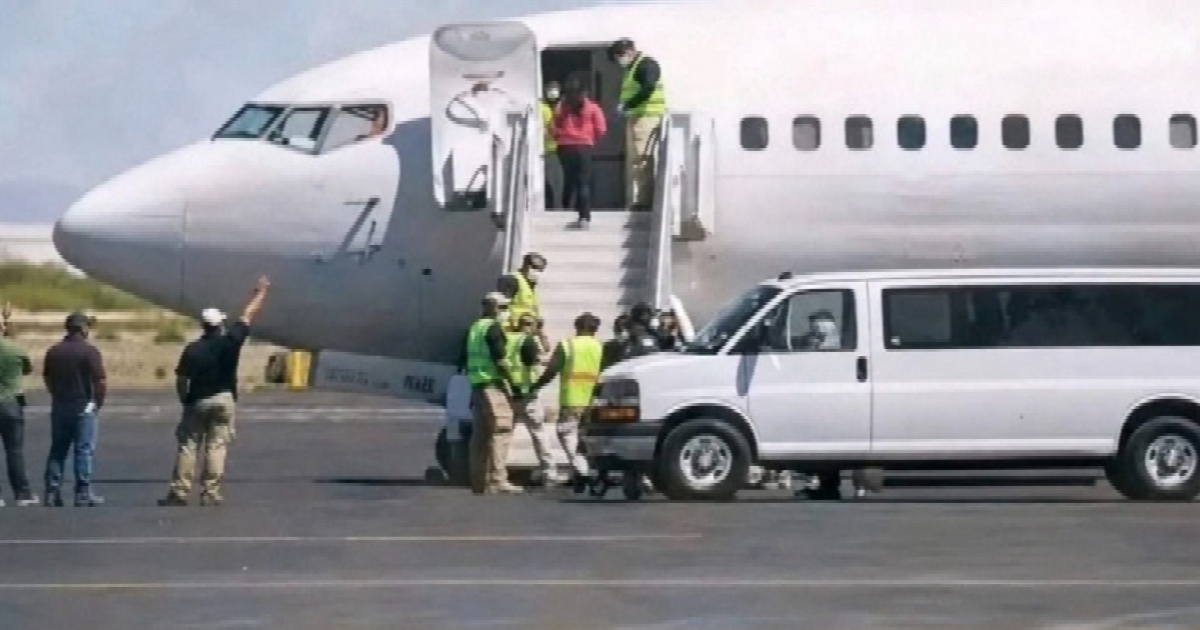
Freetown, August 1, 2026 – The third group of third-country nationals (TCNs) deported from the United States under the controversial Third Country National Agreement (TCNA) landed at Freetown International Airport on Friday, 31 July 2026.
The arrival brings the total number of people received under the deal to 32.
The latest contingent consisted of 10 ECOWAS nationals: six Ghanaians, one Liberian, one Beninese, one Nigerian and one Togolese. Nine were male and one was female.
Upon arrival, the group went through mandatory immigration and security checks involving the Sierra Leone Police (SLP), Office of National Security (ONS), Sierra Leone Immigration Department (SLID), Ministry of Health (MoH) and Ministry of Foreign Affairs and International Cooperation (MFAIC).
After processing, they were handed over to Kenvah Solutions (SL) Ltd, the private firm contracted by government to handle reception, temporary accommodation, welfare and case management under the arrangement.
So far, Sierra Leone has received 32 individuals under the US-Sierra Leone TCNA. Of these, 22 from the first and second groups have already been successfully repatriated to their countries of origin after consular and travel documents were sorted.
Kenvah Solutions continues to provide reception services, temporary housing, welfare support and case management while working with government agencies and diplomatic missions to speed up documentation and arrange onward travel.
The company says it remains committed to treating all arrivals with dignity and providing appropriate humanitarian assistance in line with the government’s obligations under the agreement.
The TCNA, signed earlier in 2026, allows Sierra Leone to temporarily host up to 300 ECOWAS nationals deported from the United States each year, with a monthly limit of 25. It is backed by a US$1.5 million grant from the American government to cover operational and humanitarian costs. The arrangement is meant to be a time-bound process ensuring safe and dignified transit for the deportees before they return home.
The first group of nine (mostly Ghanaians, Guineans, a Senegalese and a Nigerian) arrived in May, followed by a second group of about a dozen in June.
The deal has drawn criticism from some human rights groups and observers who question the treatment of people who had sought protection in the US, but Sierra Leonean authorities maintain it is a controlled, humanitarian cooperation framework limited to West African nationals.
Further groups are expected in the coming months as the programme continues.