






















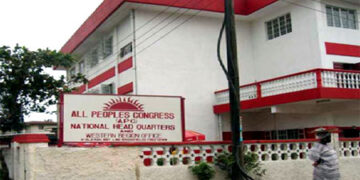




























Freetown, Sierra Leone – March 24, 2026 – Councillors of the ruling Sierra Leone People’s Party (SLPP) at the Freetown City Council have nominated an Acting Mayor to oversee municipal operations following the absence of substantive Mayor Yvonne Aki-Sawyerr of the opposition All People’s Congress (APC), whose party has withdrawn its elected officials from governance activities.
The APC’s boycott affects parliamentarians, councillors, and mayors nationwide, reflecting ongoing disagreements with the government over implementation of recommendations from the Tripartite Committee.
Central to the dispute is the proposed adoption of the Proportional Representation (PR) electoral system, which the APC says was introduced without sufficient national consultation.
SLPP councillor Moses Mambu confirmed the nomination, stating that the Acting Mayor will be presented to party leadership and central government authorities.
The interim official is expected to maintain continuity of essential municipal services until the elected mayor resumes her duties.
Political Tensions Persist
The boycott, which escalated in mid-March 2026, is linked to broader political disagreements following the 2023 elections and subsequent reform discussions.
Mayor Aki-Sawyerr has criticized what she describes as limited stakeholder engagement on electoral changes, while labour and religious groups have also expressed concerns about the reform process.
Despite the boycott, Aki-Sawyerr has remained visible in public engagements, including participating in community activities marking Eid celebrations on March 20.
Observers warn that prolonged political tensions could affect service delivery in the capital, particularly in areas such as sanitation, road maintenance, market management, and public health initiatives under the #TransformFreetown programme.
As of March 24, the identity of the nominated Acting Mayor has not been disclosed. Authorities have not indicated when the substantive mayor and other APC officials may resume participation in council proceedings.
The situation continues to attract attention from residents and civil society stakeholders concerned about governance continuity in the capital.