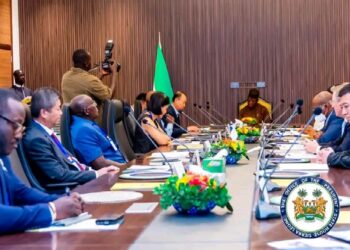



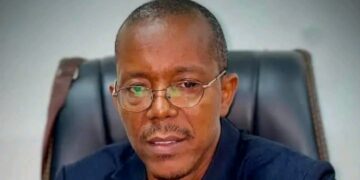



































Freetown – Sierra Leone’s Minister of Internal Affairs, Rtd. AIG Morie Lengor Esq., has called for deeper collaboration between government institutions and the Inter-Religious Council of Sierra Leone (IRCSL) in tackling drug abuse and promoting peace, security, and national cohesion.
Speaking during a meeting with IRCSL’s executive members on Tuesday, Minister Lengor described drug abuse—particularly the spread of kush—as a “silent pandemic destroying Sierra Leone’s future.”
He urged faith leaders to use their platforms to educate and intervene in communities, stressing that their influence is crucial in saving young people from addiction.
“This fight cannot be won by government alone. The voices of religious leaders are powerful in shaping society, and your involvement will go a long way in addressing drug abuse,” Minister Lengor said.
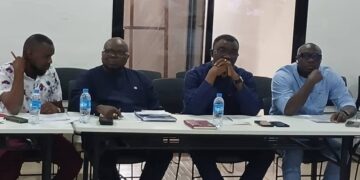
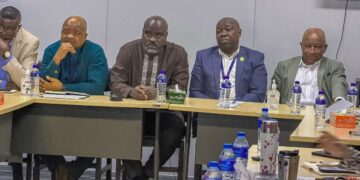
The meeting, held at the IRCSL headquarters, was the first time a sitting Minister of Internal Affairs has formally engaged with the body. IRCSL Secretary General, Rev. Jesse Fornah, welcomed the initiative and commended the Minister for recognizing the Council as a partner in peace and security efforts.
Vice President of the IRCSL, Alhaji Mutada Sesay, emphasized the Council’s wider role in conflict resolution, national cohesion, and social development.
“We are not just here to offer prayers. We have expertise and skills that can support the government’s peacebuilding and development agenda,” he said, reaffirming their commitment to collaborate.
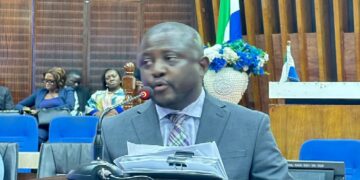
Inspector General of Police, William Fayia Sellu, also addressed the gathering, noting that the Police Force’s transition into a “Police Service” would strengthen community-oriented policing, trust, and accountability. He described the IRCSL’s involvement as “timely and essential” in addressing the rise of drug abuse.
Representing the National Drug Law Enforcement Agency (NDLEA), Ibrahim Samuel Dugba, Director of Drug Prevention, Education and Training, outlined the agency’s zero-tolerance stance on narcotics.
He stressed that engaging religious leaders was a key pillar of NDLEA’s strategy to curb substance abuse.
Discussions also included calls for reforms in police recruitment to ensure integrity among officers, the creation of a fast-track court to impose tougher sentences on drug dealers, and a stronger focus on traffickers rather than addicts, who were described as victims of the crisis.
The meeting concluded with an agreement to develop a Memorandum of Understanding (MOU) between the Ministry, the Police, NDLEA, and the IRCSL. A committee will be set up to work on the MOU and a joint strategic plan aimed at reinforcing national peace, safety, and the fight against drug abuse.