






































Freetown, Sierra Leone – January 24, 2026 – The Institute for Legal Research and Advocacy for Justice (ILRAJ), a prominent non-partisan think tank focused on human rights and democratic governance, has issued a strongly worded position paper critiquing the proposed Constitution of Sierra Leone (Amendment) Bill 2025.
In the document, ILRAJ argues that while the bill aims to introduce electoral reforms, several provisions could entrench ruling party dominance, weaken judicial independence, distort voter equality, and erode the democratic progress achieved since the end of the country’s civil war in 2002.
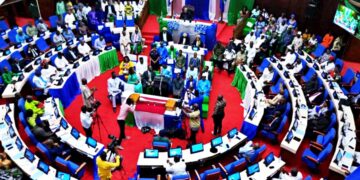
The bill, currently under pre-legislative scrutiny in Parliament, includes changes to presidential election thresholds, the adoption of proportional representation (PR) for parliamentary seats, fixed election dates, new grounds for removing the President and Vice-President, and enhanced judicial roles in election disputes.
ILRAJ’s analysis, detailed across a series of recommendations, highlights deviations from the 2024 Tripartite Committee’s proposals and warns of potential partisan manipulation if the bill passes without revisions.
“Sierra Leone stands at a critical crossroads,” ILRAJ stated in its overview. “The changes, if passed as is, could saturate electoral processes, overwhelm opposition, and secure long-term dominance for one political faction, echoing the dark lessons of the 1978 one-party amendments.”
The organization urges lawmakers to incorporate its recommendations to safeguard democratic integrity and ensure reforms reflect broad consensus rather than narrow interests.
Key Criticisms and Recommendations
ILRAJ’s position paper breaks down its concerns into specific areas, drawing on constitutional principles, past judicial rulings like the 2015 Alhaji Sam Sumana case, and international benchmarks from countries such as Kenya and Nigeria.
1. Electoral Commissioners’ Neutrality: The bill emphasizes academic qualifications and age limits for commissioners but omits safeguards against partisan appointments. ILRAJ criticizes this oversight, noting that a highly qualified but politically affiliated commissioner poses a greater threat to election credibility than a neutral one with fewer credentials. Recommendation: Implement a ban on party-affiliated individuals and a mandatory cooling-off period for former politicians.
2. Judicial Role in Election Disputes: Provisions grant petitioners only three days to challenge presidential election results and require the Supreme Court to decide cases within 14 days, with the Chief Justice notifying the Electoral Commission if no petition is filed. ILRAJ argues these timelines are unrealistically short, potentially making the right to petition ineffective, and could blur separation of powers, eroding judicial neutrality. Recommendation: Extend filing deadlines to 7-10 days, remove the Chief Justice’s notification role, and bolster judicial independence with anti-interference measures and dedicated resources.
3. Removal of President and Vice-President: New clauses allow Parliament to remove the executives by a two-thirds vote if they resign or are expelled from their electing party. While codifying aspects of the Sam Sumana ruling to prevent automatic vacancies, ILRAJ warns this could weaponize party politics for regime change without evidence of misconduct, undermining the President’s national mandate. The bill also extends presidential terms up to 12 months in emergencies. Recommendation: Defer or reject these provisions pending a referendum or national dialogue, require proven misconduct, and add judicial review; limit emergency extensions with strict checks.
4. Shift to Proportional Representation: The bill repeals temporary PR powers and introduces permanent PR for parliamentary seats, deferring details to future legislation. ILRAJ points out the lack of mandated national dialogue as recommended by the Tripartite Committee, risking perceptions of partisanship and eroded trust. Recommendation: Require multi-stakeholder consultations, public hearings, or a referendum before finalizing; embed constitutional safeguards to prevent manipulation.
5. Presidential Election Threshold: The proposal lowers the first-round victory requirement from 55% to a simple majority plus 20% of votes in two-thirds of districts, deviating from the Tripartite’s 50%+1 and 25% in half the districts. ILRAJ contends this weakens the presidential mandate, could distort one-person-one-vote due to unequal district populations, and heightens dispute risks. Recommendation: Align with Tripartite standards, incorporate population-weighted adjustments, and consult stakeholders on thresholds.
6. Fixed Parliamentary Election Dates: While welcoming predictability, ILRAJ criticizes the second Saturday in November timing for conflicting with holidays and deviating from Tripartite suggestions of March-May to avoid rainy seasons. No flexibility for emergencies is provided. Recommendation: Shift to March, April, or May; add clauses for exceptional delays and mandate public input.
7. Amending Entrenched Provisions: Changes to sections on parliamentary sittings and elections affect entrenched clauses requiring gazette publication, two-thirds parliamentary support, and a referendum. ILRAJ warns of potential invalid passage without explicit compliance. Recommendation: Ensure full adherence to Section 108 safeguards, reflecting the people’s will.
Broader Context and Calls for Action
The bill emerges amid ongoing debates over electoral reforms following the Tripartite Committee’s 2024 review, which aimed to address issues from the 2023 elections. Critics, including ILRAJ, emphasize that without inclusive processes, the amendments could deepen political divisions in a nation still healing from past conflicts.
ILRAJ’s paper concludes by stressing that “democracy belongs to the people, not to any single party,” calling for urgent parliamentary amendments to unite rather than divide Sierra Leone. A pre-legislative hearing is scheduled for January 26, 2026, providing an opportunity for stakeholders to address these concerns.
As Sierra Leone approaches its next electoral cycle, the fate of this bill could shape the country’s democratic trajectory for years to come. ILRAJ has made its full position paper available online, encouraging public engagement to “protect our democracy.”