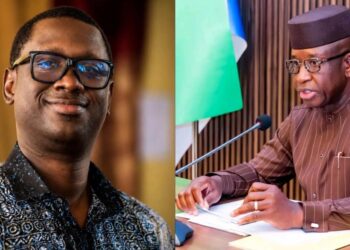
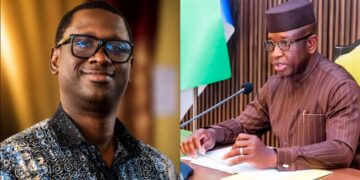













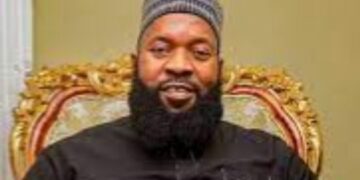

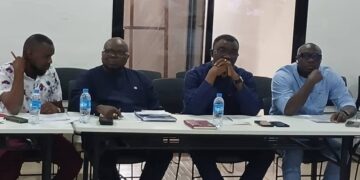




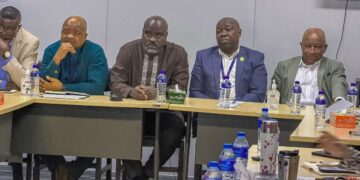












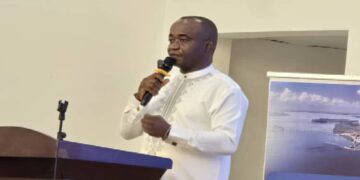









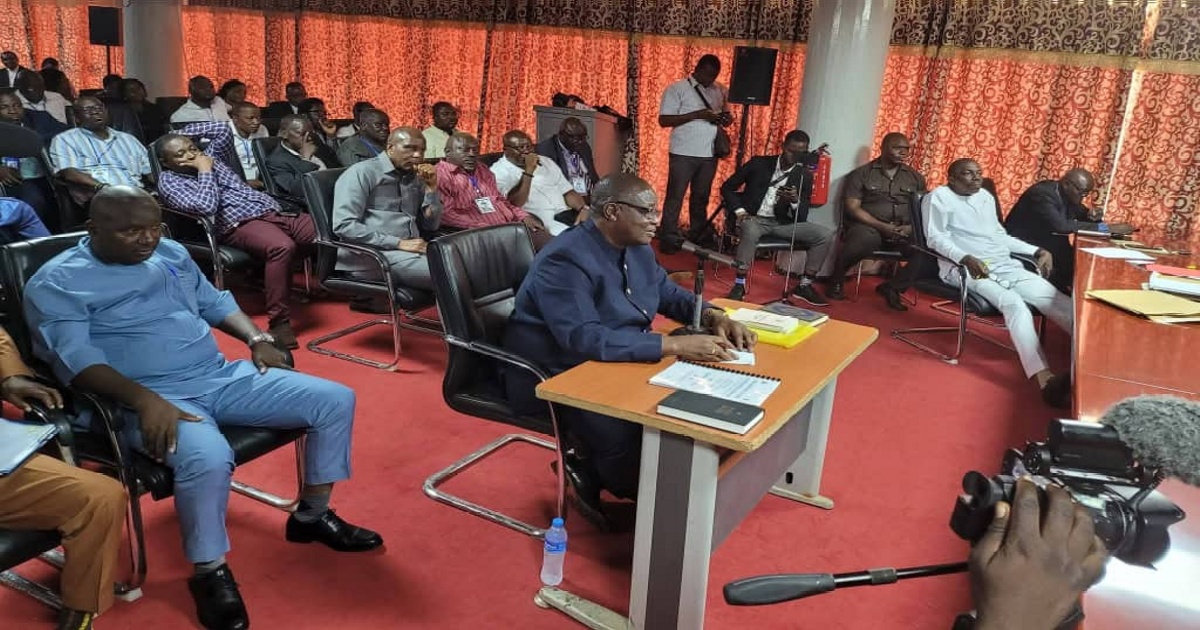
FREETOWN, SIERRA LEONE — On Thursday 26 February 2026, Edmond Sylvester Alpha, the presidential nominee for Chairman of the Electoral Commission for Sierra Leone (ECSL), appeared before the Parliamentary Committee on Appointments and Public Service to defend his nomination and present his vision for the country’s electoral body.
In a detailed address, Mr. Alpha emphasized themes of professionalism, accountability, and institutional renewal, saying his leadership at the ECSL would be defined by integrity, transparency, and adherence to international best practices.
He pledged that, if confirmed, he would work to restore public confidence in Sierra Leone’s electoral processes by adopting innovative strategies and drawing on lessons from established democracies.
Highlighting his qualifications, Mr. Alpha referenced more than two decades of service within the commission and a decade of academic experience at Njala University, a combination he described as equipping him to implement meaningful reforms and improve the credibility of the ECSL.
During the parliamentary session, Mr. Alpha also committed to ensuring timely and transparent electoral outcomes, including pledging that results from general elections would be announced within 72 hours, and stressing his respect for the rule of law, particularly judicial review mechanisms available under the constitution.
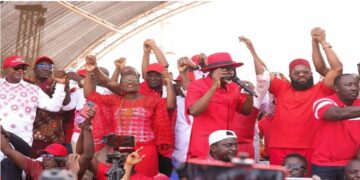
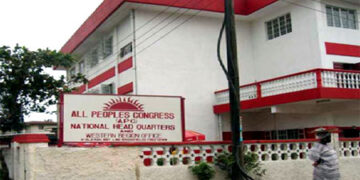
The vetting process unfolded against a backdrop of political controversy. The opposition All People’s Congress (APC) has issued a 48-hour ultimatum calling on the government to withdraw Mr. Alpha’s nomination and complete ongoing constitutional reforms, particularly the creation of an independent Search and Nomination Committee for ECSL appointments, as recommended in the post-2023 election reform agenda. The APC has warned of broader political action if its demands are not met.
Mr. Alpha’s nomination follows public scrutiny over electoral credibility and continued efforts to strengthen institutional trust following disputed elections in recent years. Progress on broader electoral and governance reforms remains a key point of debate among political parties, civil society groups, and lawmakers in Sierra Leone.