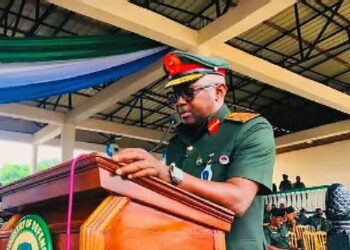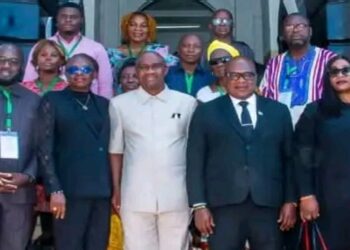

















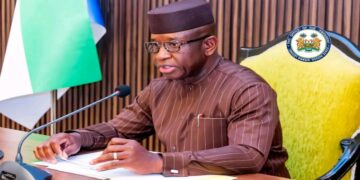



















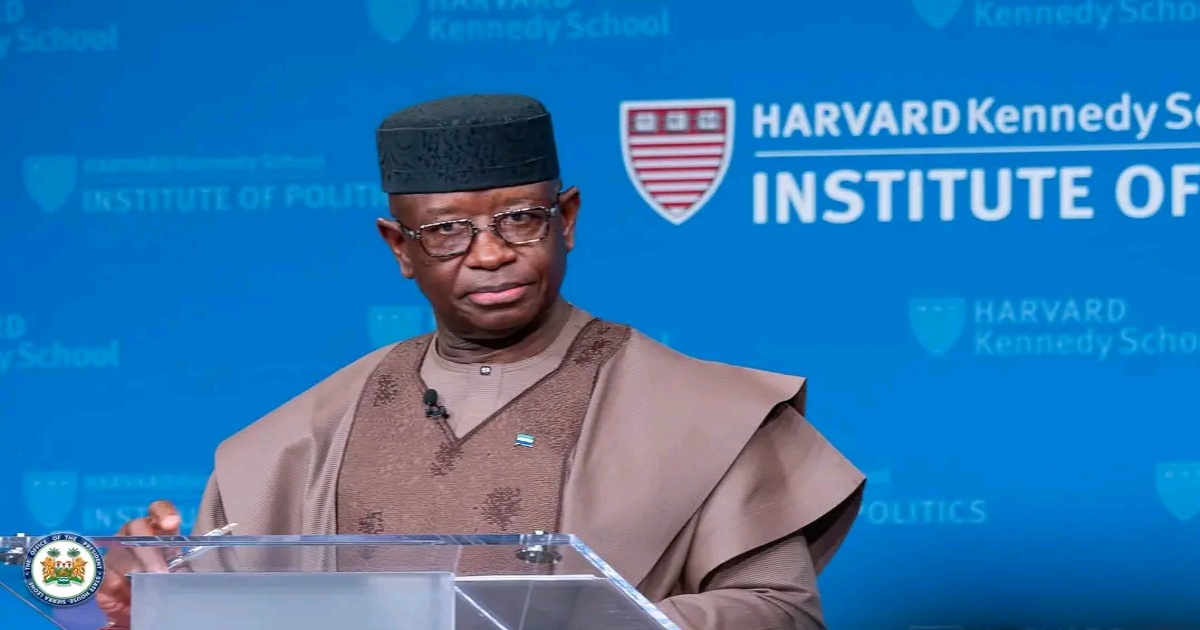
President Julius Maada Bio has outlined four key tests African countries must use to judge all foreign partnerships, during a major address at Harvard University.
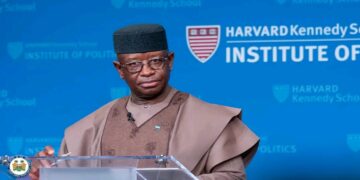
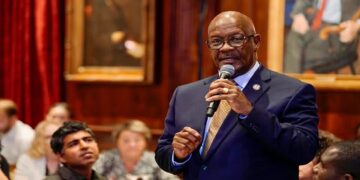
Speaking on Monday 29 September at the John F. Kennedy Jr. Forum at the Harvard Kennedy School, President Bio said the era of accepting aid and investment without clear returns for Africa must end.
The engagement, themed “Africa and the Shifting Geopolitical Landscape: Leadership, Democratic Resilience, and Strategic Choice,” was hosted by Dr Zoe Marks, Oppenheimer Faculty Director of Harvard University’s Centre for African Studies.
The Four Tests
According to the President, every deal offered by an international partner – whether in mining, infrastructure, trade, or security – should be asked:
Test 1 – Skills: Does this partnership build the skills of our people?
Test 2 – Jobs and Local Business: Does it create jobs and strengthen Sierra Leonean and African businesses?
Test 3 – Industry: Does it support industrial development and value-addition inside Africa, rather than exporting raw materials?
Test 4 – Independence: Does it enhance our country’s capacity to make independent, strategic decisions?
President Bio said the framework places skills development, employment, local enterprise and industrialisation at the centre of national interest.
“We must assess partnerships not by how much money is promised, but by how much capacity is built,” he argued, in a speech that has been described as one of his most assertive on foreign policy.
Why It Matters Now
The speech comes as African countries navigate intensifying competition between major powers – the United States, China, the European Union and Russia – for trade, minerals, and security influence in West Africa.
It also echoes a growing trend on the continent. Just last week, Burkina Faso opened its first gold refinery to keep more profit at home, while Ghana and Sierra Leone have faced pressure over foreign-linked drug and mining networks.
President Bio has long called for “more trade and less aid” – a message he first delivered at Harvard in March 2019. In his 2019 address titled ‘Toward a New Renaissance in Sierra Leone’, he argued aid should align with national priorities, not duplicate them.
What It Means For Sierra Leone
For Sierra Leone, which is negotiating new investments in mining, agriculture and energy, the four tests could become a policy checklist.
If applied strictly, any new mining agreement would be required to show a clear plan for local processing, local employment, and skills transfer – not just royalty payments.
The Presidency has not yet announced whether the framework will be formalized into a cabinet policy for vetting foreign deals, but analysts say the Harvard address signals a shift towards more assertive economic nationalism.
The address ended with a call for Africa to maintain its strategic autonomy while still engaging the world.
The question for many Sierra Leoneans watching from home will be how the four tests will be applied to deals signed in Freetown.