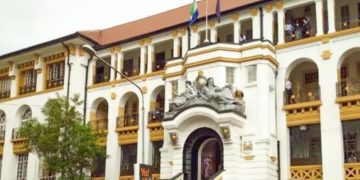






















FREETOWN, 7th October 2026 – There was brief tension inside the Supreme Court this morning as hearing commenced in the high-stakes challenge to the Constitutional Amendment Bill, 2025.
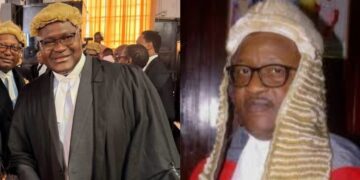
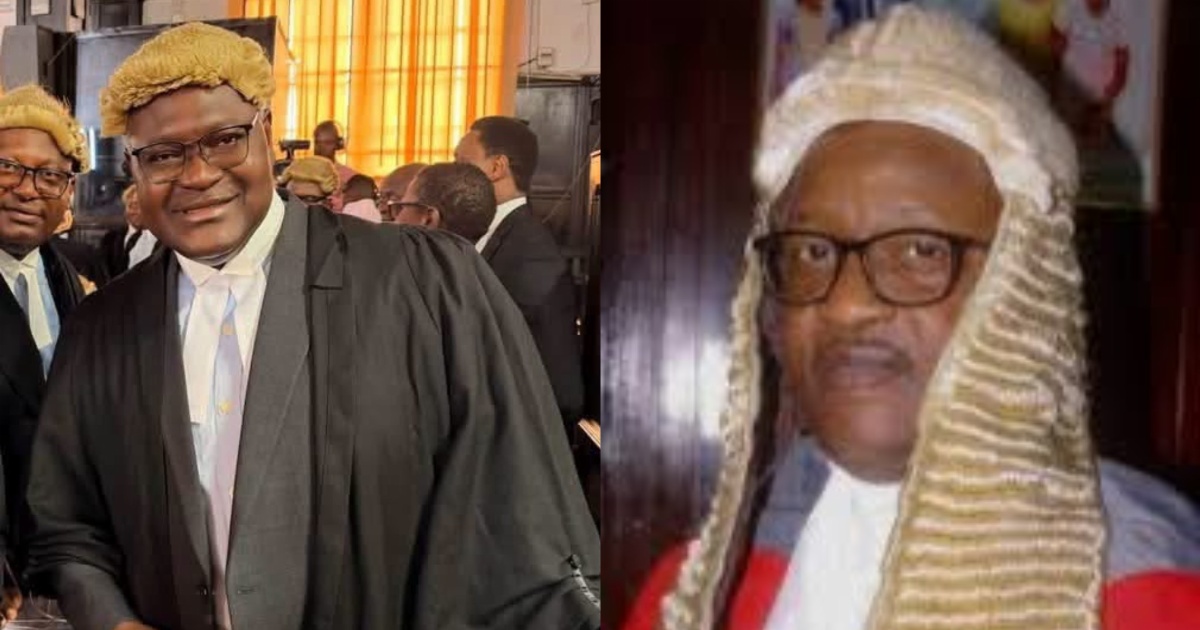
The exchange began when Counsel for the All People’s Congress (APC), Joseph Fitzgerald Kamara Esq. (JFK), a former Attorney-General and former Commissioner of the Anti-Corruption Commission, informed the Court that the Office of the Attorney-General and Minister of Justice had not filed its Statement of Case.
JFK told the panel of Justices that the State had failed to file the crucial document in which Government is required to set out its defence and answer the constitutional questions raised by the plaintiffs. He argued that it was unfair for his clients to be fully prepared while the State was not.
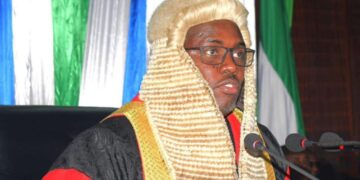
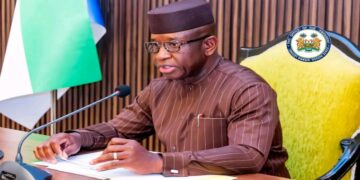
The submission prompted a swift intervention from the Chief Justice, His Lordship Justice Komba Kamanda, who is presiding over the five-man panel.
Chief Justice Kamanda cautioned all Counsel in the courtroom to remember that the Supreme Court is not a political platform, stressing that the Court is built on independence and integrity and must be respected as such.
JFK, however, stood his ground. He insisted that his legal team came to Court to treat the matter with the seriousness it deserves and expected the same level of preparedness from the State.
The exchange became heated for several minutes, with voices raised between the two senior figures, prompting the Court to stand down the matter for a short break to calm proceedings.
The Bigger Case Before the Court
Today’s hearing is a historic one, consolidating all cases relating to the Constitution of Sierra Leone (Amendment) Bill, 2025.
Parliament claims to have passed the Bill on 10th August 2026, but APC Members of Parliament staged a walkout before the final vote. Speaker Segepoh Solomon Thomas, who is absent from today’s hearing on medical grounds, had ruled that the Bill passed with a majority of members present.
The APC, alongside plaintiffs including Hon. Osman Timbo and civil society organisations, argues that Parliament violated Section 108(2)(b) of the 1991 Constitution, which requires any Bill seeking to amend the Constitution to be supported by not less than two-thirds of all Members of Parliament, that is 100 of the 149 MPs.
The Bill was not assented to by President Julius Maada Bio. Instead, acting under Section 122(1) of the Constitution, the President referred it to the Supreme Court for a determination on its constitutionality following a petition from the Institute for Governance Reform (IGR). Separate challenges were also filed by the APC and Hon. Timbo.
If enacted, the Bill would bring far-reaching changes, including reducing the threshold to win a presidential election from 55% to 50% plus one vote, returning the country to a District Block Proportional Representation system for parliamentary elections, and mandating 30% of leadership positions in political parties for women.
In a first for Sierra Leone, the Supreme Court is allowing live broadcast of a constitutional case. Following a request by the Sierra Leone Association of Journalists (SLAJ), Chief Justice Kamanda on 6th October approved live coverage. Ten media houses are accredited inside the Court, with the Independent Radio Network (IRN) broadcasting live on over 40 radio stations nationwide alongside major television stations.
The Court has directed that no commentary or analysis should be done while the case is ongoing.
Hearing is expected to resume after the break.