























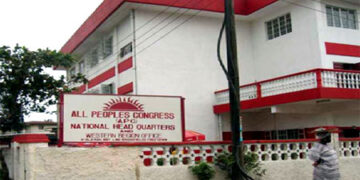



























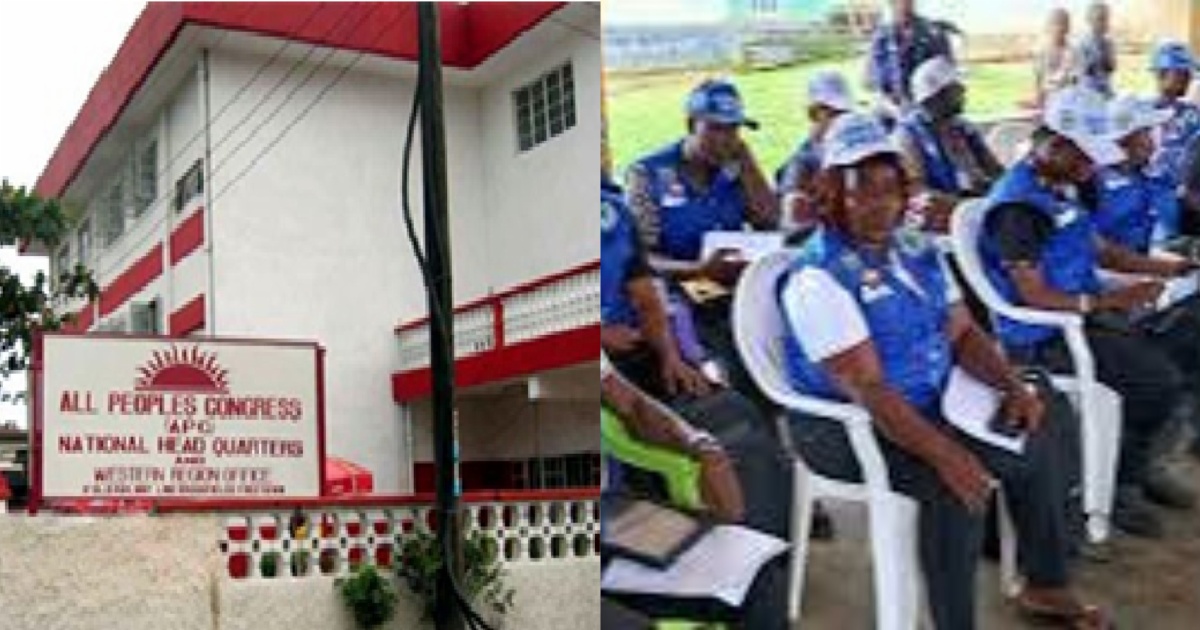
Freetown – The All People’s Congress (APC) has raised serious concerns about logistical and operational problems in the ongoing nationwide training of enumerators for Sierra Leone’s 2026 Population and Housing Census, warning that tablet shortages, lost training days and oversized Enumeration Areas (EAs) risk undermining the quality and credibility of the exercise.
In an official press release dated Friday, 13 November 2026, the APC National Secretariat said its monitors, deployed across training centres, observed shortfalls on the fifth day of training (the first day of nationwide assessment). Training for supervisors and field enumerators began on 9 November 2026 and is running for about 12 days simultaneously in all 16 districts at hundreds of venues.
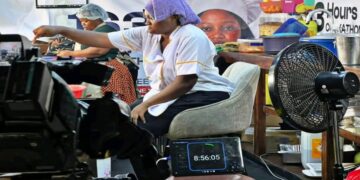
The party reported that many training halls lacked the electronic tablets required for practical Computer-Assisted Personal Interviewing (CAPI) practice. In Tonkolili District alone, it said 17 training halls had no tablets at all, while some centres only received devices on the third day. In places, trainees without official tablets were assessed using personal mobile phones — a practice the APC argued undermines fairness, uniformity and the ability to test competence on the actual census equipment.
Late tablet distribution, venue changes, inadequate equipment and unequal access to practical sessions have cost some participants three to four days of meaningful hands-on training in an already short programme, the statement said. This has left some trainees demotivated and uncertain about their status, with reports of people leaving centres daily because they felt their presence was a waste of time.
The APC warned of potential attrition of trained personnel the country has invested in recruiting, and questioned how the lost days would be recovered before deployment.
The party also flagged disproportionately large EAs. Drawing on United Nations Principles and Recommendations for Population and Housing Censuses, it argued that each EA should be realistically manageable by one enumerator, taking into account population size, household density, terrain and accessibility. Oversized areas, it said, create unequal workloads, risk incomplete coverage, rushed interviews, skipped verification, missed households and higher error rates.
The APC called for independent technical scrutiny of EA boundaries and workload allocation before enumeration begins.
A successful census, the party stressed, depends on scientifically defensible EA delineation, equitable workloads and adequate practical training for every enumerator — not merely the number of people recruited or tablets procured. Inaccurate or incomplete data would affect national development planning, resource allocation, constituency representation and public service delivery for years.
The APC called on the Government of Sierra Leone to provide the necessary logistical, financial and administrative support; on Statistics Sierra Leone (Stats SL) to convene an emergency national stakeholder meeting without delay and present a clear, time-bound recovery plan; and on UNFPA, Parliament, development partners, civil society, oversight bodies, professional associations, the media and all political parties to engage, monitor conditions and insist on credible, inclusive preparations. It announced that it would publish a comprehensive nationwide monitoring report detailing tablet distribution and shortages by district and centre.
The party emphasised that its concerns should not be read as opposition to the census itself.
“We want the census to succeed,” the release stated, adding that the exercise is a national responsibility belonging to the people of Sierra Leone, not any political party or government. Its slogan for the process remains: “Count every person. Leave no community behind. Protect the credibility of the 2026 Census.”
Context and related developments
The 2026 exercise is Sierra Leone’s first fully digital Population and Housing Census. Census Night is scheduled for 1 December 2026, with enumeration running from 2 to 16 December. House-listing is planned for late November. Stats SL has procured and received approximately 29,000 tablets (including a recent consignment of 25,000 plus accessories funded by the Government of Sierra Leone), which will be the primary data-collection devices.
Stats SL had earlier announced some venue changes for the enumerator training. Teachers in some districts have also left classrooms to join the training, prompting warnings from the Teaching Service Commission. Both major parties have previously pledged support for a credible census, and the APC has conducted its own sensitisation activities in districts including Kailahun.
As of mid-November, no detailed public response from Stats SL specifically addressing the APC’s latest points on tablet distribution during training or EA sizes had been widely reported. The census remains critical for evidence-based planning, equitable resource allocation and national representation. Public confidence will depend on transparent handling of operational challenges in the remaining weeks before enumeration.