


























































Freetown, April 28, 2025 — As Sierra Leone grapples with a surge in mpox infections, health authorities are racing against time to contain the outbreak and overcome public mistrust that threatens to undermine the response.
In recent days, the country has recorded 260 new cases of the virus, bringing total infections since January to 864, with six confirmed deaths and 282 recoveries, according to the National Public Health Agency.
Freetown, the densely populated capital, remains the epicenter, prompting the establishment of four dedicated treatment centers since February.
The government declared a public health emergency earlier this year and launched aggressive household screening campaigns to track potential cases.
Amanda Clemens, the Health Ministry’s social mobilisation coordinator, confirmed that 177 new cases were logged over just a 48-hour period last week.
Health workers now face a dual challenge: fighting the virus and the misinformation surrounding it.
“Persistent fear and rumors about mpox are discouraging people from seeking medical care promptly, leading to late diagnoses and silent transmission,” warned Sallu Lansana, a member of the ministry’s vaccination team.
To curb the outbreak, the government began vaccinating high-risk groups, including healthcare workers and adolescents over 12, earlier this month after receiving 61,300 vaccine doses from the World Health Organization (WHO) and international partners. More than 1,000 people, predominantly female health workers, have already been immunized, said Desmond Maada Kangbai, who heads the vaccination program.
Mpox, a viral disease related to smallpox, causes fever and vesicular skin rashes. It had historically been confined to parts of Africa until a global spread in 2022 triggered international alarm.
The WHO elevated its alert level for mpox in 2024, reflecting the disease’s growing threat.
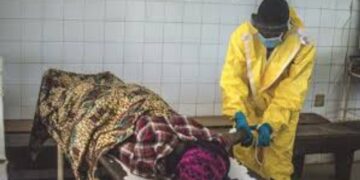
The crisis stirs painful memories of the 2014–2016 Ebola epidemic, during which Sierra Leone lost nearly 4,000 lives, including a devastating toll among healthcare workers. Officials fear that unless trust in health interventions is quickly rebuilt, the country could face a prolonged struggle with mpox as well.