







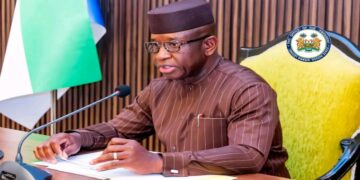










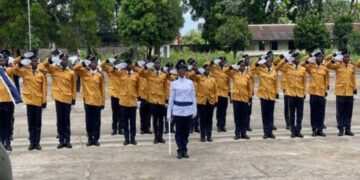

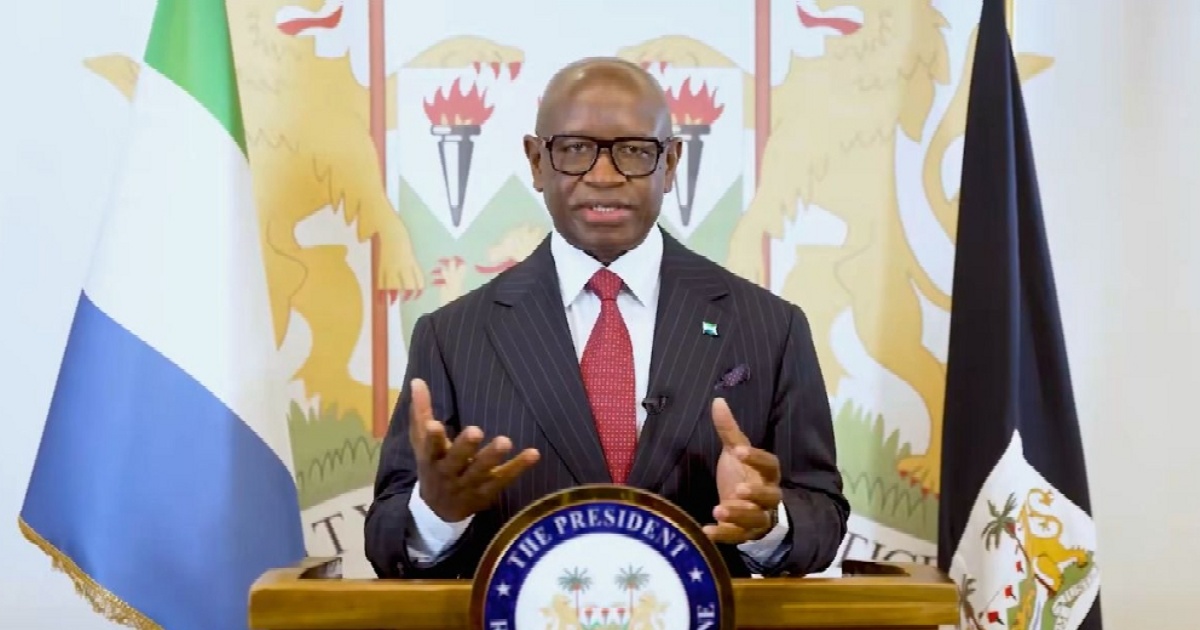
Freetown, Sierra Leone – President Julius Maada Bio used the country’s 65th Independence Day anniversary on Tuesday to deliver a blunt message: true freedom for Sierra Leone remains incomplete as long as the nation depends on others to feed its people.
Delivering a notably frank address, Bio placed food self-sufficiency at the center of his vision for national transformation, arguing that political independence must be matched by economic and agricultural independence.
“A nation that cannot feed itself cannot truly call itself free,” the President declared, striking a tone that moved beyond ceremonial rhetoric to confront the daily struggles of Sierra Leoneans.
Bio acknowledged the severe economic pressures weighing on citizens, driven by global conflicts, disrupted supply chains, and rising fuel prices that have pushed up the cost of food, transport, rent, and electricity.
“Families feel it in the market. Drivers feel it at the petrol station. Households feel it in their rent and electricity bills. I will not pretend otherwise,” he said.
While short-term relief measures such as cash transfers and temporary subsidies have provided some cushion, Bio insisted they are not sufficient.
He called for a deeper structural shift, naming 2026 as a “year of action and accelerated execution” focused on building an economy that produces more of what it consumes.
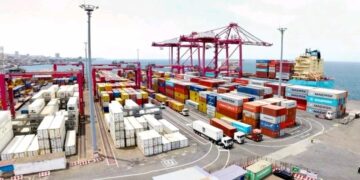
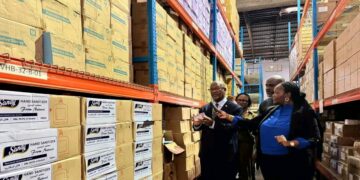
Central to this agenda is a major new push in agriculture. The President highlighted progress in reducing rice import bills and announced the upcoming launch of an Agricultural Development Bank to unlock financing and support for local farmers.
Complementing the agricultural drive, Bio unveiled the “Mission 300 Energy Compact,” a landmark $2.2 billion investment, the largest in the nation’s history. The ambitious energy project aims to dramatically expand electricity access across the country, power agricultural transformation, and reduce costly dependence on imported fuels.
The President also spoke directly to Sierra Leone’s youth, recognizing the frustration of unemployment and the temptation many feel to seek opportunities abroad.
“The temptation to believe that your future lies somewhere else is real,” he said, while urging young people to reject drugs and crime and to demand accountability from their leaders.
On the political front, Bio stressed the importance of responsible democracy, welcoming the return of opposition elected officials to their duties and stating firmly that “political disagreement must never suspend public service.”
He reaffirmed his government’s commitment to electoral reforms through the tripartite committee.
Bio closed his address by appealing for national unity, describing the country’s religious and ethnic diversity as a source of strength.
“Let the answer be that we faced difficulty with maturity, that we chose to hold Sierra Leone together and move it forward,” he said. “Choose Sierra Leone.”
The speech positions agricultural self-sufficiency and energy expansion as the twin pillars of Sierra Leone’s next chapter, framing them as essential steps toward achieving genuine independence on the 65th anniversary of the nation’s flag-raising.