








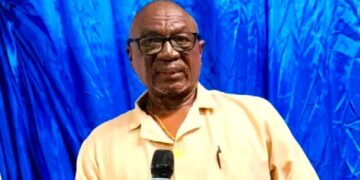





































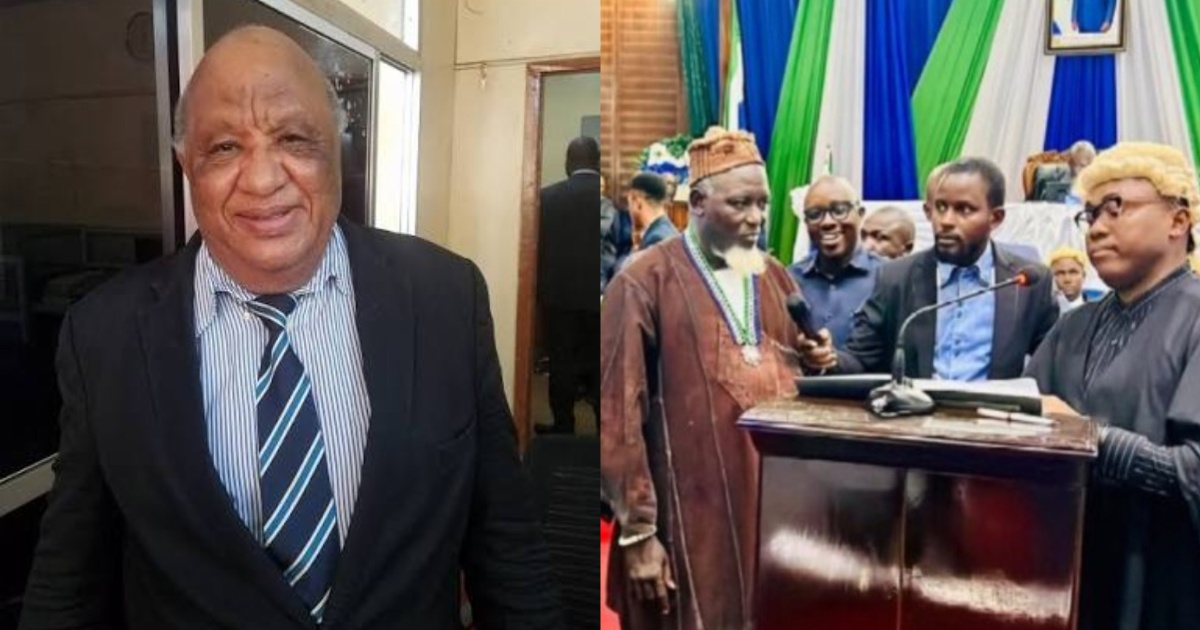
Freetown – Senior lawyer and former Ombudsman Francis Gabbidon has sparked fresh debate on Sierra Leone’s governance structure, arguing that Paramount Chiefs should not have reserved seats in the national Parliament.
Speaking on AYV’s Wake Up Sierra Leone programme, Gabbidon stated bluntly: “I don’t think we really need Paramount Chiefs in Sierra Leone’s Parliament.”
Sierra Leone’s unicameral Parliament currently comprises 149 members: 135 directly elected representatives (using proportional representation in the 16 districts since the 2023 elections) and 14 Paramount Chiefs, one indirectly elected from each of the 14 provincial districts to represent traditional authorities. This arrangement is enshrined in Section 74 of the 1991 Constitution and reflects a practice dating back to the colonial era, when chiefs were included in the Legislative Council.
Paramount Chiefs head the country’s 149 chiefdoms and play significant roles in local governance, land administration, dispute resolution, and maintaining law and order at the grassroots level. They are elected for life by Chiefdom Councillors from recognized ruling houses, as governed by the Chieftaincy Act of 2009, though they can be removed for misconduct. Their parliamentary representation is intended to ensure traditional institutions have a voice in national law-making.
Critics, however, argue that the system blurs the lines between traditional authority and modern democratic representation. Concerns include the potential for Paramount Chiefs to align too closely with the ruling party, limited accountability to ordinary voters (as they are indirectly elected), and questions about whether their primary role should remain at the chiefdom level rather than in national legislation.
Issues such as absentee Paramount Chiefs residing outside their chiefdoms for extended periods have also drawn public criticism in recent years, with calls for stricter residency requirements.
Gabbidon’s comments come amid ongoing discussions about democratic reforms, the balance of power between elected officials and traditional leaders, and broader constitutional review processes. Similar sentiments have surfaced periodically, with some advocating for Paramount Chiefs to focus on advisory or local governance functions instead of holding parliamentary seats.
Supporters of the current arrangement maintain that the inclusion of Paramount Chiefs provides valuable continuity, incorporates indigenous knowledge into national policy, and helps bridge the gap between Freetown-centric governance and rural communities, where the majority of Sierra Leoneans live.
As of now, there has been no official government response to Gabbidon’s remarks, but the statement has circulated widely on social media and local platforms, reigniting conversations about the future of chieftaincy in Sierra Leone’s evolving democracy.
The institution of Paramount Chieftaincy remains constitutionally protected, but periodic reviews and public discourse continue to examine its place in a modern representative system.