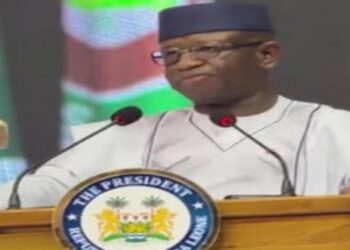


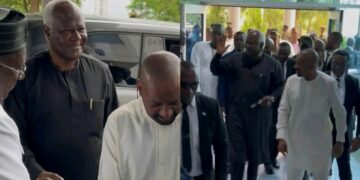
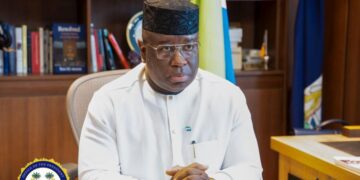









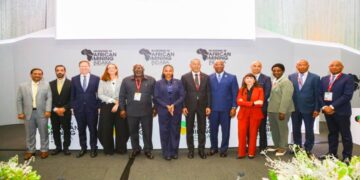





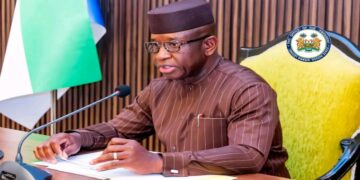





















Freetown, Sierra Leone – In a significant step toward bolstering the nation’s energy infrastructure, Vice President Dr. Mohamed Juldeh Jalloh chaired the inaugural meeting of the Millennium Challenge Account (MCA)-Sierra Leone Board of Directors on Friday.
The board is tasked with overseeing the implementation of a $480 million Millennium Challenge Corporation (MCC) Energy Compact, aimed at transforming Sierra Leone’s power sector.
In a post on social media platform X, Vice President Jalloh expressed optimism about the initiative’s potential impact.
“I am excited about the future of US-Sierra Leone relations and more importantly, the impact the Compact will have on Sierra Leone’s energy sector,” he wrote.
He described the meeting as a “significant milestone” following the recent adoption of an energy sector roadmap.
The event comes on the heels of productive discussions with German Federal Minister for Economic Cooperation and Development, Reem Alabali-Radovan. The talks focused on enhancing bilateral cooperation in key areas, including food security, healthcare, youth empowerment, and regional security.
Jalloh concluded his post on an upbeat note: “The future of Sierra Leone is indeed very bright.”
The U.S. Embassy in Freetown echoed these sentiments in its own X post, congratulating the Sierra Leonean government on the milestone.
“The MCA Board of Directors had its inaugural meeting and orientation, chaired by @VP_Jalloh,” the embassy stated.
It emphasized the board’s role in ensuring that U.S. investments are managed effectively and responsibly, promoting mutual interests and supporting Sierra Leone’s development goals.
This development underscores growing international partnerships for Sierra Leone, with the MCC Compact representing one of the largest foreign investments in the country’s energy sector in recent years.
Officials anticipate that the project will improve electricity access, reliability, and efficiency, addressing long-standing challenges in power generation and distribution.
As Sierra Leone continues to navigate post-pandemic recovery and economic reforms, such collaborations are seen as pivotal to achieving sustainable growth and stability in West Africa.
Further updates on the Compact’s progress are expected as implementation ramps up.