




































25 November 2026 — While Freetown argues over official pump prices, the real fuel crisis is unfolding upcountry — where a litre of petrol is now reportedly selling for as high as over Le80, double the official price.
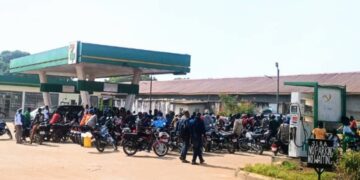
In Kenema, Bo, Makeni, Pujehun, Kamakwie and other provincial towns, residents say getting fuel has become a daily struggle. Filling stations are either closed, rationing, or barely selling to ordinary motorists.
Instead, residents allege, priority is being given to retail fuel sellers — the “Jebu” sellers — who buy in bulk from stations and resell on the roadside at inflated prices.
For commercial drivers, okada riders, keke riders and private vehicle owners, that means a choice: queue for hours with no guarantee, or pay double on the black market.
The Cost Is Passed To Everyone
The impact goes far beyond drivers.
In Bo, okada riders who used to charge a short distance for a few leones say they can no longer break even. In Kenema, traders who bring goods from Freetown and Guinea are paying more to transport pepper, rice, fish and vegetables — and those costs are now showing up in market prices.
In Pujehun, one of the most neglected districts in the country with only three filling stations for over 400,000 people, a delay in supply can shut down transport for days. Farmers cannot move their produce to Bo. Patients struggle to reach hospitals. Pupils struggle to get to school.
In Kamakwie and Makeni, in the north, bike riders, many of them young men who depend on daily earnings to feed their families say they are spending more time in queues than on the road. When they do not work, they do not earn.
“If I buy fuel at Le80, I must increase the fare. If I don’t increase the fare, I go home with nothing,” one okada rider in Kenema told reporters. “Either way, the ordinary man suffers.”
Why Is This Happening?
The official pump price remains NLe40 per litre for petrol and NLe45 for diesel, effective 28 October 2026. Government on Monday, 23 November, assured the public there will be no increase for the rest of 2026.
But that assurance means little in the provinces, where the official price is often not what people actually pay.
Government blames the shortage mainly on difficulties accessing foreign exchange for importers to pay for fuel shipments. Sierra Leone imports 100% of its petroleum products, paying in US dollars and selling in Leones.
NPRA data for the week of 4 November showed the country held only 11.2 million litres of petrol, enough for just 2.1 weeks and projected stocks could run out by 19 November if no cargo arrived. Diesel was better, with 5.2 weeks of cover.
When stocks run low nationally, provincial towns feel it first and worst. Trucks are sent to Freetown first. Rural stations wait longest. And when supply is scarce, the black market thrives.
This is not new. In September, a similar pattern of artificial scarcity saw stations refusing to sell, followed by a price increase from NLe25 to NLe40 in less than a year, a 60% jump. In October, Sierra Leone was ranked No. 3 in Africa for highest petrol prices.
Civil society activist Edmond Abu has described the current shortage as an “acute artificial fuel scarcity” and questioned why stations appear to have fuel for Jebu sellers but not for ordinary motorists.
What Residents Are Demanding
Residents in the provinces are now calling for three things:
1. Fair distribution — fuel must reach provincial stations at the same time as Freetown, not days later.
2. Enforcement — NPRA must stop stations selling to Jebu sellers at the expense of motorists, and punish those selling above NLe40.
3. Transparency — government must tell the public exactly how much fuel is in the country, where it is going, and when the next shipment will arrive.
Government says additional fuel distribution is expected to begin this week, and that NPRA will continue monitoring stocks and retail operations to prevent hoarding and unauthorised price increases.
But with the festive season approaching, a time of increased travel, trade and family visits many in the provinces fear the worst is yet to come if urgent action is not taken.