





















































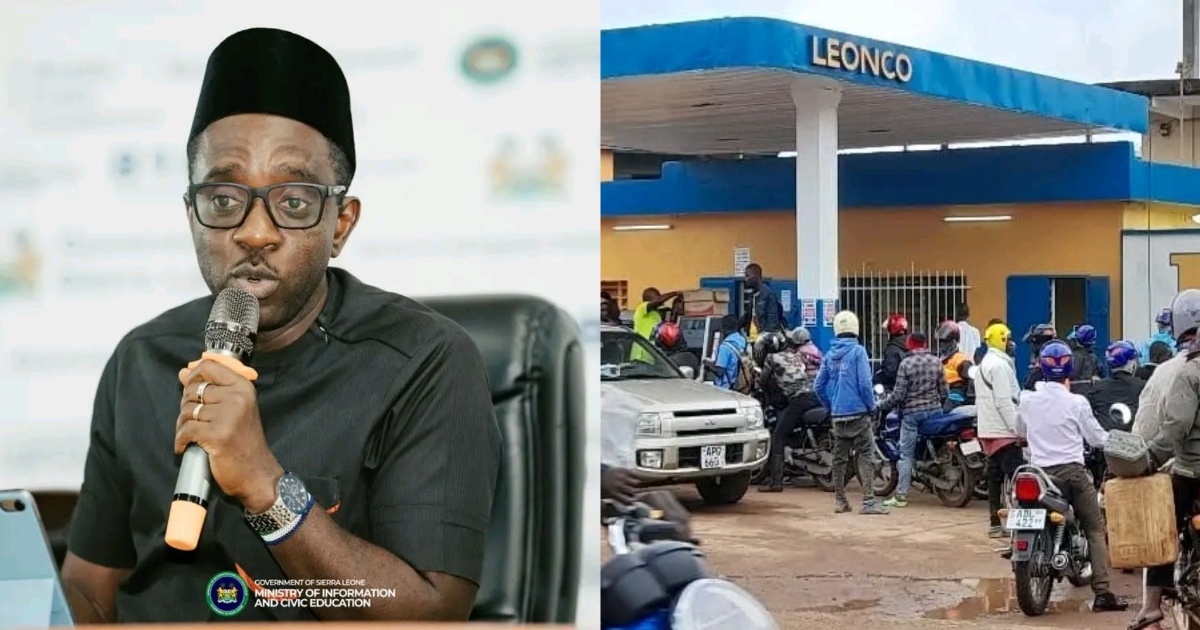
The Government of Sierra Leone has apologised to citizens for the discomfort caused by recent fuel shortages and long queues at filling stations, while giving a firm assurance that regulated pump prices will not rise before the end of 2026.
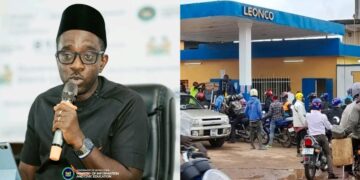
Hon. Chernor Bah, Minister of Information and Civic Education, delivered the apology on Tuesday, 24 November 2026, while closing the Ministry’s weekly press briefing at the Miatta Civic Centre in Freetown.
“On behalf of the Government of Sierra Leone, we want to offer sincere apologies to the people of this country for the discomfort and challenges you have endured over the past week due to the fuel shortage,” he said.
The minister explained that fuel importers had struggled to secure enough US dollars to pay overseas suppliers. To ease the bottleneck, the government is working with commercial banks to provide letters of credit starting at US$5 million for each major importer. These bank commitments help guarantee payment to suppliers. An initial US$1 million was made available immediately, and new shipments have already begun arriving, helping to shorten queues at some stations.
“Let me make it clear: the government has no plans, at least until the end of this year, to allow fuel prices to go up,” Bah stated.
He added that queues were expected to ease further over the coming days as more fuel reaches the market, and that prices could even fall in 2027 if global oil prices continue to decline.
Official regulated pump prices, set by the National Petroleum Regulatory Authority (NPRA) and effective since 28 October 2026, remain NLe40 per litre for petrol and NLe45 per litre for diesel.
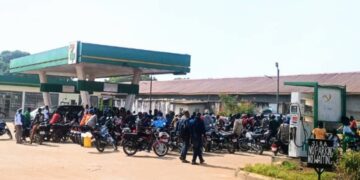
The shortages have been felt widely. Long queues formed in Freetown and other major centres including Bo, Kenema and Makeni. In some areas, stations ran dry or rationed sales, forcing many motorists and commercial riders onto the black market, where prices reportedly reached as high as NLe80 per litre in places such as Kenema double the official rate. Transport fares rose in several towns as riders and drivers passed on the higher costs, adding pressure on household budgets and daily movement.
The crisis stems largely from foreign-exchange constraints. Fuel is imported and paid for in US dollars but sold locally in Leones. Limited dollar liquidity delayed payments and restocking. The government has also signalled it will enforce a requirement under the Finance Act for exporters to repatriate at least 30 per cent of their foreign-currency earnings through local commercial banks, a step intended to improve the availability of hard currency in the domestic market.
NPRA has said it will continue monitoring stocks, distribution and retail operations to curb hoarding, artificial shortages and unauthorised price increases. Officials expect supplies to improve progressively as the new measures take effect and additional cargoes arrive.
The shortages come at a sensitive time, with Census Night scheduled for 1 December 2026 and house-to-house enumeration due to follow. Reliable fuel supplies will be important for movement of enumerators and the public.
Global crude prices remain elevated, with Brent recently trading in the mid-to-high US$90s per barrel amid geopolitical tensions, though the government maintains that current domestic pricing policy will hold steady through the rest of 2026 barring major external shocks.