



































Freetown, Sierra Leone – March 4, 2026
In a move that has deepened Sierra Leone’s political divide, President Julius Maada Bio has publicly defended the appointment of Edmond Sylvester Alpha as the new Chairman of the Electoral Commission for Sierra Leone (ECSL), dismissing the opposition All People’s Congress (APC)’s outright rejection of the nomination.
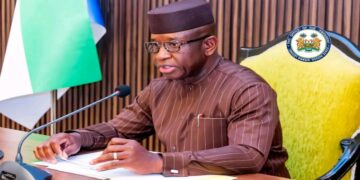
The President’s remarks came during Alpha’s swearing-in ceremony at State House on March 3, 2026, a event hailed by Bio as a pivotal moment for the nation’s democratic governance.
Bio emphasized that the appointment adhered strictly to constitutional guidelines under Section 32(6) of the Sierra Leone Constitution, following consultations with registered political parties.
“This process was the result of careful consultation and aligns with the powers vested in me as President,” Bio stated, urging respect for state institutions and the ECSL’s independent operation.
He called on citizens to support the commission in executing its mandate, underscoring the need for credible and transparent electoral processes ahead of the next national elections scheduled by July 2028.
Alpha, who previously served as Acting Chief Electoral Commissioner and Electoral Commissioner for the Southern Region since August 2025, took the oath of office, pledging to discharge his duties with “integrity, neutrality, and professionalism.”
In his address, he appealed for civic engagement and public prayers to ensure success in his role, marking the start of a new era for the ECSL, the body responsible for organizing and supervising elections in the country.
The appointment has sparked intense controversy, with the APC boycotting Alpha’s parliamentary vetting on February 25, 2026, and formally rejecting the nomination in a letter dated February 17, 2026. The opposition cited Alpha’s alleged involvement in the disputed 2023 general elections, which were marred by irregularities and heavily criticized by the European Union observer mission for lacking transparency.
APC leaders, including Acting Chairman Amb. Osman Foday Yansaneh, argued that the nomination undermines ongoing electoral reforms recommended by the Tripartite Committee, a body formed post-2023 to address electoral issues and foster national unity.
Escalating their protest, the APC issued a 48-hour ultimatum on February 20, 2026, demanding the government rescind the appointment or face the withdrawal of APC-elected officials from Parliament, local councils, and other governance structures. The party followed through, announcing an immediate boycott, labeling the move a “direct assault” on the Agreement for National Unity and a threat to democracy. Prominent figures like former Attorney-General Joseph Fitzgerald Kamara have echoed these sentiments in an open letter to President Bio, calling the appointment “unlawful, unconstitutional, and a threat to Sierra Leone’s democracy.”
Despite the APC’s opposition, Alpha received endorsements from 12 to 14 of Sierra Leone’s registered political parties during the consultation process, paving the way for parliamentary approval on February 27, 2026. Critics, however, argue that this ignores broader calls for reform following the 2023 polls, where Bio secured re-election amid allegations of vote rigging and voter suppression.
The development unfolds against a backdrop of widening political fault lines, with stakeholders closely monitoring how Alpha’s leadership will navigate the polarized environment. Even within the APC, voices like MP Mohamed Bangura have urged Alpha to remain impartial and prioritize public interest. As Sierra Leone inches toward 2028 elections, the ECSL’s role in restoring public confidence remains critical, with experts warning that unresolved tensions could erode democratic gains made since the end of the civil war in 2002.
Government supporters, including ruling Sierra Leone People’s Party (SLPP) members, have defended the appointment as a step toward stability, dismissing APC’s actions as obstructive. Bio’s administration maintains that the process was inclusive and constitutional, urging national unity.
This appointment highlights ongoing challenges in Sierra Leone’s post-conflict democracy, where electoral integrity continues to be a flashpoint between the SLPP and APC.