












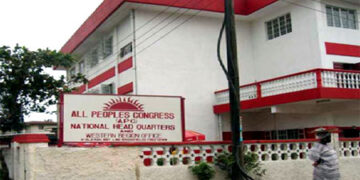




















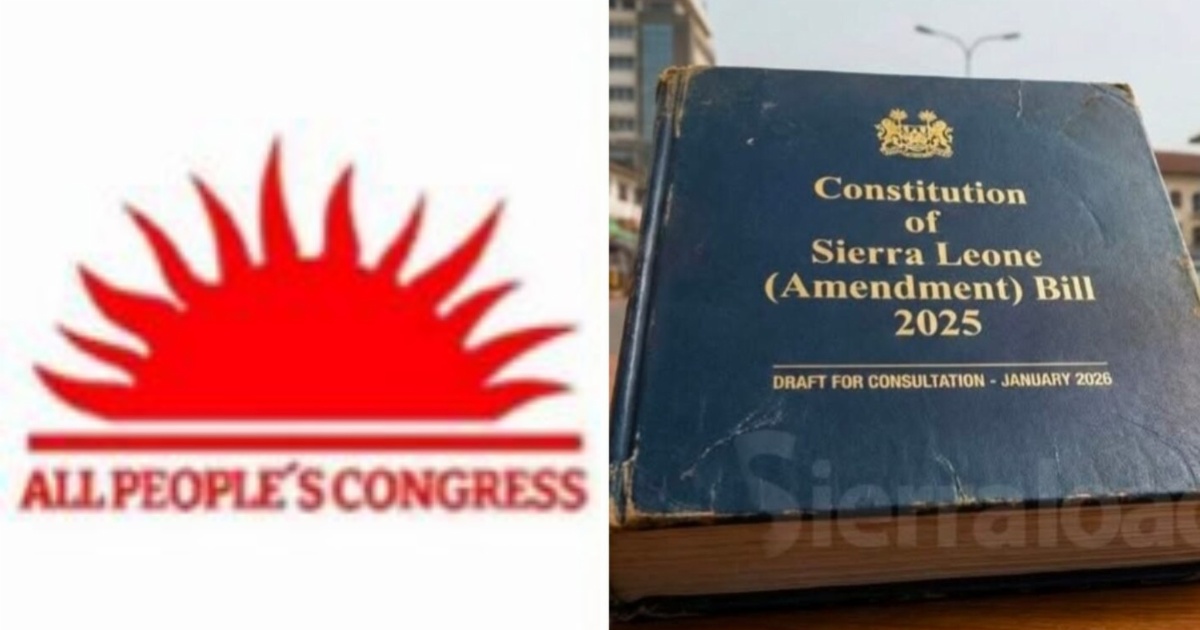
Freetown — The All People’s Congress has taken its challenge against the disputed passage of the Constitution of Sierra Leone (Amendment) Bill, 2025 to the Supreme Court, filing two distinct actions that seek both interpretive guidance and a direct ruling on the legality of parliamentary steps taken in August.
APC legal representative Ady Macaulay confirmed the filings during a Liberty TV interview on September 1. He stressed that while the suits arise from the same parliamentary controversy, they involve different parties, raise separate legal questions, and request different forms of relief.
One action was brought jointly by the APC, Minority Leader Hon. Abdul Kargbo, and Deputy Minority Leader Hon. Daniel Koroma. Named as defendants are Speaker of Parliament Hon. Segepoh Thomas, the Attorney-General and Minister of Justice, and the Clerk of Parliament.
According to Macaulay, this case centres on the proper construction of key provisions of the 1991 Constitution — notably Sections 108, 91 and 51 — and asks the Supreme Court to clarify how those provisions must be applied to the process of amending the Constitution.
The second suit was filed by Hon. Osman Abdal Timbo in his personal capacity as a Member of Parliament. He is represented by Hon. Joseph Fitzgerald Kamara. This application challenges the constitutionality of specific actions and interpretations adopted by the Speaker during the proceedings, questioning whether those steps complied with the 1991 Constitution.
Macaulay illustrated the difference with a simple analogy: two travellers may take different roads to Waterloo yet arrive at the same place. In the same way, the two cases address the same underlying constitutional dispute but pursue distinct legal paths — one focused on authoritative interpretation of the relevant sections, the other on a direct challenge to the validity of the Speaker’s rulings and subsequent parliamentary steps.
The cases follow the APC’s earlier announcement that it would seek judicial determination of the issues. The party maintains that the Supreme Court is the proper forum to settle questions about the interpretation and application of the 1991 Constitution in relation to the disputed proceedings.
The controversy stems from the parliamentary sitting of 10 August 2026, when opposition MPs walked out before the vote on the Amendment Bill. The Speaker later declared the Bill passed, relying on an interpretation that the required support was a majority of those present and voting rather than the two-thirds of the full membership of Parliament stipulated in Section 108(2)(b). With a House of 149 members, that constitutional threshold would normally require 100 affirmative votes. Critics, including the APC and independent legal practitioners, contend that the lower bar applied by the Speaker was inconsistent with the special amendment procedure laid down in the Constitution. The Speaker himself subsequently referred the threshold question to the Supreme Court.
Among the Bill’s most closely watched proposals is a change to the presidential election threshold, reducing the first-round requirement from 55 percent of valid votes to 50 percent plus one. The measure has drawn scrutiny from civil-society groups and legal commentators who argue that any alteration of the supreme law must strictly observe the safeguards built into Section 108.
The dual filings now place the central questions of procedure, majority requirements, and constitutional interpretation squarely before Sierra Leone’s highest court.