










































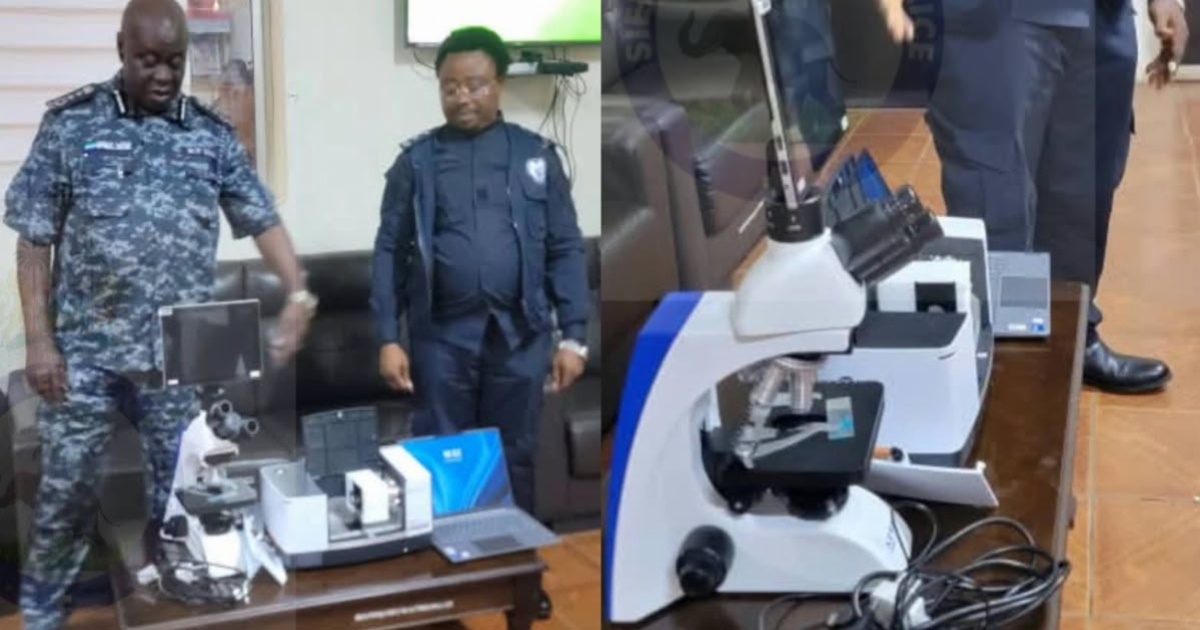
Freetown, 26 November 2026 — The Sierra Leone Police (SLP) has taken a major step in its fight against illicit drugs and transnational organised crime with the acquisition of two specialised scientific machines for the Transnational Organised Crime Unit (TOCU) Forensic Laboratory.
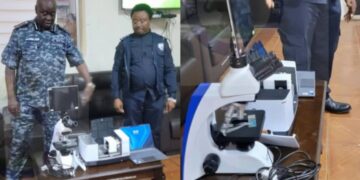
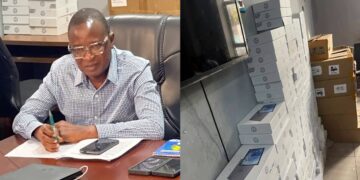
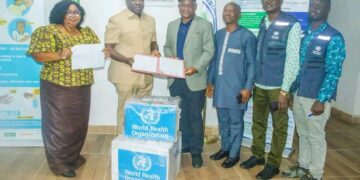
The Inspector General of Police (IGP), Mr William Fayia Sellu, on Thursday received a Fourier Transform Infrared (FTIR) machine and a Polarising Microscope, which are expected to greatly improve the laboratory’s ability to identify, analyse and characterise suspected narcotic substances, particularly emerging synthetic drugs.
The acquisition marks an important milestone in the SLP’s ongoing efforts to modernise its forensic services and bring its laboratory operations in line with internationally recognised scientific standards.
The development comes as Sierra Leone, like many countries, faces a growing threat from synthetic drugs — substances whose chemical compositions are constantly changing, making them difficult to detect with conventional testing methods.
Recommendations from the Global Initiative Against Transnational Organised Crime (GI-TOC) have highlighted the importance of appropriate scientific equipment, including FTIR technology, in improving the reliability and accuracy of forensic drug analysis.
Strengthening local forensic capacity will help reduce reliance on external laboratory services, improve the speed and quality of scientific investigations, and provide stronger technical evidence to support criminal proceedings.
Speaking at the presentation, IGP Sellu acknowledged the specialised nature of forensic science and invited the Head of the SLP Forensic Laboratory, Assistant Superintendent of Police (ASP) Stevens, to explain the functions of the new equipment.
ASP Stevens explained that the FTIR machine is an advanced analytical instrument used to identify and characterise chemical compounds by measuring how they absorb infrared radiation.
Different chemical bonds absorb infrared light at specific frequencies, producing a unique spectrum that serves as a molecular fingerprint for identifying substances.
He said the machine will significantly improve the laboratory’s ability to examine suspected drug samples, distinguish between different chemical compounds, and identify emerging synthetic substances that may be difficult to detect through conventional testing.
The Polarising Microscope, on the other hand, enables forensic experts to examine the physical and optical properties of materials under specialised lighting conditions. This allows for closer examination of the structure, composition and characteristics of substances, supporting more detailed laboratory analysis.
According to ASP Stevens, the two machines will enhance the laboratory’s capacity to conduct more reliable and scientifically supported examinations, while bringing its operations closer to internationally recognised forensic practices.
The acquisition follows sustained engagement between the Sierra Leone Police and its international partners.
In 2025, ASP Stevens participated in the Annual Meeting of Forensic Laboratory Directors in Casablanca, Morocco, where he presented Sierra Leone’s efforts to combat synthetic drugs, highlighting the achievements of the Police, operational challenges, and the need for advanced scientific equipment.
His presentation, which also highlighted the strategic commitment and support of IGP Sellu towards improving forensic services, attracted the attention of international partners. The engagement subsequently contributed to the provision of drug-testing kits and further support for strengthening the laboratory’s technical capacity.
Beyond drug detection, the equipment is expected to strengthen evidence analysis, improve professional competence, and enhance the overall effectiveness of investigations involving narcotic substances and organised crime.
The development further demonstrates IGP Sellu’s commitment to transforming the Sierra Leone Police from a traditional Force into a modern, professional and service-oriented institution driven by technology, accountability and operational efficiency.
It also reinforces his broader vision of building a Police Force capable of responding effectively to contemporary security challenges through strategic international partnerships, investment in modern technology and continuous professional development.
With the acquisition of the FTIR machine and Polarising Microscope, the TOCU Forensic Laboratory is now better equipped to contribute to Sierra Leone’s fight against illicit drugs and strengthen the country’s role in the wider international effort to combat transnational organised crime.