










































Freetown – Sierra Leone is taking a major step towards making smartphones more affordable for ordinary citizens after the government signed a memorandum of understanding with Gambian company Unique Group to explore a local mobile phone and electronics assembly plant.
The Ministry of Communication, Technology and Innovation (MoCTI) sealed the deal on the sidelines of the West Africa Integration and Investment Summit (WAIIS) 2026 held in Lungi from 16 to 18 November.
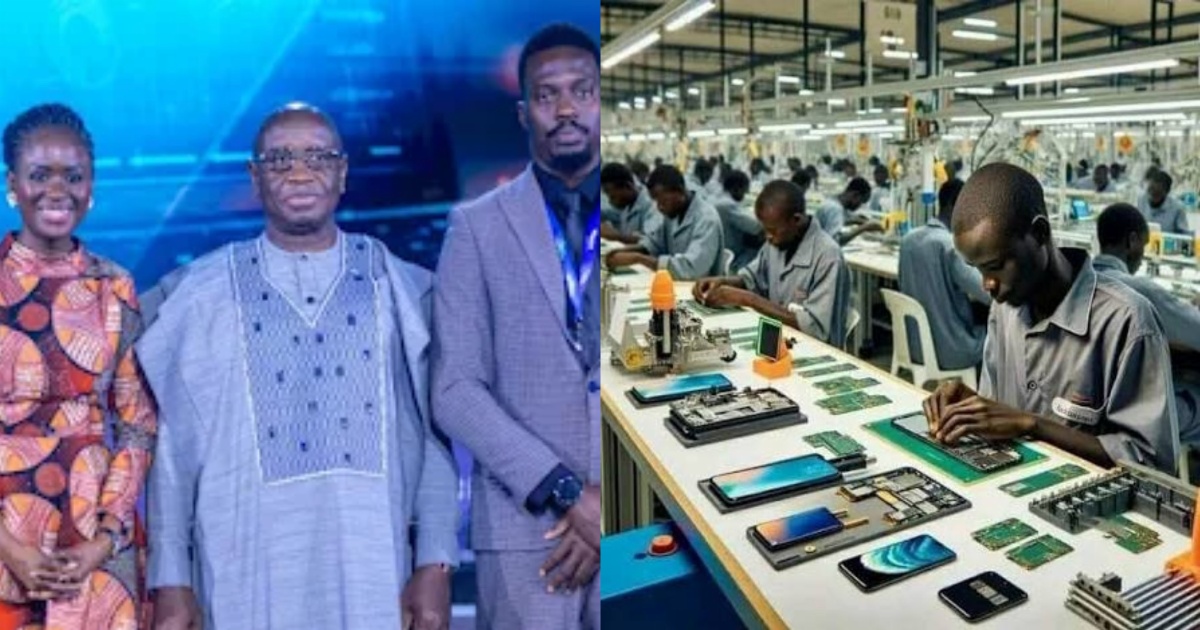
The indicative investment stands at US$21.9 million. Minister Salima Monorma Bah and Unique Group Managing Director Adama Touray formalised the agreement, with President Julius Maada Bio present at related events.
Although mobile network coverage has improved significantly, with 3G reaching over 96 percent and 4G covering more than 80 percent of the population, the high price of smartphones continues to keep many Sierra Leoneans offline. Official figures show that only about 28.5 percent of people aged 15 and above owned a smartphone in 2024, while internet usage remains around 25 percent. Roughly three-quarters of the population still do not use the internet regularly.
Minister Bah stressed that expanding coverage alone is not enough. “
Our ambition is not simply to expand mobile network coverage, but to ensure that more Sierra Leoneans can afford the devices needed to access and benefit from connectivity,” she said.
The planned facility is designed to tackle this affordability barrier directly while building local manufacturing capacity.
The project will roll out in phases. The first stage will focus on assembling and configuring devices, quality testing, servicing and repairs. A technical training centre will run alongside the plant to equip Sierra Leoneans with practical skills in electronics assembly, maintenance and related digital technologies. Organisers hope the centre will create jobs and help develop a skilled local workforce that can support both the factory and wider digital services.
Unique Group already operates assembly plants in Ghana and The Gambia. Its managing director, Adama Touray, said the company aims to bring investment and technical expertise to Sierra Leone, create employment and improve access to affordable devices. Future plans include possible expansion into regional markets and complementary projects such as digital learning tools, school connectivity and solar-powered education infrastructure.
The assembly plant forms part of a broader package of digital initiatives announced at WAIIS 2026. MoCTI also advanced plans for a second submarine cable to improve international connectivity after the 2024 cable cut disrupted services, a joint venture to take the Sierratel brand into other African markets, and efforts to reduce the high energy costs that push up data prices for telecom operators.
Analysts note that success will depend on whether the locally assembled phones can be produced and sold at prices competitive with imported devices. Similar projects elsewhere in Africa have faced challenges with costs, scale and market demand. Details on the exact location, production timeline and final retail prices have not yet been announced, as the MoU currently covers exploration and planning rather than an immediate start of operations.
For many Sierra Leoneans, particularly young people, traders, students and residents in rural areas, cheaper smartphones could open doors to mobile money, online education, e-commerce and government digital services.
If the project moves from agreement to reality, it would mark one of the first major efforts to build electronics manufacturing capacity inside the country and help close the stubborn digital usage gap that continues to limit the benefits of improved network coverage.