
















































FREETOWN, November 12, 2026 — The Anti-Corruption Commission (ACC) has defended its decision to procure an official vehicle for Commissioner Francis Ben Kaifala at a cost of Le3.9 billion, insisting the purchase was necessary, approved and followed procurement laws.
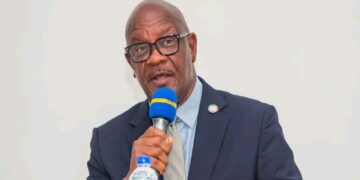
The defence was made by the ACC’s Coordinator of Operations, Patrick Sandi, during an appearance on Liberty Online TV’s Breakfast Show on Thursday, where he responded to public concerns raised by journalist Thomas Dixon.
Dixon had questioned the reported Le4.5 billion price tag of the vehicle, the Commission’s overall performance, and its declining score on the Millennium Challenge Corporation (MCC) scorecard, as well as claims that staff were leaving due to poor conditions.
Clarifying the figures, Sandi said the vehicle actually cost Le3.9 billion, not Le4.5 billion, and that the Ministry of Finance had approved the expenditure. He noted that the Commissioner is by law entitled to an official vehicle to perform his duties.
According to Sandi, the need for a replacement became urgent after the Commissioner’s former vehicle suffered repeated mechanical failures, including breakdowns during official assignments.
On the procurement process, Sandi explained that the ACC used a restricted bidding method after its Procurement Committee approved the approach and the National Public Procurement Authority (NPPA) issued a no-objection — a standard procedure allowed under the Public Procurement Act for such categories of procurement.
Addressing broader criticisms of the Commission’s work, Sandi rejected suggestions that the ACC was diverting corruption cases to administrative action instead of prosecution, saying the Commission’s mandate allows for different remedial actions depending on evidence and legal thresholds.
He also dismissed claims of mass staff attrition due to poor welfare. The ACC, he said, conducts exit interviews for departing staff, and many of those who left did so to take up more lucrative opportunities in international organizations — a trend common across public institutions.
Sandi challenged critics to provide evidence for claims that staff welfare was being neglected, adding that the Commission continues to handle sensitive investigations involving public institutions and procurement irregularities.
The interview comes at a time when public scrutiny of anti-graft institutions is high, with many Sierra Leoneans demanding greater transparency not just from those being investigated, but also from those doing the investigating.