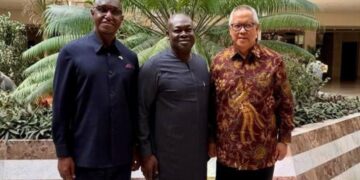
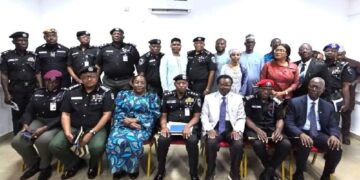

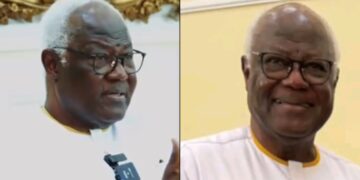












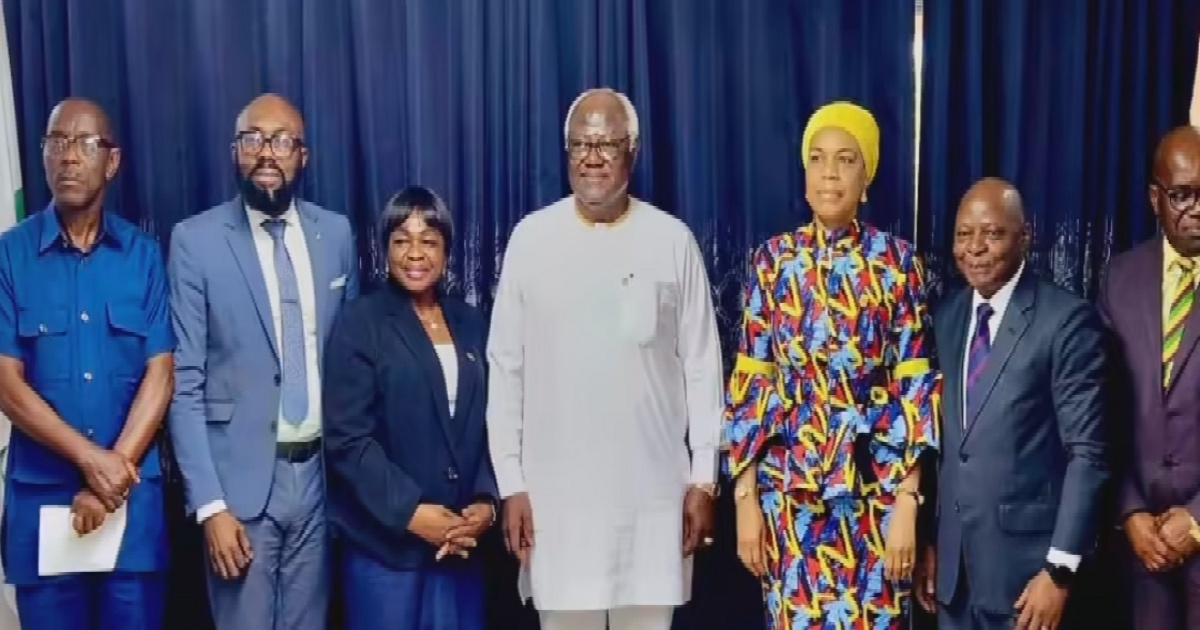
Freetown, 2 November 2026 – Former President Ernest Bai Koroma has called on ECOWAS diplomatic representatives in Sierra Leone to provide stronger, practical support for the country’s peacebuilding efforts, stressing the need for sustainable measures that will prevent a return to post-election tensions as the 2028 general elections approach.
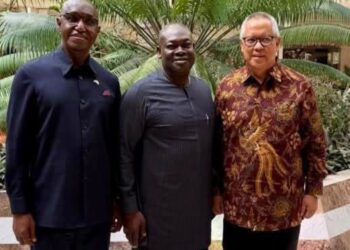
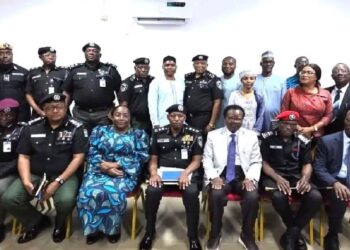
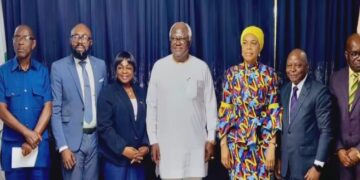
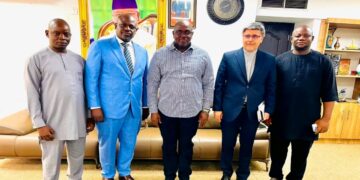
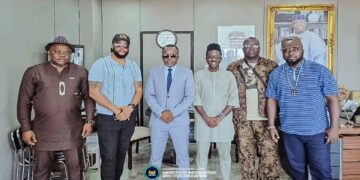
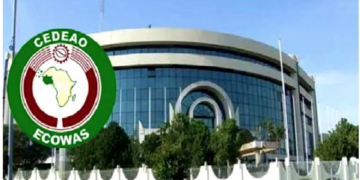
Koroma made the appeal during a meeting with ECOWAS envoys at the regional organisation’s Secretariat in Freetown on Monday. The discussions focused on consolidating peace, strengthening national unity, and ensuring the effective implementation of the Agreement for National Unity (ANU) and the Tripartite Agreement.
Welcoming the former President, ECOWAS Resident Representative Ambassador John Azumah reaffirmed the organisation’s commitment to Sierra Leone’s peace and development.
He highlighted the Mission’s ongoing work in governance, institutional strengthening, humanitarian support, healthcare, capacity-building, women and youth empowerment, and early warning.
Azumah also praised Koroma’s reconciliation efforts since his return to the country, particularly his public pledge at the National Unity and Social Cohesion Conference on 26 October to support President Julius Maada Bio’s peace agenda.
In his response, Koroma thanked the representatives for attending at short notice and described their presence as a clear demonstration of commitment to ECOWAS ideals.
He recalled the organisation’s critical intervention through ECOMOG during Sierra Leone’s civil war and its continued engagement after the 2023 elections.
While acknowledging progress made in rebuilding peace and democratic institutions, Koroma observed that recurring tensions after electoral cycles show the need for a more sustainable approach to reconciliation.
He reiterated his commitment to supporting President Bio’s peace initiative but stressed that the country must move beyond conferences to practical actions that rebuild trust among political actors and ordinary citizens.
Koroma cautioned against creating parallel structures outside the existing ANU and Tripartite frameworks, noting that both processes already have established institutional ownership.
He urged efforts to reinforce their implementation through sustained public engagement, reciprocal political visits, and other visible demonstrations of goodwill.
With the next electoral cycle drawing closer, the former President specifically called on the ECOWAS representatives to offer perspectives on priority areas and practical measures that could help ensure the successful implementation of the agreements and prevent a recurrence of post-election tensions.
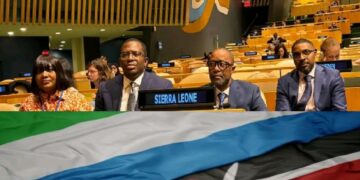
Representatives of Nigeria, Ghana, Liberia, Guinea and The Gambia expressed support for Koroma’s initiative and highlighted the importance of peace in Sierra Leone to the wider West African region. They also commended President Bio for creating the environment for peace and national cohesion.
Nigeria reaffirmed its commitment to the reconciliation process and acknowledged Koroma’s experience as a former Head of State and regional statesman. Ghana noted that Sierra Leone’s success would be a shared achievement for ECOWAS. Liberia emphasised the close historical ties between the two countries and encouraged Koroma to extend his peacebuilding engagement to the Mano River Union. Guinea highlighted the deep cultural and social connections, while the Dean of the African Diplomatic Group, representing The Gambia, welcomed Koroma’s return and recalled his earlier contribution to peace efforts in The Gambia.
Responding to the discussions, Ambassador Azumah said the proposals raised by Koroma would be taken into consideration. He confirmed that the representatives had agreed to constitute themselves into a committee to jointly collaborate on their work in support of Sierra Leone’s peacebuilding efforts.
In a vote of thanks, the Nigerian High Commissioner commended Koroma’s statesmanship and described his appeal as that of a father and elder statesman, assuring him of the representatives’ continued goodwill and support.
The meeting follows Koroma’s public commitment at the recent National Unity and Social Cohesion Conference to make himself available in support of President Bio’s efforts to consolidate peace. It also comes against the backdrop of ongoing efforts to fully implement the ANU and Tripartite recommendations ahead of the 2028 elections, which many Sierra Leoneans see as a critical test of the country’s hard-won stability.