





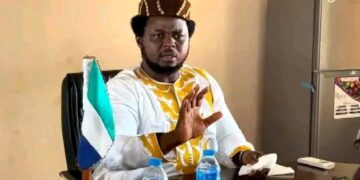


























The President of the Sierra Leone Association of Journalists (SLAJ), Alhaji Manika Kamara, has called for stronger efforts to promote gender equality and support women journalists in Sierra Leone as the world marks International Women’s Day 2026.
In a statement issued to commemorate the global celebration, Kamara praised the achievements and resilience of women and girls while urging renewed commitment to advancing equality, justice, and opportunities for all.
He referenced this year’s global theme, “Rights. Justice. Action. For ALL Women and Girls,” noting that although progress has been made in promoting women’s empowerment, many barriers still limit women’s participation in leadership, economic activities, and decision-making processes.
Kamara said the issue is particularly significant in Sierra Leone, where women play vital roles in families, communities, and national development, yet continue to face structural challenges that hinder their full potential.
Within the media sector, he highlighted the difficulties many women journalists encounter, including demanding working conditions, societal expectations, harassment, discrimination, and limited opportunities for leadership.
He stressed that their dedication and resilience deserve recognition and concrete institutional support.
The SLAJ president also outlined several initiatives undertaken by the association to promote gender equality in journalism.
He recalled the launch of the country’s first Gender Equality Policy for the media sector during a previous SLAJ administration, an initiative supported by the Embassy of Ireland in Sierra Leone and the SLAJ Gender Advisory Panel to address structural gender imbalances affecting women journalists.
According to Kamara, the association has continued to expand opportunities for women in the profession.
With support from the European Union through BBC Media Action, about 75 women journalists have been trained in Public Financial Management reporting through the Budget Advocacy Network. In addition, more than 60 women journalists are currently benefiting from digital media literacy training at Limkokwing University of Creative Technology.
He further noted that SLAJ has encouraged the election and appointment of more women into leadership positions within the association and continues to collaborate with Women in the Media Sierra Leone (WIMSAL) to advance the women’s agenda in the media sector.
Kamara emphasized that a strong and vibrant media industry requires the active participation and leadership of women.
He also called on journalists to use their platforms responsibly by challenging harmful stereotypes and highlighting issues affecting women and girls, particularly those in rural and marginalized communities.
The SLAJ president paid tribute to women journalists across Sierra Leone for their courage, professionalism, and dedication in strengthening democracy and enriching the country’s media landscape.
He concluded by urging stakeholders to move beyond rhetoric and take concrete actions that will ensure women and girls in Sierra Leone enjoy their rights, access justice, and achieve their full potential.