
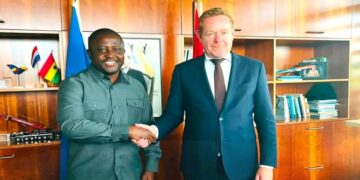


















































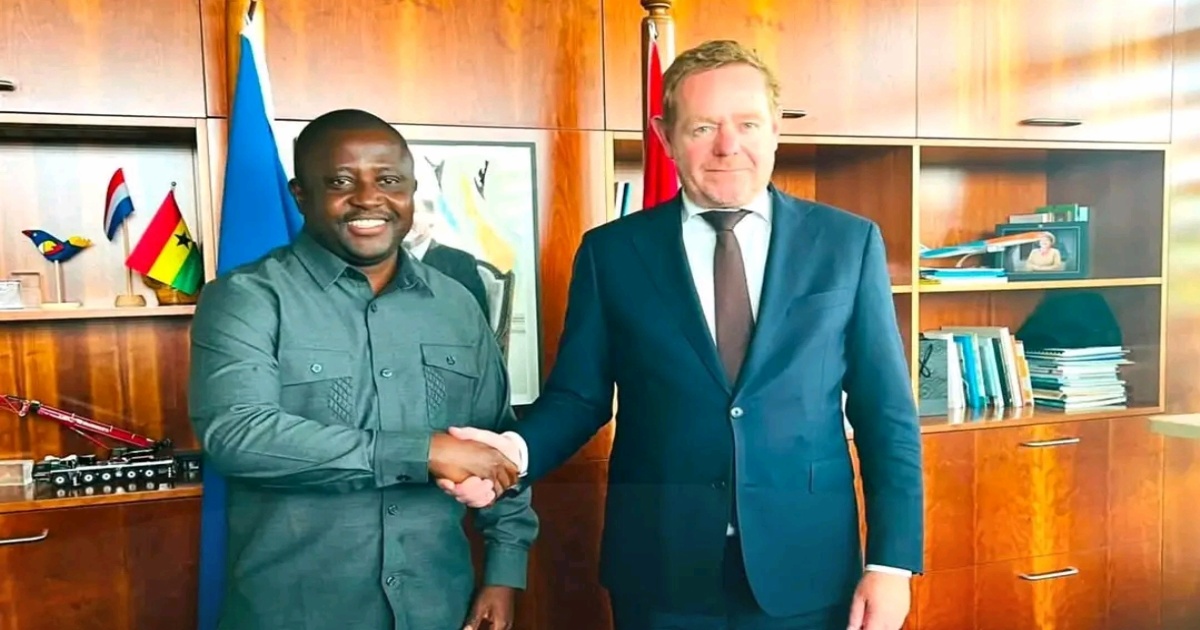
Accra, Ghana – Sierra Leone’s Attorney-General and Minister of Justice has announced a high-level bilateral meeting with his Dutch counterpart in Accra, Ghana, aimed at bolstering cooperation against transnational organized crime, illicit financial flows, and cross-border criminal networks.
The discussions, which focused on strengthening judicial collaboration, information sharing, law enforcement partnerships, and legal frameworks, underscore both nations’ commitment to addressing sophisticated criminal threats that transcend borders. Sierra Leone’s top legal official emphasized the need for sustained momentum in security and justice sector cooperation to safeguard national borders and citizens.
Context of the Meeting
The engagement builds on longstanding efforts between Sierra Leone and the Netherlands to tackle issues such as drug trafficking, corruption, cybercrime, and money laundering. West Africa has long been identified as a vulnerable corridor for transnational crime, including drug smuggling routes, arms trafficking, human smuggling, and illegal fishing, which often exploit porous borders and weak institutional capacities.
This latest meeting comes against the backdrop of heightened tensions over specific cases, notably the Netherlands’ push for the extradition of convicted Dutch drug kingpin Jos Leijdekkers (known as “Bolle Jos”), who has been linked to major international narcotics operations. Dutch authorities have previously pressed Sierra Leone on this matter, with efforts including formal extradition requests and discussions around potential impacts on development aid.
Broader Implications
The Netherlands has a strong track record of supporting rule-of-law initiatives globally, including assistance in fighting transnational crime through capacity building, joint investigations, and multilateral frameworks like the UN Convention against Transnational Organized Crime (UNTOC).
For Sierra Leone, which continues to recover from its civil war history and faces ongoing challenges with governance, corruption, and economic vulnerabilities, such partnerships are critical. Enhanced cooperation could improve extradition processes, asset recovery related to illicit financial flows, and intelligence sharing—key tools in disrupting criminal networks that fuel instability in the Mano River region and beyond.
The Attorney-General reaffirmed Sierra Leone’s dedication to its international obligations and contributions to global anti-crime efforts. Analysts view this as part of a wider trend where African nations seek coordinated responses with European partners to counter increasingly adaptive criminal enterprises that exploit globalization, technology, and regional instability.
As transnational threats evolve—from fentanyl precursors and cyber-enabled fraud to environmental crimes—these bilateral ties could set a model for broader ECOWAS-EU collaboration.
This engagement highlights Sierra Leone’s proactive diplomacy in positioning itself as a reliable partner in international security architecture while addressing domestic priorities around justice sector reform.
Further details on specific agreements or follow-up actions are expected in the coming weeks.