












































Sierra Leone has taken a major step toward advancing its oil and gas ambitions after signing a reconnaissance permit agreement with Shell Exploration Company B.V., in a move aimed at boosting investor confidence and deepening offshore exploration.
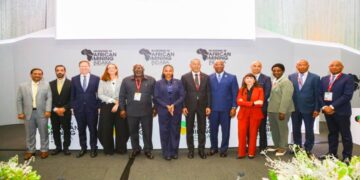
The agreement, signed through the Petroleum Directorate of Sierra Leone at the Invest in African Energy Forum 2026 in Paris on Wednesday, grants Shell the right to conduct extensive geological and geophysical studies across several offshore blocks.
These include G-Blocks 91, 92, 93, 110, 111, 112, 114, 115, 116, 117, 133, 134, 135, 148, 149, 150, 162, 163 and 164, covering an estimated 20,594 square kilometres of offshore territory.
The reconnaissance programme will focus on advanced technical work such as seismic data analysis, basin modelling, petrophysical studies, and mapping of potential hydrocarbon prospects. The goal is to better understand Sierra Leone’s offshore basin and prepare for future exploration and licensing opportunities.
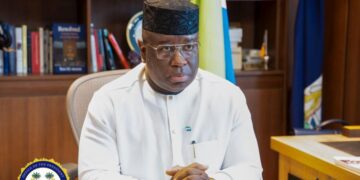
President Julius Maada Bio described the agreement as a landmark development, saying it reflects the country’s commitment to responsibly harness its natural resources while promoting transparency and strong governance.
“This sends a clear message to investors that Sierra Leone is open for business,” the President said in a statement released by the petroleum authorities.
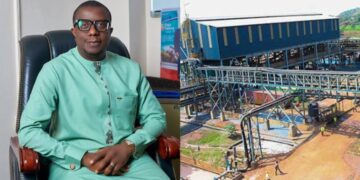
Director General of PDSL, Foday Mansaray, also underscored the significance of securing a global energy giant like Shell, noting that it validates ongoing efforts to improve the country’s geoscience data and regulatory environment.
He explained that Sierra Leone’s upstream strategy is focused on reducing exploration risks by investing in high-quality seismic data and maintaining transparent engagement with international oil companies.
Shell, which operates in more than 70 countries and has extensive deepwater expertise, is expected to play a key role in evaluating the country’s offshore potential ahead of future licensing rounds.
Although Sierra Leone is yet to produce oil or gas commercially, the country is positioning itself as a potential exploration hotspot in West Africa. Recent major discoveries in neighbouring countries such as Ghana, Senegal and Côte d’Ivoire have heightened interest in the region.
Industry observers say Africa is experiencing an “exploration renaissance,” as major energy companies seek new frontiers. Sierra Leone, which has drilled eight wells and recorded four non-commercial discoveries since the 1980s, is now hoping to build on that history.
Past challenges, including the COVID-19 pandemic, the Ebola epidemic, and the high cost of deepwater drilling, have slowed progress in the sector.
However, authorities remain optimistic. Government estimates suggest Sierra Leone could hold up to 44 billion barrels of oil resources, with roughly half considered recoverable. The country’s crude is also believed to be light and sweet, similar in quality to Nigeria’s well-known Qua Iboe grade.
With this latest agreement, Sierra Leone appears to be strengthening its position on the global energy map, placing renewed emphasis on data-driven exploration and credible international partnerships.