

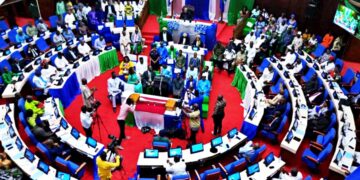























































Freetown, 31 July 2026 — The Office of the Clerk of Parliament has announced that the next sitting of the Parliament of Sierra Leone will take place today, Friday 31 July 2026, at 10:00 a.m. in the Chamber of Parliament.
Lawmakers are scheduled to consider The Supplementary Act, 2026, which seeks to appropriate additional funds from the Consolidated Revenue Fund for the services of the Republic of Sierra Leone and related matters. The measure comes amid ongoing fiscal pressures, including those linked to external economic shocks, and aligns with commitments under Sierra Leone’s Extended Credit Facility arrangement with the International Monetary Fund. Authorities have indicated plans for a supplementary budget to accommodate certain spending adjustments while maintaining overall consolidation targets.
On Monday 3 August 2026, Parliament is expected to continue consideration of the Constitution of Sierra Leone (Amendment) Act, 2025. The Bill, which aims to amend the 1991 Constitution (Act No. 6 of 1991), represents one of the most significant constitutional reform efforts in over a decade.
The proposed amendments draw primarily from the report of the Constitutional Review Committee chaired by the late Justice Edmond Cowan and the recommendations of the Tripartite Committee established after the disputed 2023 elections.
Key provisions under debate include:
– Fixed dates for presidential and parliamentary elections (proposed for the second Saturday in November every fifth year).
– Reforms to the Electoral Commission, including stricter qualifications for commissioners and a more transparent Search and Nomination Committee process.
– Measures to reinforce the political neutrality of the police and armed forces.
– A framework supporting greater women’s representation, including a proposed 30 percent quota in certain political contests.
– Adjustments to the electoral system and related governance structures.
Attorney General and Minister of Justice Alpha Sesay has piloted the Bill through its early stages. Debate on the second reading took place on Tuesday 28 July 2026, with contributions from both sides of the House before the Speaker adjourned proceedings. The Bill requires a two-thirds majority in Parliament for passage; certain entrenched provisions would also need approval in a national referendum.
The sitting forms part of a busy legislative period focused on both immediate fiscal needs and longer-term democratic reforms ahead of the 2028 elections. Honourable Members of Parliament and members of the public have been notified of the schedule following the previous adjournment.