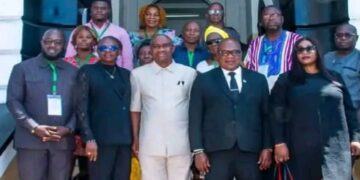





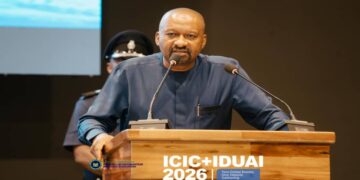
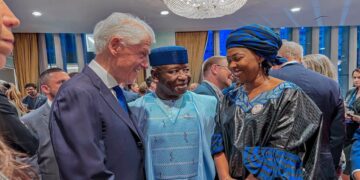

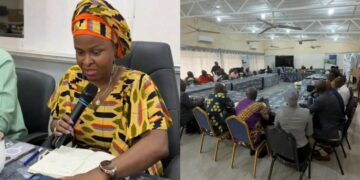








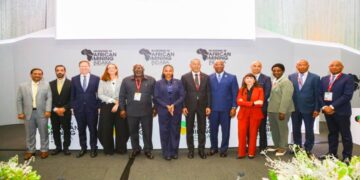









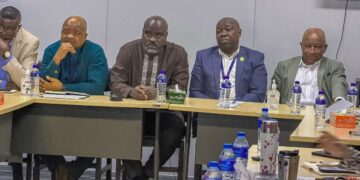




















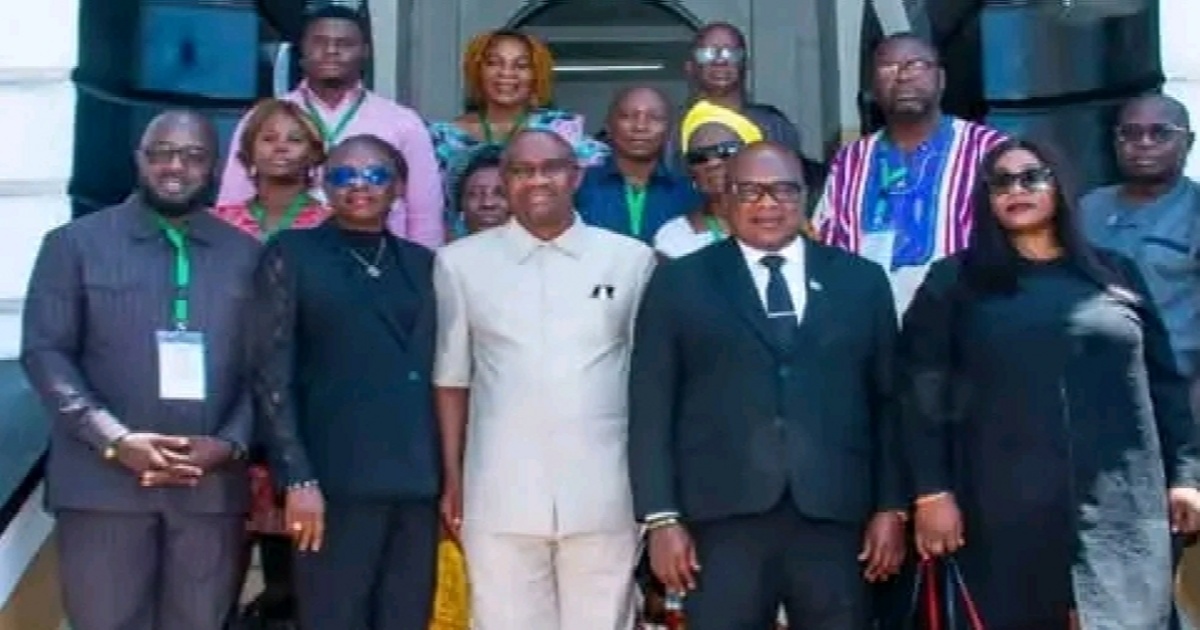
Freetown, 30 September 2026 — Liberia is turning to Sierra Leone for guidance as it advances plans to establish a War and Economic Crimes Court, with a high-level delegation holding talks with senior members of the Sierra Leone Judiciary in Freetown on Wednesday.
The Liberian team met Court of Appeal Justices who received them on behalf of Chief Justice Komba Kamanda. Justice Jamesina E.L. King described Liberia’s initiative as significant and assured the visitors that Sierra Leone’s Judiciary is prepared to share its experience and expertise. She offered a sobering reminder: justice is costly.
Establishing a specialised court, she said, requires more than legislation and good intentions. It demands sustained political commitment, financial resources, competent personnel and strong institutions capable of seeing the process through.
Sierra Leone’s own journey provides a powerful case study. Following an agreement between the Government of Sierra Leone and the United Nations, the Special Court for Sierra Leone was set up to prosecute those who bore the greatest responsibility for atrocities during the country’s civil war. The hybrid tribunal secured convictions against several accused persons, including former Liberian President Charles Taylor for his role in the Sierra Leone conflict. Some convicted individuals continue to serve their sentences outside Sierra Leone because of security considerations. The court closed in 2013, leaving a Residual Special Court to handle outstanding matters, but its work remains a landmark in regional transitional justice.
Justice King drew an important distinction that could shape Liberia’s approach. Sierra Leone’s Special Court was internationally driven. She encouraged Liberia to consider a model owned and driven by Liberians themselves. While international support, expertise and resources can strengthen such a process, she stressed, the legitimacy and long-term impact may depend heavily on national ownership. Ultimately, the objective must be for peace and justice to prevail.
The discussion also touched on economic accountability. Justice King highlighted Sierra Leone’s specialised Anti-Corruption Division of the High Court, where trained judges handle cases brought by the Anti-Corruption Commission. The shift from prosecuting corruption-related cases through the Office of the Attorney-General to creating dedicated judicial mechanisms has allowed a more focused approach to economic offences.
Court of Appeal Justice John Bosco Allieu reminded the delegation that although the war may have ended, its human consequences have not simply disappeared. Lives were lost, people were maimed and communities were permanently affected.
A courtroom cannot restore every life or erase every wound, he noted, but accountability can form part of a society’s attempt to confront what happened rather than allow painful history to disappear into silence.
Justice Isata Susan Sellu Tucker encouraged the Liberian team to undertake follow-up engagements with other institutions in Sierra Leone to broaden its understanding. Among the Liberian representatives was Rev. Amnimadab K. John, Head of the Office of War Crimes, who expressed appreciation for the engagement and explained that religious leaders had come together to help pioneer Liberia’s initiative.
The visit comes as Liberia’s Office for the Establishment of the War and Economic Crimes Court for Liberia (OWECC-L) pushes forward under a renewed mandate from President Joseph Boakai. The Liberian Senate’s Judiciary Committee has set a December 2026 target for final legislative action on bills to create both a Special War Crimes Court and a National Anti-Corruption Court. No one has yet been prosecuted inside Liberia for the civil war atrocities that claimed an estimated 250,000 lives between 1989 and 2003.
Sierra Leone and Liberia share more than a border; they share the scars of devastating and interlinked civil wars and the difficult question of what societies do after the guns fall silent. Liberia’s proposed court now presents an opportunity to draw from regional experience while developing a model that reflects its own history, institutions and aspirations.
The hardest question may ultimately be the simplest: How does a nation pursue justice for the past without allowing the past to permanently imprison its future? Sierra Leone’s experience offers Liberia lessons, warnings and possibilities. But the final chapter of Liberia’s justice journey, if the court is established, will have to be written by Liberians themselves.