



















































By Mariama Benovia Davies
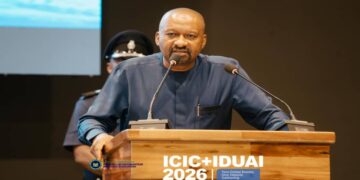
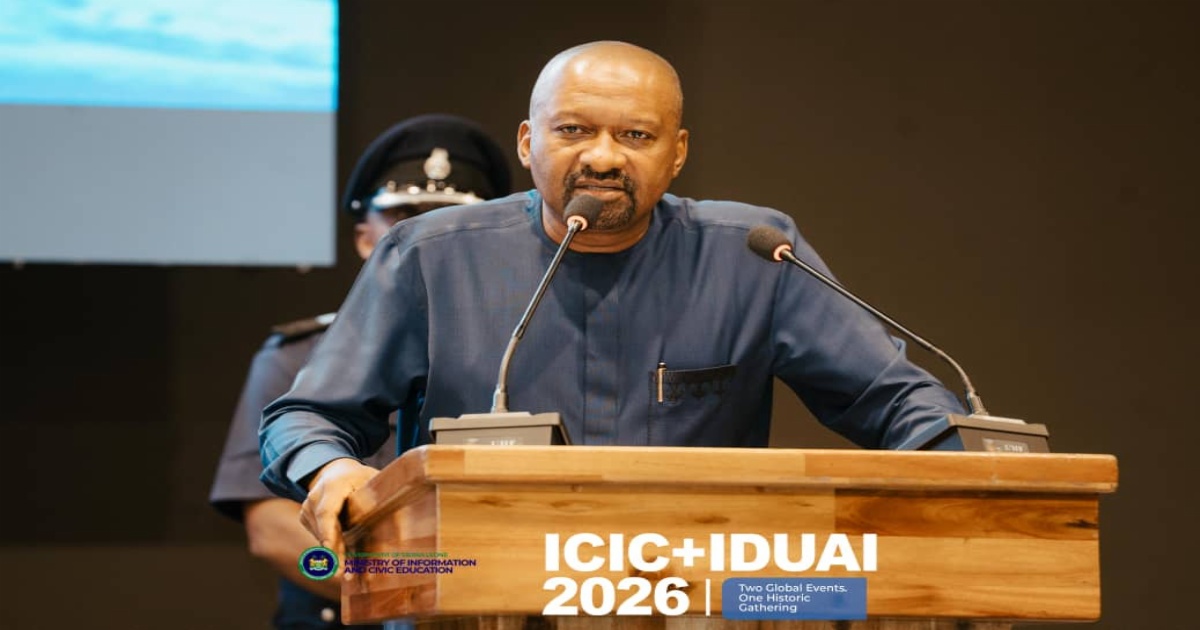
Vice President of the Republic of Sierra Leone, His Excellency Dr. Mohamed Juldeh Jalloh, has underscored the importance of access to information in strengthening democratic governance, protecting citizens’ rights and building public trust, as Sierra Leone hosts the 17th International Conference of Information Commissioners (ICIC) alongside UNESCO’s global commemoration of the International Day for Universal Access to Information (IDUAI).
The three day international gathering, being held from 28 to 30 September 2026 at the Julius Maada Bio Conference Centre in Lungi, brings together stakeholders in information governance under the theme, “Upholding Information Integrity in the Digital Age: The Role of Access to Information in Addressing Information Disorder.”
Delivering the keynote address, Vice President Jalloh, on behalf of President Julius Maada Bio, welcomed delegates to Sierra Leone and expressed appreciation to ICIC member countries and UNESCO for selecting Sierra Leone to host the important international gathering.
He described the conference as timely, particularly as societies navigate an era increasingly defined by knowledge, digital transformation and citizen participation. According to him, access to information has become an essential component of modern citizenship and a critical factor in consolidating young democracies such as Sierra Leone.
Reflecting on Sierra Leone’s historical journey, Vice President Jalloh noted the country’s long standing tradition of journalism and public information, before highlighting the political and institutional challenges the country experienced over the years, including one-party rule and civil conflict.
He explained that the return to multiparty democracy in the 1990s created renewed opportunities to strengthen democratic institutions, human rights and citizen participation. Against this background, he identified access to information as one of the important indicators through which the country’s democratic development can be assessed.
The Vice President highlighted key measures taken by Sierra Leone to strengthen citizens’ access to information, including the enactment of the Right to Access Information Act in 2013, which established the Right to Access Information Commission.
He also referenced the country’s data protection legislation as part of efforts to strengthen the broader information governance framework.
He explained that these measures demonstrate Sierra Leone’s commitment to protecting citizens’ rights and advancing principles contained in international and regional human rights instruments, including the right to seek and receive information.
He emphasized that the importance of access to information extends beyond the availability of public records.
He noted that it enables citizens to assess government performance, participate in governance, engage in policy discussions and hold public officials accountable.
He further emphasized that access to information can strengthen public institutions and build trust, while giving citizens, particularly young people, greater opportunities to contribute to national development.
He also cited the repeal of criminal libel provisions from the Public Order Act in 2020 as an important milestone in Sierra Leone’s democratic and information environment.
Turning to the challenges created by the digital age, the Vice President noted that technological advancement and artificial intelligence are creating significant opportunities to expand access to information, while simultaneously introducing new complexities.
He stressed the need for young democracies to develop the infrastructure, institutional capacity and systems required to manage the rapidly expanding information environment.
He identified limited internet access, particularly in rural communities, literacy constraints and institutional practices that can restrict the release of public information as challenges requiring continued attention.
He also situated information governance within the wider economic realities facing developing countries.
He pointed to pressures including reduced development assistance, climate change, debt burdens, international crises and rising energy and commodity costs. Against this backdrop, he noted that governments are often required to make difficult choices in allocating limited resources between strengthening information governance systems and addressing other essential national priorities such as healthcare and education.
He therefore stressed the importance of developing sustainable approaches that can strengthen information governance without undermining other critical development responsibilities.
Concluding his keynote, Vice President Jalloh called for stronger coordination and international cooperation to help young democracies build effective information governance ecosystems.
He encouraged institutions such as ICIC and UNESCO to support countries in navigating the complex relationship between access to information, information integrity, technological advancement and democratic development.
He challenged delegates to use the conference to identify practical approaches that can widen access to reliable information, protect information integrity and strengthen democratic institutions, while taking into account the economic and institutional realities confronting developing countries.