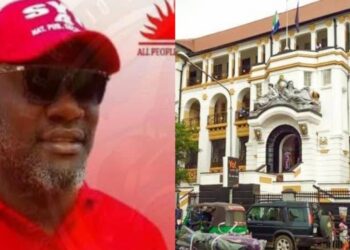



































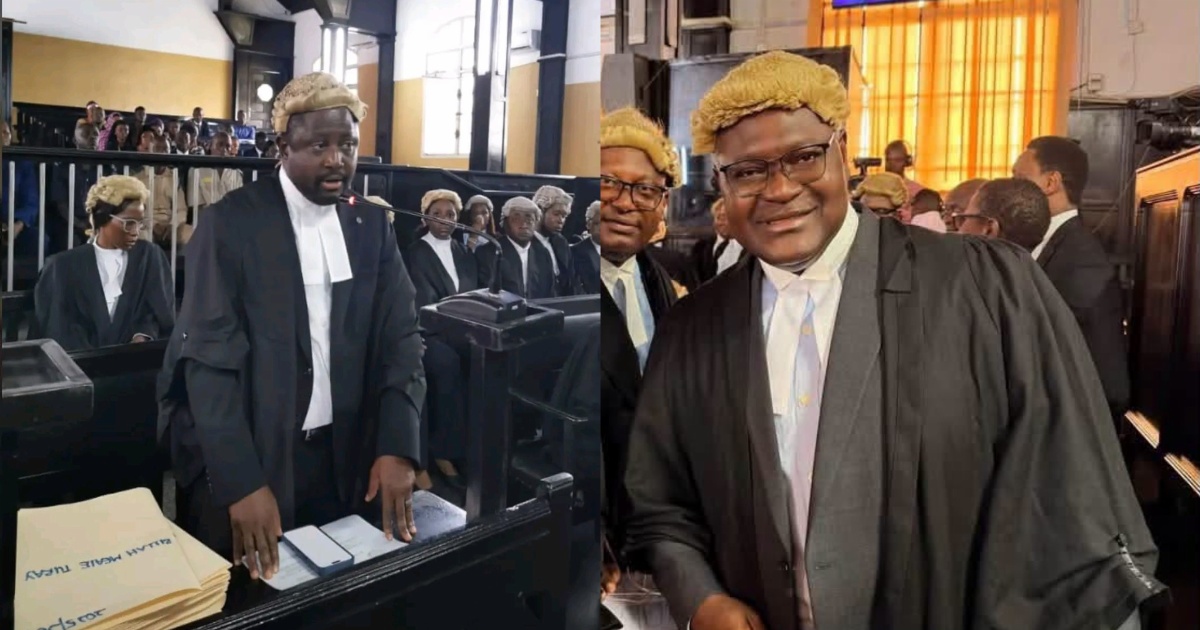
FREETOWN, 19 October 2026 – The Government of Sierra Leone has asked the Supreme Court to dismiss three cases challenging how Parliament passed the Constitution of Sierra Leone (Amendment) Bill, 2025, arguing the Court has no power to examine Parliament’s internal proceedings.
In a Notice of Motion filed on 16 October 2026 by the Law Officers’ Department, the State asks the Court to strike out the consolidated cases on four main grounds: jurisdiction, separation of powers, prematurity, and presidential immunity.
What Government Says:
1. Section 94(2) bars review: The State says the Constitution protects Parliament’s internal procedure from court scrutiny, and that this covers Speaker Hon. Segepoh Solomon Thomas’s ruling and the vote count on 10 August.
2. Not yet law: The Bill has not been assented to by President Julius Maada Bio, so it is not yet law and the Court should wait. Any challenge is premature.
3. Presidential immunity: Under Section 48(4), the Court cannot make an order that interferes with the President’s discretion to assent or withhold assent. The three cases, the State says, indirectly try to stop the President.
4. Wrong provision: Section 127, which allows citizens to challenge laws, does not cover challenges to how Parliament conducted its proceedings.
The application is supported by an affidavit sworn by Senior State Counsel Joseph Sesay. The State also wants all further steps – including written submissions – paused until this preliminary objection is decided. A hearing date has not yet been fixed.
What Challengers Say:
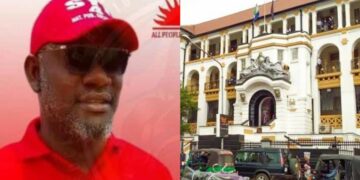
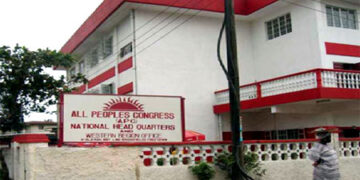
The three cases – filed separately by opposition MPs, the All Peoples Congress (APC) Party and a group of citizens including Andrew Keili and others – were consolidated by the Supreme Court on 8 October at the State’s own request. The Court, led by Chief Justice Komba Kamanda, also admitted the Institute for Legal Research and Advocacy for Justice (ILRAJ) as amicus curiae – friend of the court.
Their core argument is that the two-thirds rule is not an internal rule. Section 108(4) of the Constitution requires that a Bill seeking to amend the Constitution must be supported by not less than two-thirds of all Members of Parliament. With 149 MPs, that means 100 votes.
On 10 August, after APC MPs staged a walkout in protest, Parliament proceeded with only SLPP MPs present. The Speaker ruled that a simple majority of members present was enough for clause-by-clause votes. According to the Hansard and media reports, the “yes” votes were about 96-97 – short of the 100 required. Yet Parliament recorded the Bill as passed and sent it to the President.
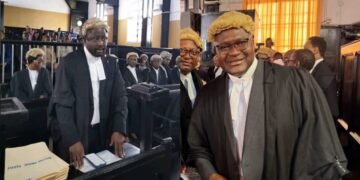
Opposition lawyers, including former Attorney-General Joseph Fitzgerald Kamara (JFK), argue that the mandatory two-thirds threshold is entrenched in the Constitution itself and cannot be waived by a Speaker’s ruling. They rely on Section 127 and Section 108 which give the Supreme Court exclusive jurisdiction to interpret the Constitution.
They also point out a contradiction: while the Government now says the Court cannot hear the challenge because the Bill is not law, President Bio himself on 15 September 2026 wrote a *Presidential Reference* to the same Supreme Court asking for advisory opinion on the very same question – whether the two-thirds requirement was met – before he decides to sign. That letter is part of the exhibits in the current filing.
Why It Matters:
The Bill seeks to change key election rules for the 2028 elections: lowering the threshold for a first-round presidential victory from 55% to 50% plus one vote, and altering the proportional representation system for parliamentary elections introduced in 2022.
If the Court grants the Government’s motion, the three contested cases will die without a ruling on the merits, leaving only the President’s Reference – where the challengers are not full parties but only interveners – as the vehicle for answering the two-thirds question.
If the Court refuses the motion, the consolidated cases will proceed to full hearing with written briefs, oral arguments and the friend of the court.
The Court also has a third option – to hear the jurisdictional objection together with the substantive arguments on whether 96 votes can amend the Constitution.
The decision will determine not just the fate of this Bill, but the precedent for how Sierra Leone’s Constitution can be amended in future.