


























A harrowing investigation by BBC Africa Eye has shed new light on the shadowy networks behind suspected ritual killings in Sierra Leone, cases that continue to haunt families who say they have been denied justice.
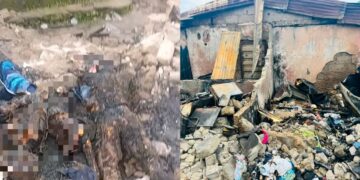
The investigation revisits the brutal 2020 murder of 11-year-old Papayo Kalokoh in Makeni, whose dismembered body was discovered at the bottom of a well two weeks after he went missing while selling fish. His mother, Sallay Kalokoh, told BBC reporters she is devastated that no arrests or charges have been made.
“They killed my child and now there is just silence,” she said. Papayo’s vital organs, eyes, and arm had been removed, yet police did not classify the case as a ritual killing.
Such cases are not isolated. Across Sierra Leone, communities, especially in the north, have long reported disappearances and killings allegedly linked to “juju” rituals performed by illicit practitioners who claim human body parts can bring power, wealth, or political success.
BBC Africa Eye’s undercover reporting provides rare insight into this underground trade.
Reporters posing as political seekers of occult power were introduced to individuals who claimed to be part of networks supplying human body parts. One man, identifying himself only as Kanu, met the team in a forest shrine in Kambia District.
Wearing a full ceremonial mask, he boasted of supplying “big politicians” in Sierra Leone and neighbouring countries. He went as far as displaying what he claimed was a dried human skull, and quoted a price of 70 million leones for the body parts of a woman. The BBC could not verify these claims, and police in Kambia have not provided an update on the matter.
The BBC investigation also highlights another troubling trend: cases involving suspected ritual killings often stall within the justice system. Even high-profile incidents struggle to progress. A 2023 case involving a missing university lecturer whose body was found in a herbalist’s shrine appears to have halted despite being committed to the High Court.
Tragedy struck the BBC’s own reporting team during the investigation. In May this year, journalist Mariam Kamara’s 28-year-old cousin, Fatmata Conteh, was found dead by a roadside in Makeni, her front teeth missing, further fuelling suspicion of ritual motives.
The family had to cover the cost of transporting her body for an autopsy, yet the post-mortem was inconclusive and no arrests have been made.
Sierra Leone, a country of more than 8 million people, has only one pathologist, making evidence-gathering difficult. Deep cultural beliefs in witchcraft also discourage victims, witnesses, and sometimes even police officers from pushing investigations further.
For families like the Kalokohs and Contehs, the pain remains raw.
“We are living in fear,” Makeni residents told the BBC, describing a rise in unexplained killings and disappearances.
BBC Africa Eye’s findings have renewed calls for government action, improved forensic capacity, and strengthened investigations—especially at a time when communities feel increasingly unprotected against ritual crimes.
Source: BBC Africa Eye Investigative Reporting