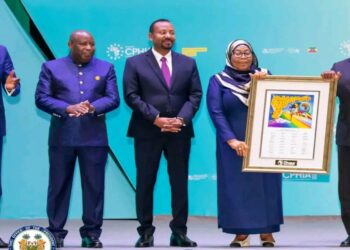
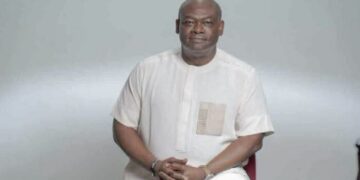
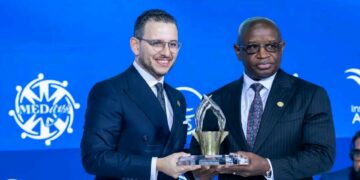







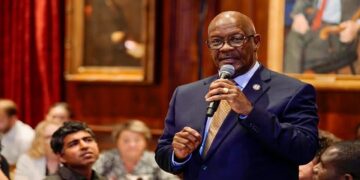







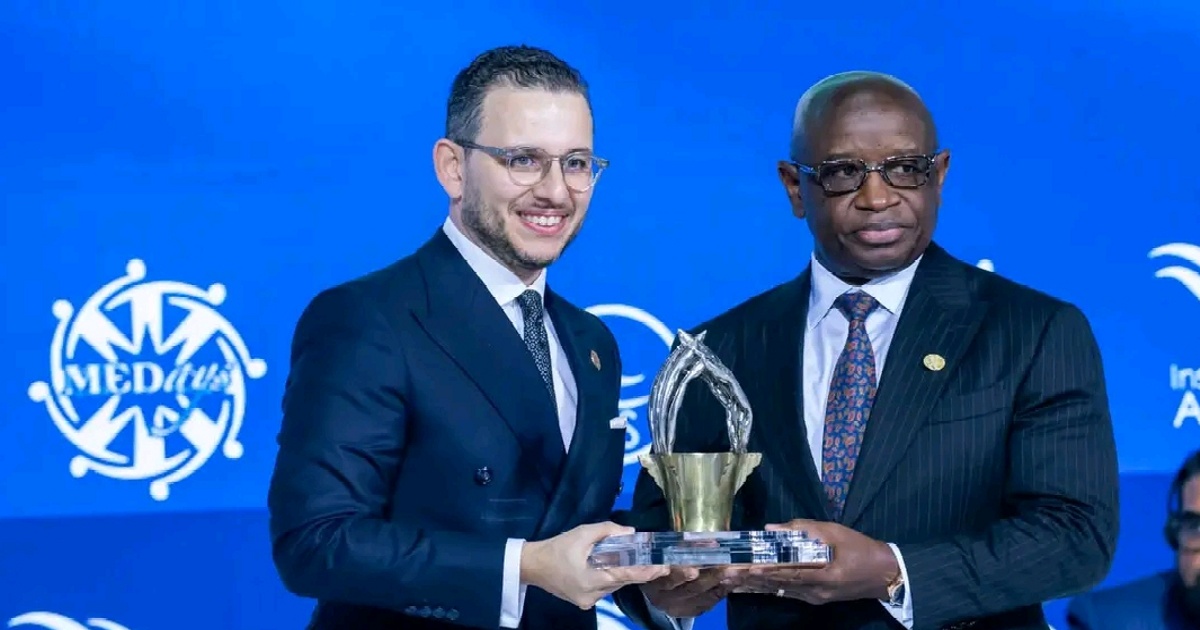
Palais des Arts et de la Culture, Tangier, Morocco, Wednesday, 25 November 2026 – His Excellency President Dr Julius Maada Bio has received the prestigious MEDays Grand Prize in recognition of his contributions to global peace, democracy, regional integration and human capital development, while using his keynote address at the 18th MEDays International Forum to call for greater African representation in global decision-making, stronger regional cooperation and a fairer international economic system.
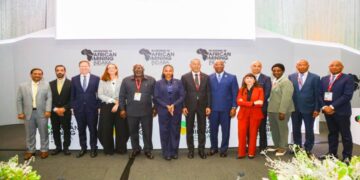
The award was presented during the 18th edition of the MEDays International Forum in Tangier, Morocco, where President Bio delivered the keynote address under the theme, “Fragmented World: Time for Choices.” The forum, held under the High Patronage of His Majesty King Mohammed VI of Morocco, brought together global leaders and policymakers to discuss major geopolitical and economic developments.
Accepting the award, President Bio thanked the Amadeus Institute and the MEDays Forum for the recognition, which he received with gratitude and humility. He dedicated the honour to the people of Sierra Leone, whose resilience and determination, he said, continued to inspire his service.
“I receive this honour on behalf of the great people of Sierra Leone, whose resilience and determination continue to inspire my service,” he stated.
The President also shared the recognition with Africans working to advance peace, strengthen institutions and improve the lives of their people. He expressed particular appreciation for receiving the award in Morocco, a country with which Sierra Leone enjoys longstanding friendship, and thanked King Mohammed VI and the Moroccan Government and people for their hospitality.
In his keynote address, President Bio reflected on the responsibilities of leadership, observing that its true measure lies in the peace preserved, opportunities created and future secured for succeeding generations.
“As I receive this distinguished award, I am reminded that leadership is ultimately judged by the peace we preserve, the opportunities we create and the future we leave to those who come after us,” he said.
Using Tangier’s strategic geographical position overlooking the Strait of Gibraltar, President Bio illustrated the interconnectedness of Africa and Europe, noting that centuries of trade, migration and shared history had closely linked the fortunes of the two continents.
He highlighted how developments in distant parts of the world directly affect African economies, pointing out that conflicts thousands of miles away could raise fuel prices in Freetown, decisions taken in international financial centres could increase borrowing costs, and changes in trade policies could disrupt the livelihoods of African producers.
Against this background, he challenged world leaders to consider how countries could protect their national interests while preserving the cooperation essential to their common future.
“For Africa, we cannot afford isolation, nor should we be drawn into rivalries between competing powers,” he stated.
President Bio reaffirmed Sierra Leone’s commitment to maintaining friendships across the world, emphasising that the value of international partnerships should be judged by what they deliver for citizens.
“Sierra Leone maintains friendships across the world. We judge our partnerships by what they deliver for our people,” he said.
Drawing on Sierra Leone’s experience of moving from conflict to peace, the President stressed that lasting peace requires difficult decisions, sustained dialogue and a willingness to place the interests of citizens above differences. He identified reconciliation, democratic institutions and regional solidarity as essential foundations for stability.
Addressing the security challenges confronting West Africa, particularly the spread of terrorism and instability across the Sahel, President Bio called for stronger regional cooperation, warning that political differences must not stand in the way of collective security.
“Our peoples share borders, markets and families, and their security must remain our common responsibility,” he emphasised.
The President also called for reform of the United Nations Security Council, arguing that Africa must have a meaningful voice in decisions affecting its peace, security and future.
Reflecting on Sierra Leone’s membership of the UN Security Council in 2024 and 2025, he noted that although the Council frequently addressed conflicts on the African continent, Africa remained without permanent representation in the body.
Speaking in his capacity as Coordinator of the African Union Committee of Ten on UN Security Council Reform, President Bio reaffirmed Africa’s demand for reform based on the Ezulwini Consensus and the Sirte Declaration. He called for at least two permanent seats, with all the rights and privileges of permanent membership, including the veto, alongside five non-permanent seats.
“We are not asking for special treatment. We are asking for fair representation,” he declared.
He extended the call for fairness to the international financial system, urging greater access to capital, more effective debt treatment and increased African influence over decisions that shape the continent’s development prospects.
Turning to Africa’s economic future, President Bio urged countries to take greater responsibility for transforming their economies, moving away from the longstanding pattern of exporting raw materials and importing finished products.
He cited Sierra Leone’s Feed Salone programme as an example of efforts to strengthen agricultural production and food security, alongside initiatives to promote local processing and value addition in the mining sector.
The President also highlighted the inaugural West Africa Integration and Investment Summit (WAIIS 2026), held in Lungi the previous week, as an important platform for bringing together political leaders, investors and development partners to explore practical ways of moving the region from potential to production.
He underscored the African Continental Free Trade Area (AfCFTA) as an opportunity to create larger markets, strengthen regional supply chains and generate employment across the continent.
President Bio identified Morocco as an important partner in advancing these ambitions, recalling the historical connections between the two countries and expressing Sierra Leone’s interest in deepening cooperation in trade, investment, agriculture and energy.
He also welcomed King Mohammed VI’s initiative to facilitate Atlantic Ocean access for Sahel states and the proposed Nigeria-Morocco African Atlantic Gas Pipeline, describing the initiatives as opportunities to strengthen regional connectivity and economic integration.
The President placed particular emphasis on the need to ensure that Africa’s development choices create meaningful opportunities for its young people.
He argued that education and skills development must translate into employment, enterprise and the opportunity to build a decent life. Referring to the dangerous journeys undertaken by many young Africans in search of opportunities abroad, he called for economies that give young people compelling reasons to remain and build their futures at home, while ensuring that those who choose to travel can do so safely and legally.
“Our ambition is an Africa where young people can build fulfilling lives at home and explore the world by choice, not out of desperation,” he said.
Concluding his address, President Bio urged African countries to choose peace over conflict, production over dependency and cooperation over division. He called for stronger institutions, greater investment in people and a more active African role in shaping global decisions.
“To our partners across the world, Africa seeks respect, fair opportunity and partnerships that deliver results. We are ready to contribute to solutions, not merely receive them,” he stated.
He thanked the Amadeus Institute once again for the MEDays Grand Prize, describing it as encouragement to continue advancing peace, cooperation and development in Sierra Leone and across the continent.
“In a fragmented world, we must decide whether to deepen our divisions or build a future together. Let us choose to build that future together,” President Bio concluded.
For Media Enquiries:
State House Media and Communications Unit
info@statehouse.gov.sl