















Moscow, 25 November 2026 — Sierra Leone has used the Third Russia-Africa Summit in Moscow to push for a shift in its relationship with Russia from diplomatic solidarity to practical economic results.
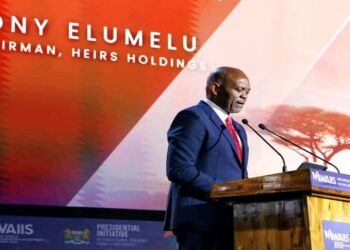
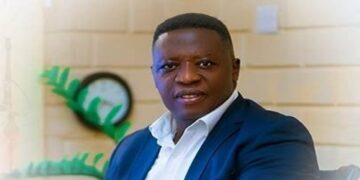
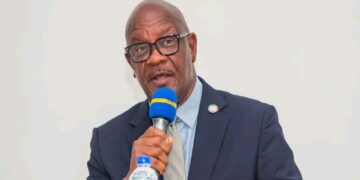
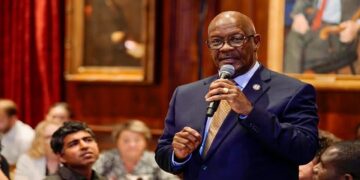
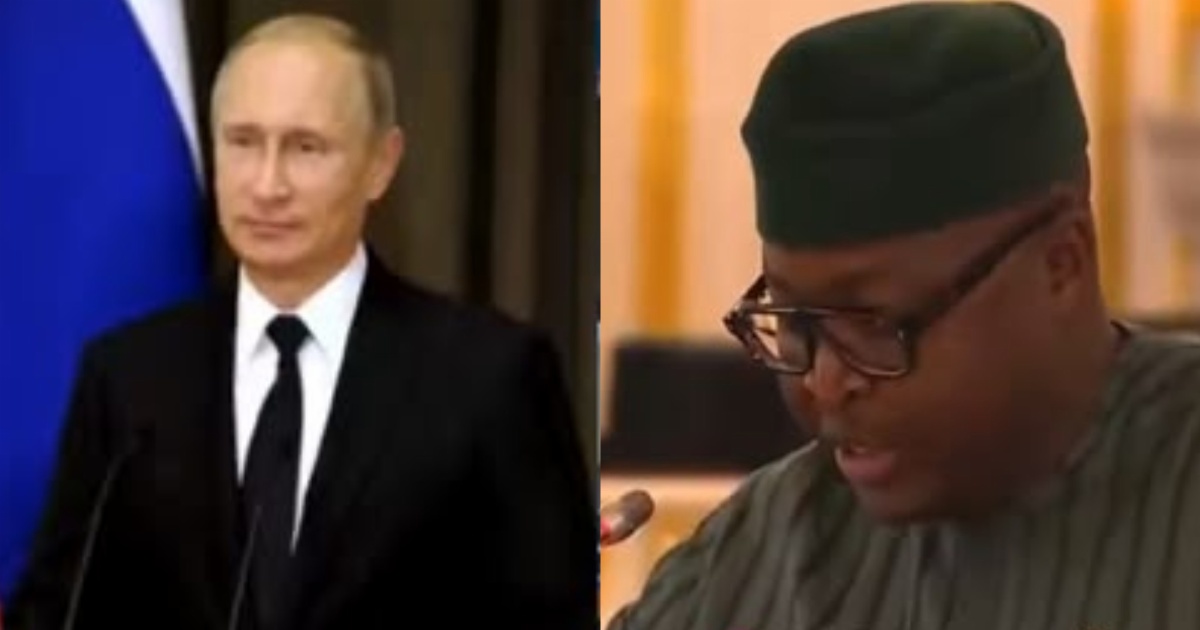
Delivering a keynote address on behalf of President Julius Maada Bio, Presidential Adviser Alhaji Musa Timothy Kabba told Russian and African leaders that the summit must move beyond friendship and produce tangible outcomes: trade, investment, technology transfer and local value addition.
“What Sierra Leone wants is not just aid,” Kabba said, “but increased trade, responsible investment, technology transfer, and local value addition — meaning processing Sierra Leone’s resources in Sierra Leone and not just exporting raw materials.”
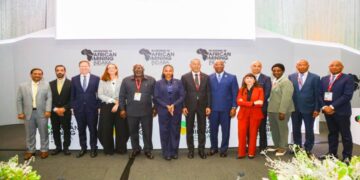
The summit, held on 28-29 October 2026 at the Grand Kremlin Palace, brought together 48 African nations, with about 22 represented by their heads of state, according to the Kremlin. It was the third edition after Sochi in 2019 and St Petersburg in 2023. f9fb
Kabba highlighted 64 years of diplomatic relations between Sierra Leone and Russia, dating back to 1962 when Sierra Leone was one of the first African countries to establish ties with the Soviet Union.
He welcomed the reopening of the Russian Embassy in Freetown and the establishment of a Russian House as important steps to bring the peoples, institutions and businesses of both countries closer.
Russia closed its Freetown embassy in September 1992 for financial reasons. It resumed operations in October 2025, appointing a new ambassador, part of Moscow’s wider return to Africa.
Kabba also spoke personally about the relationship. A graduate of Saint Petersburg State Mining University, he said he was a proud beneficiary of Russian education and expressed gratitude to Russia and its people for the opportunity to study there.
He had made a similar point days earlier at the Second Russian-African Raw Materials Dialogue at the same university, where he said his life was an example of what Africa-Russia cooperation could produce. Kabba was recruited into an armed faction at age 12 during Sierra Leone’s civil war before later pursuing education in Russia.
Energy At The Centre
Energy was at the top of Sierra Leone’s agenda.
“Like most African countries, energy remains an urgent national priority for Sierra Leone, and reliable electricity is essential for manufacturing and value addition,” Kabba said.
He called for Russian support in power generation, oil and gas development, energy infrastructure and peaceful nuclear-energy expertise.
The appeal reflects a stark domestic reality. Only about 36% of Sierra Leone’s population has access to electricity, with rural access far lower. The government’s $2.2 billion National Energy Compact under Mission 300 aims to raise access to 78% by 2030.
President Bio has repeatedly made the same argument internationally: “Africa will not be the warehouse of the global energy transition. Our continent will be a centre of value creation and industrial growth.”
Kabba also linked energy to agriculture, calling for cooperation in agricultural technology, fertiliser production, seed development and mechanised farming to support President Bio’s Feed Salone initiative and improve food security.
He further encouraged Russian investment in petroleum exploration, geological mapping, mining and infrastructure — but stressed that such investments should be transparent, sustainable and mutually beneficial, with emphasis on skills transfer and local value addition.
Education And UN Reform
Kabba welcomed Russia’s scholarship programmes, including the Open Doors Scholarship scheme, which provides opportunities for Sierra Leonean students to study at Russian universities.
Russian-language studies have already commenced in Sierra Leone, and the Eastern Technical University is in discussions to establish a Russian Language and Cultural Centre at its Kenema campus.
On international affairs, Kabba reiterated Sierra Leone’s call for reform of the United Nations Security Council to ensure greater African representation, urging Russia to support the Ezulwini Consensus and Sirte Declaration.
Sierra Leone served as a non-permanent member of the Security Council in 2024-2025, a period during which it coordinated closely with Russia on Council matters.
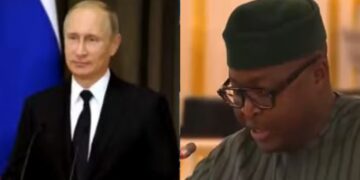
Russian President Vladimir Putin told the summit that Russia was a better partner than the West, saying Russian companies operate in Africa on an equal footing, and that Moscow delivers grain and fertilisers to more than 40 African countries. f
But analysts note the challenge for Moscow is turning declarations into delivery. Russia accounts for less than one per cent of foreign direct investment into Africa, and its global arms exports fell by 64% between 2021 and 2025.
That is precisely the test Kabba set for the summit.
He challenged participants to ensure that Moscow produces tangible development outcomes — “industries, farms, power plants, employment opportunities and improved livelihoods.”
For Sierra Leone, he said, Africa has a youthful population, abundant resources and vibrant societies, but is still held back by conflict, health crises, food insecurity, weak energy systems and limited economic diversification.