













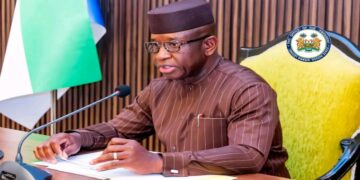





















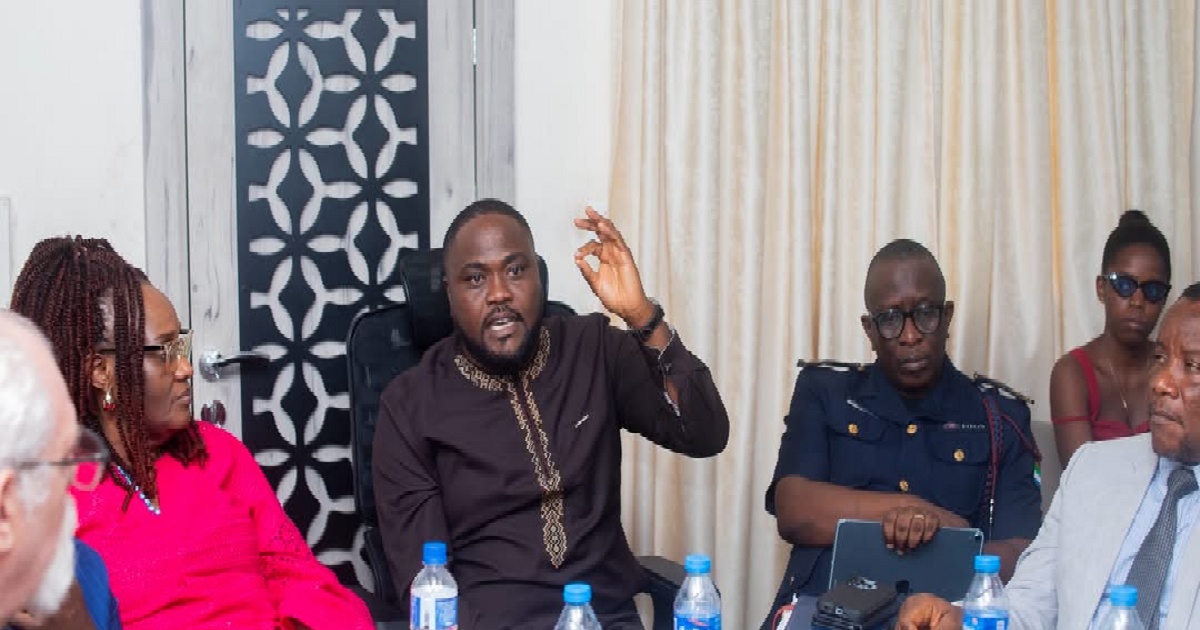
The Director General of the Sierra Leone Ports and Harbours Authority (SLPHA), Yankuba Askia Bio, has clarified a number of issues surrounding operations at the Port of Freetown, while urging journalists reporting on the maritime sector to verify information and properly understand the respective roles of institutions operating within the port.
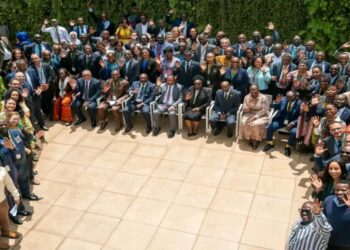
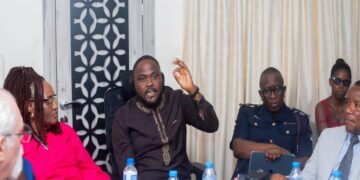
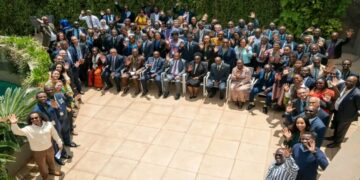
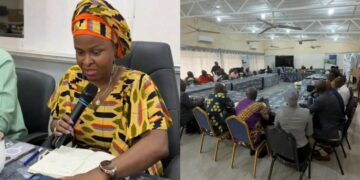
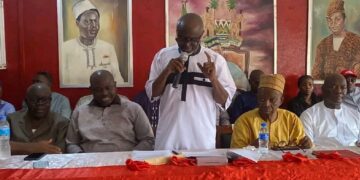
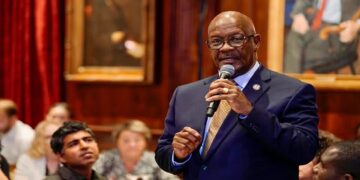
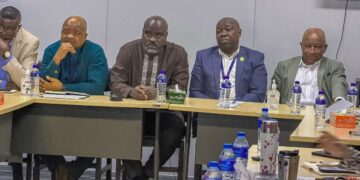
Mr. Bio made the clarification during a media engagement with port stakeholders held at the Queen Elizabeth II Quay on Wednesday September 23, 2026.
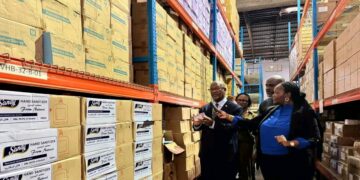
A major focus of the engagement was the recent improvement in cargo flow at the Port of Freetown. According to the SLPHA Director General, the port has undergone significant decongestion following coordinated interventions by the Authority and key stakeholders involved in cargo clearance and movement.
He said the Port of Freetown has, as a result of the recent decongestion efforts, been removed from the list of congested ports in Africa. Bio attributed the improvement to the combined efforts of SLPHA, the National Revenue Authority’s Customs and Excise department, Freetown Terminal Limited (FTL), Nectar Sierra Leone Bulk Terminal (NSBT) and other stakeholders whose operations form part of the cargo clearance chain.
 He nevertheless appealed to importers and cargo owners with goods awaiting clearance to take advantage of the available space at the port and complete the necessary procedures to collect their consignments.
The SLPHA Director General also disclosed plans for the introduction of a single-window system designed to further simplify and modernize cargo clearance and forwarding processes.
According to him, the system is expected to commence in March 2027 and will enable users to undertake a significant part of the clearance process digitally, reducing the need for physical movement between different offices. The proposed system, D.G. Bio explained, forms part of broader efforts to improve efficiency and move port operations further into a digital era.
SLPHA’s Yankuba Askia Bio used the engagement to explain the evolution of port management in Sierra Leone and the Authority’s present responsibilities under the landlord port model.
He noted that the former Sierra Leone Ports Authority operated largely as a service port, carrying out many operational functions itself. Under the current model, however, SLPHA’s responsibilities center on regulation, supervision, infrastructure, oversight, safety and security compliance, and creating an enabling environment for concessionaires and other port operators.
He therefore stressed that “SLPHA does not directly undertake clearing and forwarding activities at the Port of Freetown.” The distinction, he said, is important in understanding where responsibility lies when issues arise within the wider cargo clearance process.
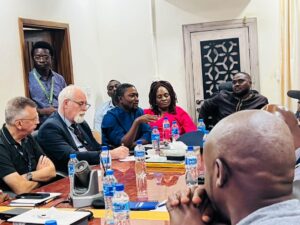
The stakeholders-media meeting also brought together representatives of key port stakeholders, who outlined their respective roles in the movement of cargo. As concessionaries, the Nectar Sierra Leone Bulk Terminal (NSBT) handles the bulk and break-bulk segment of port operations, while FTL handles containerized cargo as well as a portion of break-bulk operations, under their respective concession agreements. The National Revenue Authority (NRA), through Customs and Excise, is responsible for the collection of government revenue associated with imported goods. Integrated Trade Services (ITS) manages the scanning of containerized cargo, while Logistics Solution Services (LSS) provides cargo tracking from the port of loading to the port of discharge. Haulage services are provided by the Indigenous Transport Owners Association (ITOA) and private investors, moving containers and other cargo between the quay and their destinations. The engagement was therefore used to reinforce the point that port operations involve several institutions and private-sector actors whose responsibilities are interconnected.
Responding to questions from media practitioners, the Director General commented on an online publication which alleged that he had once every three months since 2022 to 2025 gone to the port at midnight, halted operations and cleared cargo, bypassing normal processes, and using military personnel. Mr. Bio categorically rejected the account, describing it as “untrue.” Refuting the claim, he pointed out that he became Director General of SLPHA in October 2023 and therefore was not occupying the position of General Manager of Sierra Leone Ports Authority (SLPA) in 2022.
Deputy Commissioner Kpana Conteh of the NRA’s Customs and Excise department alongside other port stakeholders present affirmed that no container is cleared at the port without due processes and procedures.
“No one bypasses procedures here. Not even the Director General so that claim is false,” Conteh told press men and women.
D.G. Bio further explained that the Port of Freetown only commenced 24-hour operations in 2026 as part of efforts to facilitate real-time port operations. Against that backdrop concessionaires and port stakeholders questioned the basis for claims that he personally stopped port operations at midnight in 2022.
“That story is not true and does not reflect actual happenings or operations at the Port of Freetown,” ITS’s John Brima asserted. While addressing journalists, the SLPHA Boss emphasized the importance of accuracy and verification in reporting, particularly when dealing with public institutions and matters of national economic significance.
He urged journalists to ensure that facts, dates and official records are properly checked before publication. Cautioning media representatives on credible, accurate and balance news reportage, AGL’s Captain Fabjanko Kokan informed that biased and untrue publications do not only damage the reputation of the SLPHA D.G., but has a ripple effect on their reputations as international multinational companies. He therefore urged the media to act professionally and always seek clarification on their stories and allegations prior publication.
Pointing out that “the Port of Freetown has zero tolerance towards illegal drugs and other forms of maritime crime,” General Manager at the Integrated Trade Services, John Brima and other port stakeholders explained that cargoes raising suspicion during established checks and due diligence procedures are referred “to the appropriate security and law enforcement institutions for further investigation and action within respective mandates.” As much as the port stakeholders are averse to maritime crimes, Brima informed news men and women that they have neither the logistics, nor the legal or statutory authority to pronounce suspicious goods intercepted at the quay.
The engagement concluded with a renewed call for closer cooperation between the port community and the media.
SLPHA reaffirmed its commitment to transparency, improved service delivery and continuous engagement with journalists to promote a better understanding of port operations. DG Bio told the journalists that the port community has an open door policy and is easily accessible by the media via its Media and Public Relations Unit, under the Company Secretary’s department.