


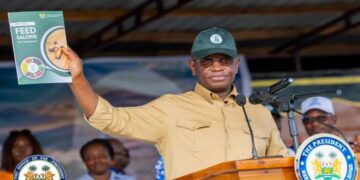










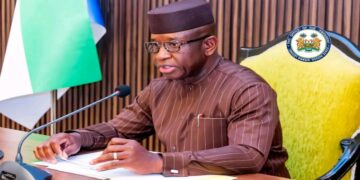

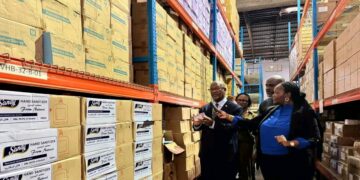






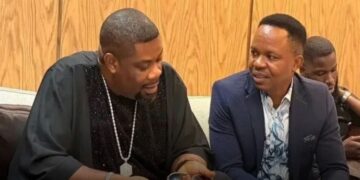










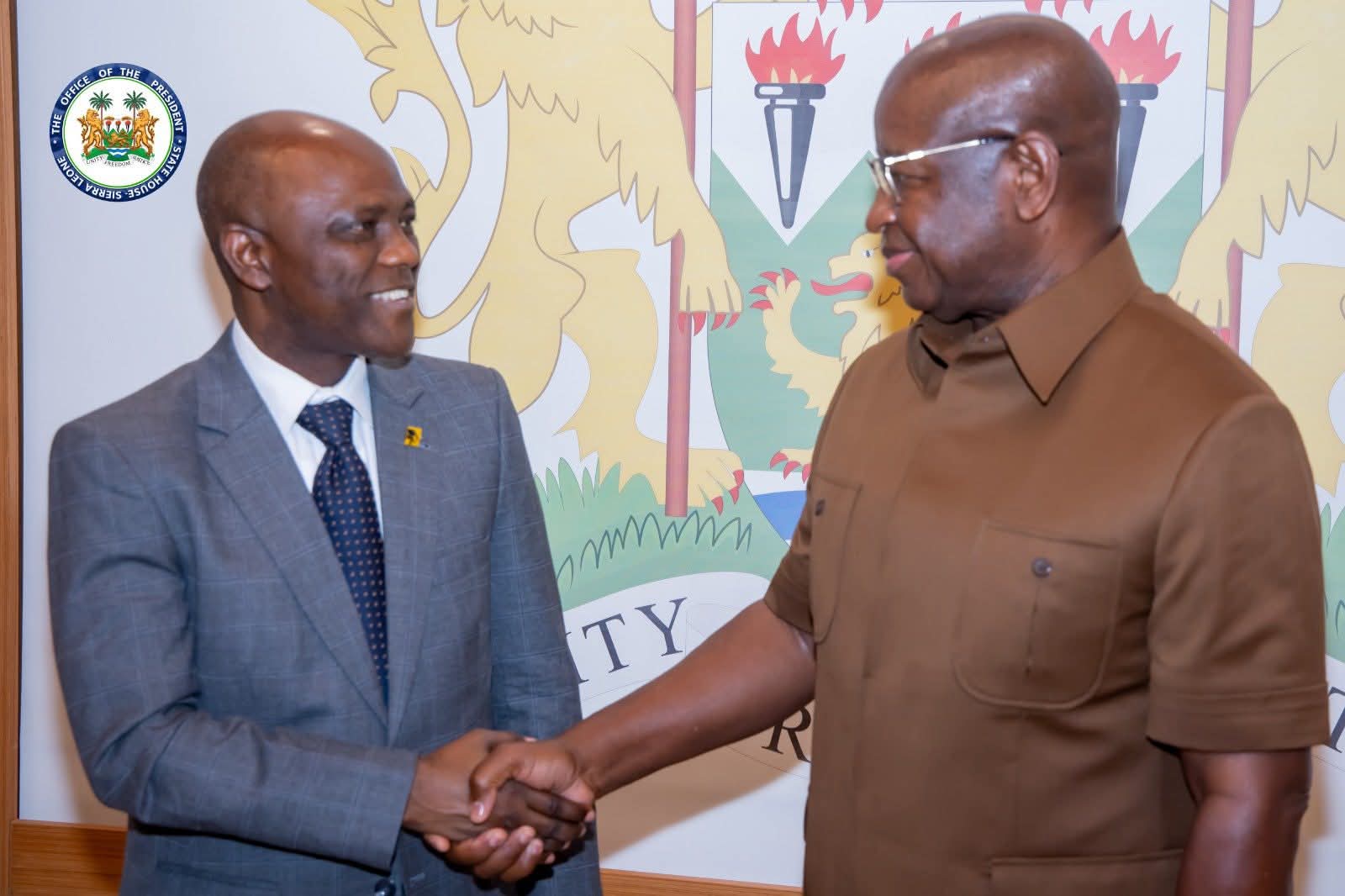
President Julius Maada Bio on Monday received a high-level delegation from First Bank Group at State House in Freetown for discussions focused on mobilising large-scale financing for Sierra Leone’s infrastructure and industrial development priorities.
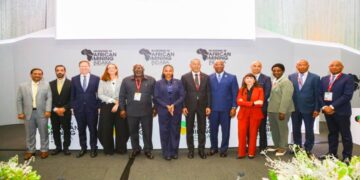
The delegation was led by the Group Chief Executive Officer of First Bank, Mr. Olusegun Alebiosu, and included senior engineering executives and international directors of the bank. They were received alongside Sierra Leone’s First Bank Country CEO, Board Chair and the Minister of Finance, Hon. Sheku Ahmed Fantamadi Bangura.
Discussions centred on innovative financing mechanisms aimed at accelerating investment in key sectors, particularly roads, electricity, water supply, bridges, and industrial infrastructure.
Speaking during the engagement, Finance Minister Fantamadi Bangura emphasised the Government of Sierra Leone’s commitment to moving beyond traditional aid models by embracing blended financing approaches that combine public resources, private capital, and concessional funding.
He noted that Sierra Leone’s mineral wealth and agricultural potential provide a strong foundation for structuring sustainable financing arrangements capable of supporting long-term national development goals.
“Our priority is to ensure that technical engagements move swiftly toward concrete financing structures and implementable agreements that can unlock critical infrastructure investments,” the Minister stated.
First Bank Group CEO Olusegun Alebiosu highlighted the bank’s long-standing experience in infrastructure financing across Africa, stressing that strategic investment in roads, electricity, water systems, and industrial facilities is essential for stimulating economic growth and expanding national productivity.
Founded in 1894, First Bank operates across six African countries, with its head office in Paris and an established presence in the United Kingdom.
Mr. Alebiosu described blended finance as one of the most effective instruments for mobilising large-scale capital for transformative development projects. He further explained that the bank possesses the capacity to structure financing arrangements using future commodity revenues and mineral royalties as collateral, enabling governments to accelerate development interventions without waiting for traditional budgetary cycles.
He assured the Government of Sierra Leone that the bank’s engagement would be guided by transparency, strong local coordination, and sound financial governance.
President Julius Maada Bio welcomed the discussions and linked the proposed financing frameworks directly to his Government’s “Big Five” development priorities: agriculture, fisheries, mining, tourism, and manufacturing.
The President underscored that inadequate infrastructure remains one of the greatest constraints to economic growth and private sector expansion in Sierra Leone.
He therefore directed that concrete project pipelines and financing structures be developed without delay and assured the delegation of Government’s full cooperation in creating an enabling environment for successful implementation.
The Government of Sierra Leone views the engagement as a significant step toward mobilising the investment required to unlock the country’s long-term development potential.